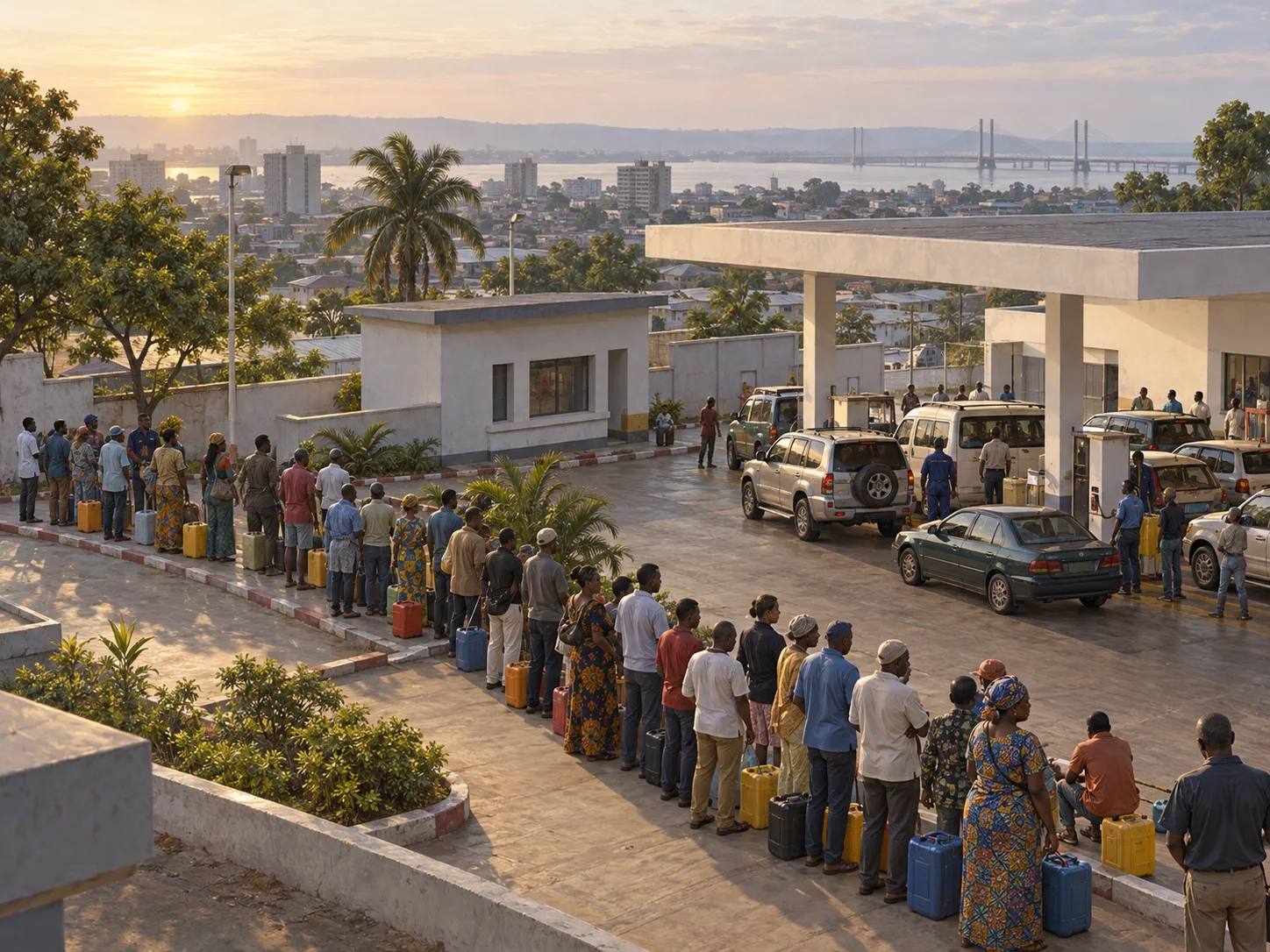
In May 2026, vehicles seeking fuel lined up beyond filling-station forecourts in Brazzaville, capital of the Republic of the Congo. On-site reporting by RFI described a long line near the Mazala roundabout in the west of the city, spilling into a main road as drivers waited to be served.
A taxi driver interviewed at noon said he had left home at 4 a.m. and joined the line at 5, yet there had still been no sale or information. For a taxi driver, fuel is not simply a purchase; it is what makes work possible. Time in the queue is time without passengers or income, but abandoning it may make operating at all impossible.
The cars in the line have different destinations and carry different people. At the pump, however, they can advance only one at a time. Vehicles meant to keep the city moving stood still, and their order in the queue helped determine what could move next.