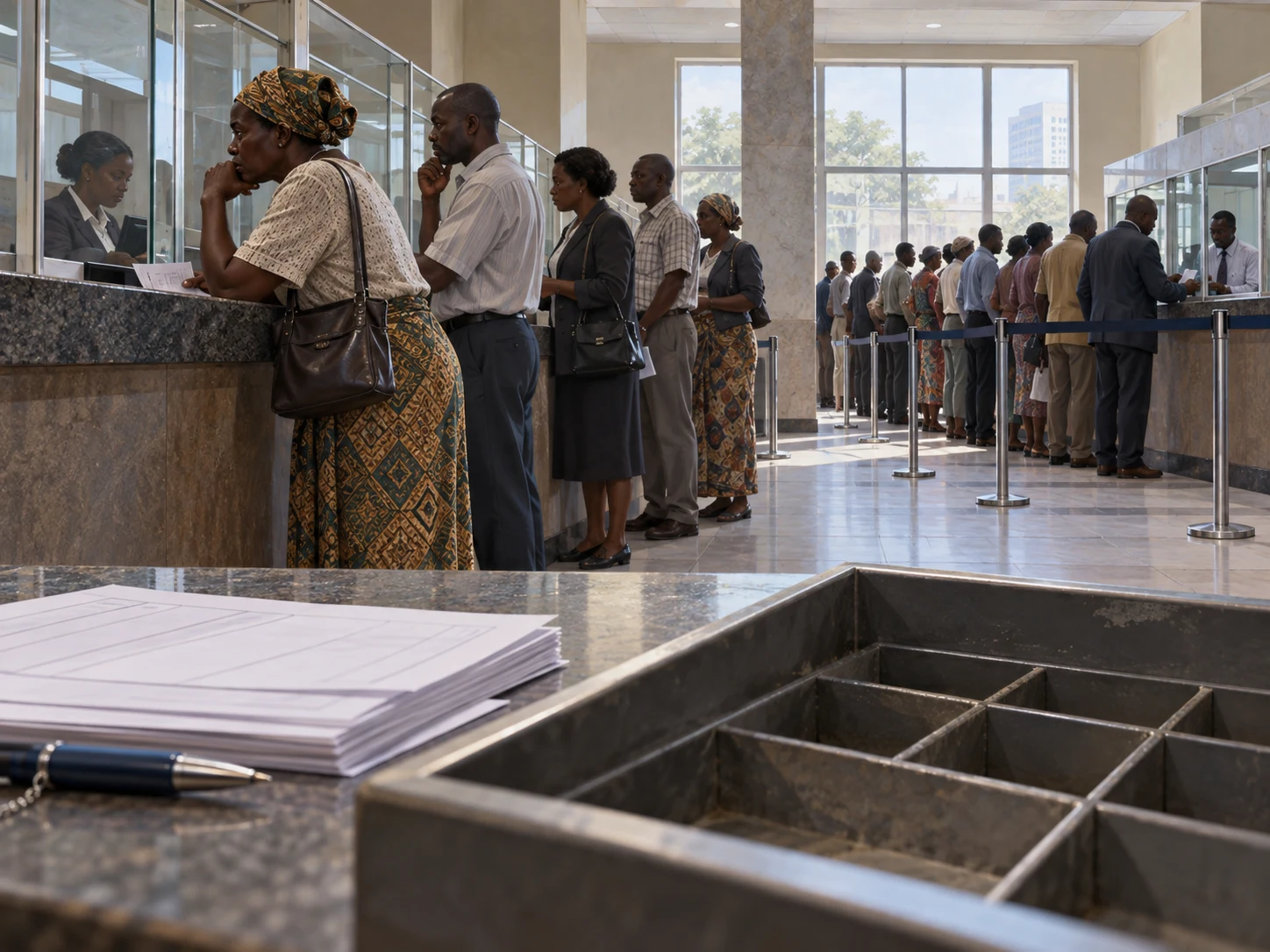
In an account published by the Zimbabwe Independent on 4 January 2008, a bank customer in Harare described the day’s procedure in the first person. Unsure whether a transfer had reached the account, the customer first joined the balance-inquiry queue and then had to move to the longer cash-withdrawal queue. The report said long lines had become routine in banking halls; some people had arrived at 6 a.m., while others had struggled for weeks to obtain cash.
A balance on paper could not buy food or medicine unless it could be converted into banknotes. Amid extreme inflation and a cash shortage, checking and collecting became separate services, turning one errand into two waits. People in the lines spoke not in abstractions but about money needed for funerals, medical treatment, transport, and basic food. The paired queues made visible the way a financial crisis consumed ordinary time.