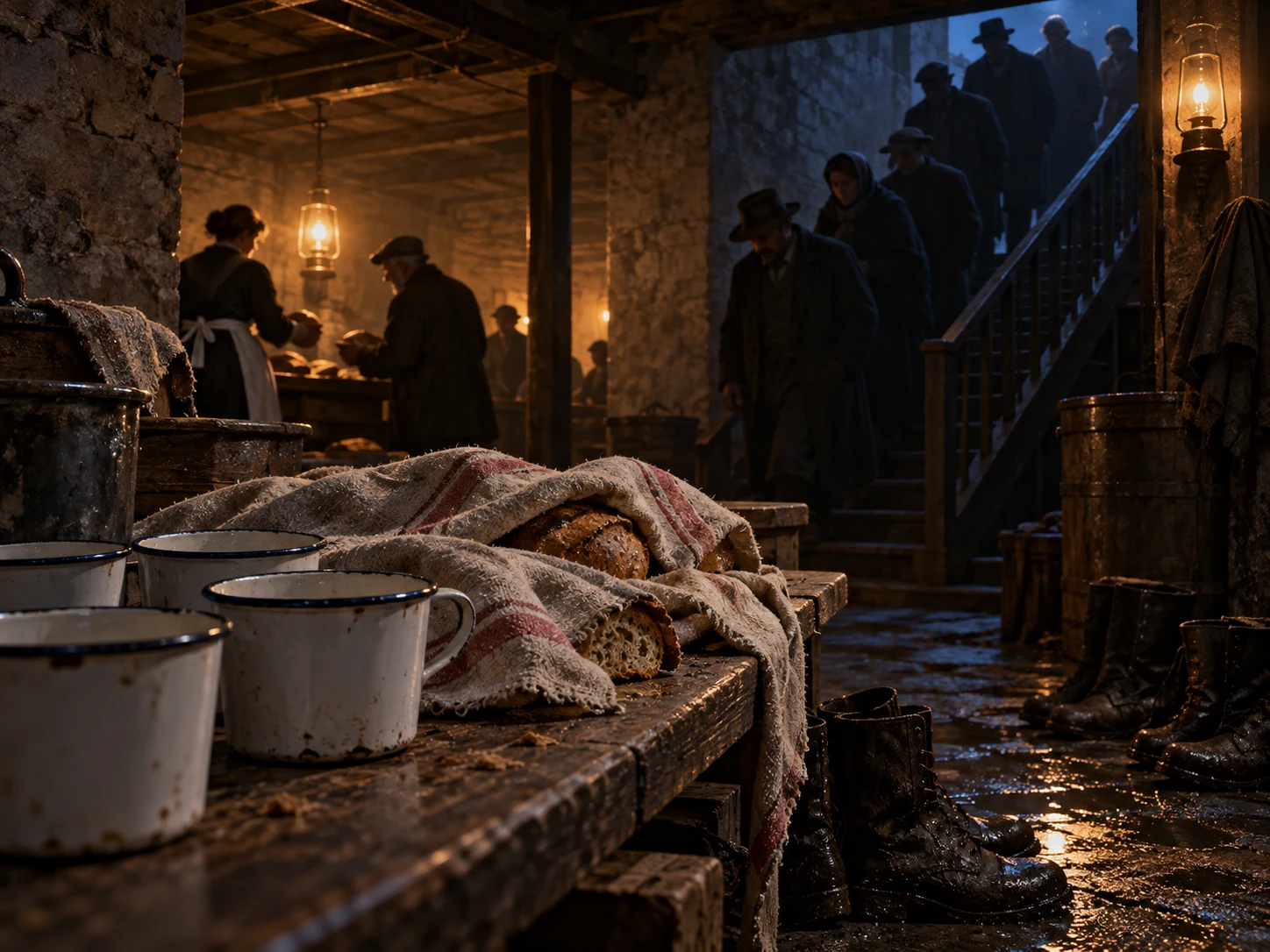
The surviving candidate description does not, on its own, establish the number of people in a particular line or how long they waited. Those details require comparison with contemporary photographs, reporting or records. Separating what is documented from what remains uncertain is essential to describing the people involved without inventing their experience.
A night bread line consumed sleep rather than hours used for job searches or household work. Even when stock is outside the frame, arriving before opening documents uncertainty about whether bread will last.
New York’s Bowery has long been associated with lodging houses and charitable missions. A historical photograph of bread distribution at the Bowery Mission preserves a different rhythm of city life: people waiting for something to eat. For some, the city after dark means entertainment; for others, it can mean searching for food to carry them into the next day.
For those holding a place on the Bowery at night, free bread was not a symbol but the next meal. After shops closed, the pavement served as both reception desk and waiting room for charity.