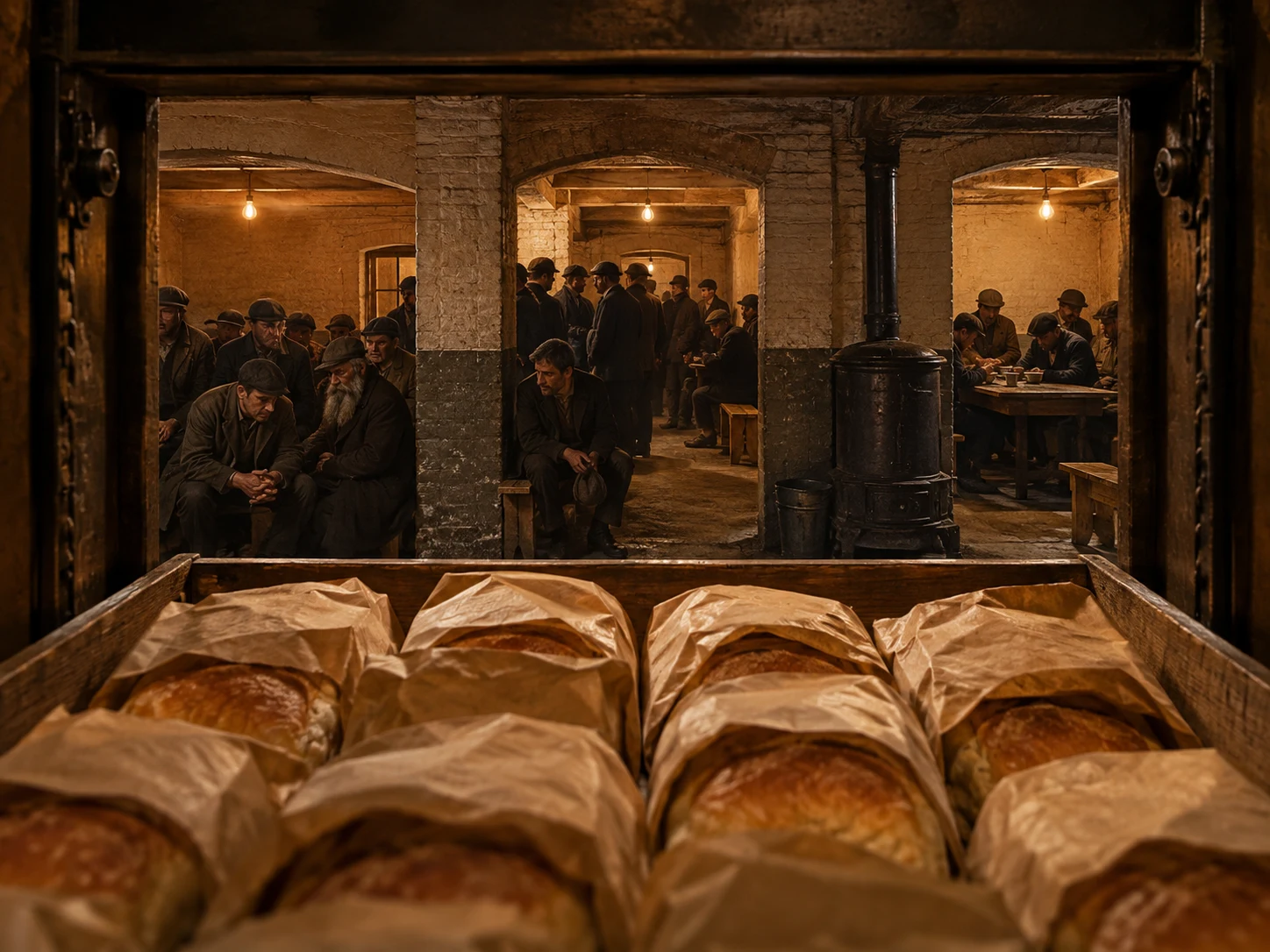
A caption as short as “bread line” leaves many questions unanswered. Where did people come from? Who provided the food? Was bread the only thing distributed? A photograph catalogued by the Library of Congress as dating to 1910 offers a starting point for exploring what it meant to wait for something to eat. Its date, location and subject must still be checked against the original catalogue record. Used carelessly, an image of hardship turns the people in it into mere illustrations of poverty. We can study the distribution system while remembering that every person pictured had a life beyond the frame. Bread may have been handed out one piece at a time; what receiving it meant was never identical for everyone.
A 1910 bread-line photograph shows urban food insecurity before the Great Depression. Keeping its date, place and caption separate from famous 1930s images is essential to preserving its historical meaning.
The 1910 photograph establishes that people assembled in sequence at one bread-distribution point. The organiser and economic context should not be expanded beyond what the original title and catalogue support.
A Library of Congress photograph preserves a specific bread line from 1910. Where food was free or cheap, waiting time replaced part of the monetary price. The image shows not poverty in the abstract but bodies arranged to match the pace at which aid could be handed out.