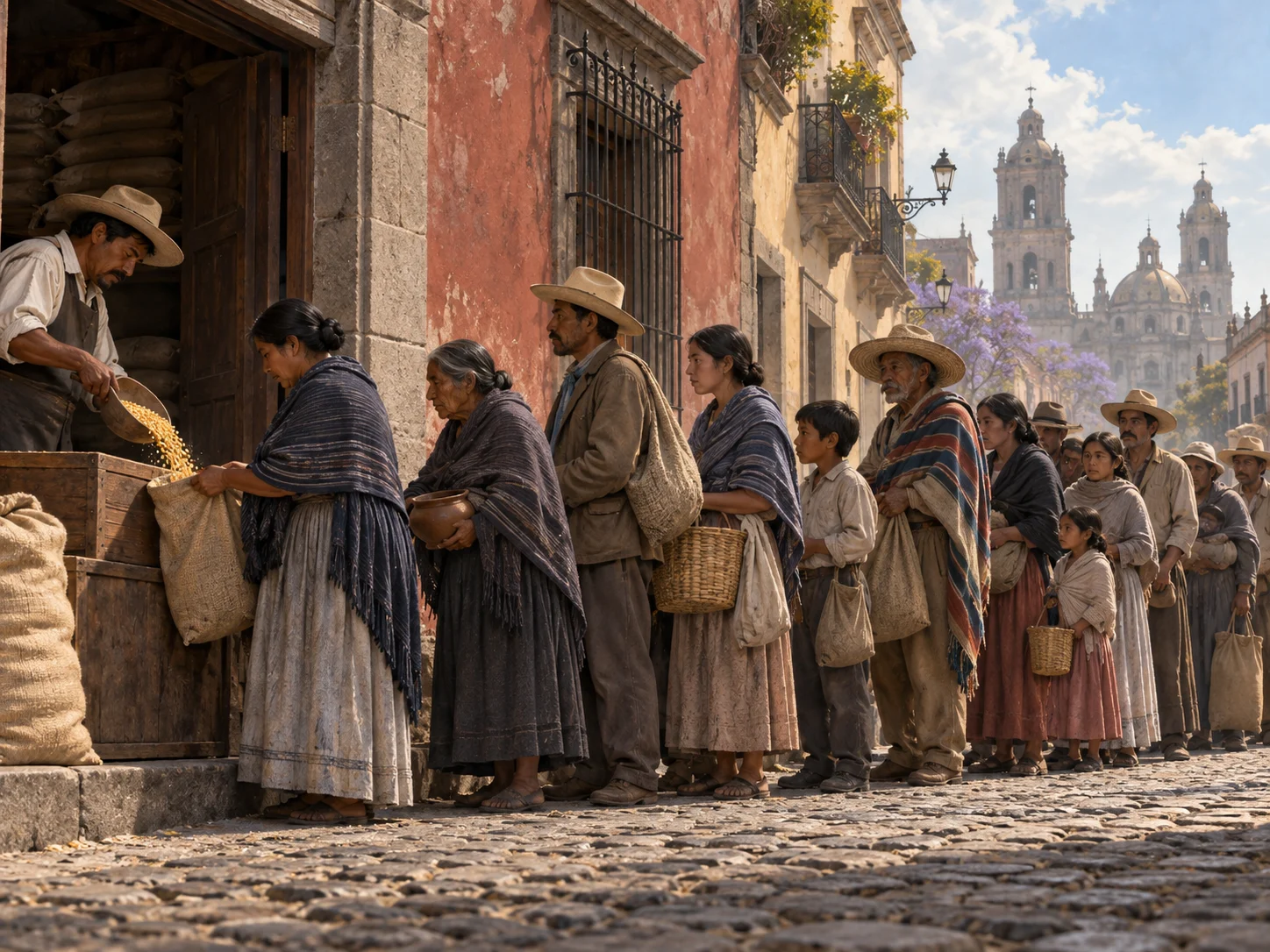
During the Mexican Revolution, food shortages in the capital made 1915 known as the Year of Hunger. The Casasola photographic archive records people waiting for a distribution of maize. Although the catalogue candidate mentions bread, the strongest queue evidence concerns maize and Red Cross soup, so this article narrows its subject to what the historical record actually shows.
Military movements, disrupted railways, unstable currency and broken rural supply routes shook urban markets. Residents turned not only to shops but to relief organisations and public distribution. Joining a line did not guarantee a sufficient share; the day’s supply and the size of the cooking pot determined how many could be served.
Revolutions are often told through generals and battles. For city residents, political change appeared first at the table. The maize queue represented another front: food had to move more slowly than armies changed governments, yet faster than hunger moved through a household.
In the 'year of hunger,' maize was not merely a commodity but an allocation for surviving the day. As supplies tightened, the queue ceased to express ordinary demand and instead decided which household pot would receive food first.