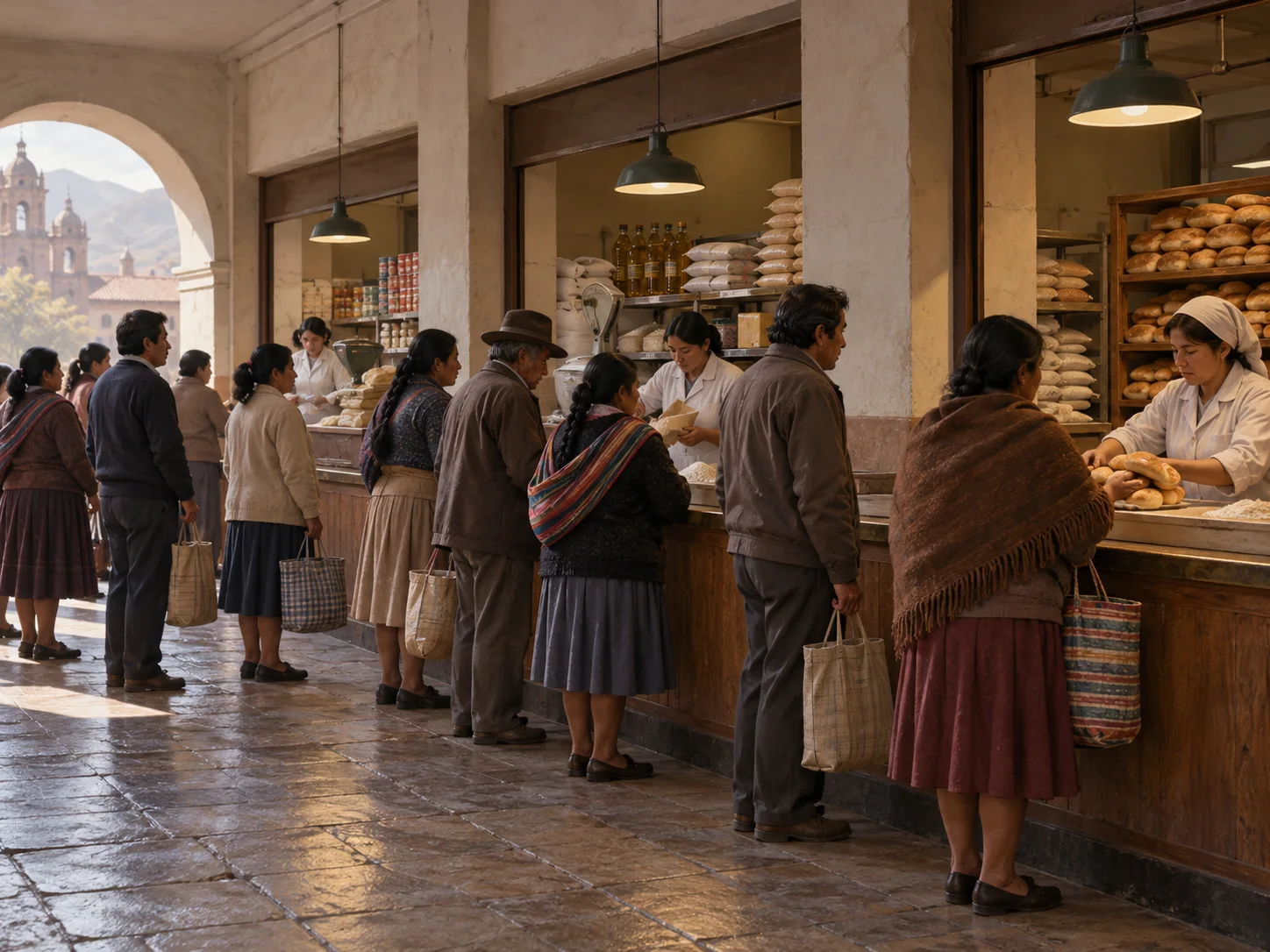
In late-1980s Peru, queues for bread and necessities became part of the urban landscape. The archive of El Comercio preserves a long line photographed in Callao on 19 September 1988. Under hyperinflation, today’s price could not be trusted to survive until tomorrow, and news that goods had reached a shop was enough to mobilise a neighbourhood.
Arriving early was not mainly about saving time; it was about buying before stock disappeared. Currency could lose value while customers waited, and shops might impose quantity limits. Every hour a family member spent holding a place was taken from paid work, household work or school.
An economic crisis can be drawn as a curve on a price index. The queue shows where that curve touched daily life. When empty shelves and vanishing purchasing power advanced together, people waited not only to secure an object but to capture the present price before it escaped. Shopping became a race against the future.
Under hyperinflation, the queue moved against a second clock: the speed at which prices rose. Because money could lose value during the hours before purchase, waiting itself became a household cost.