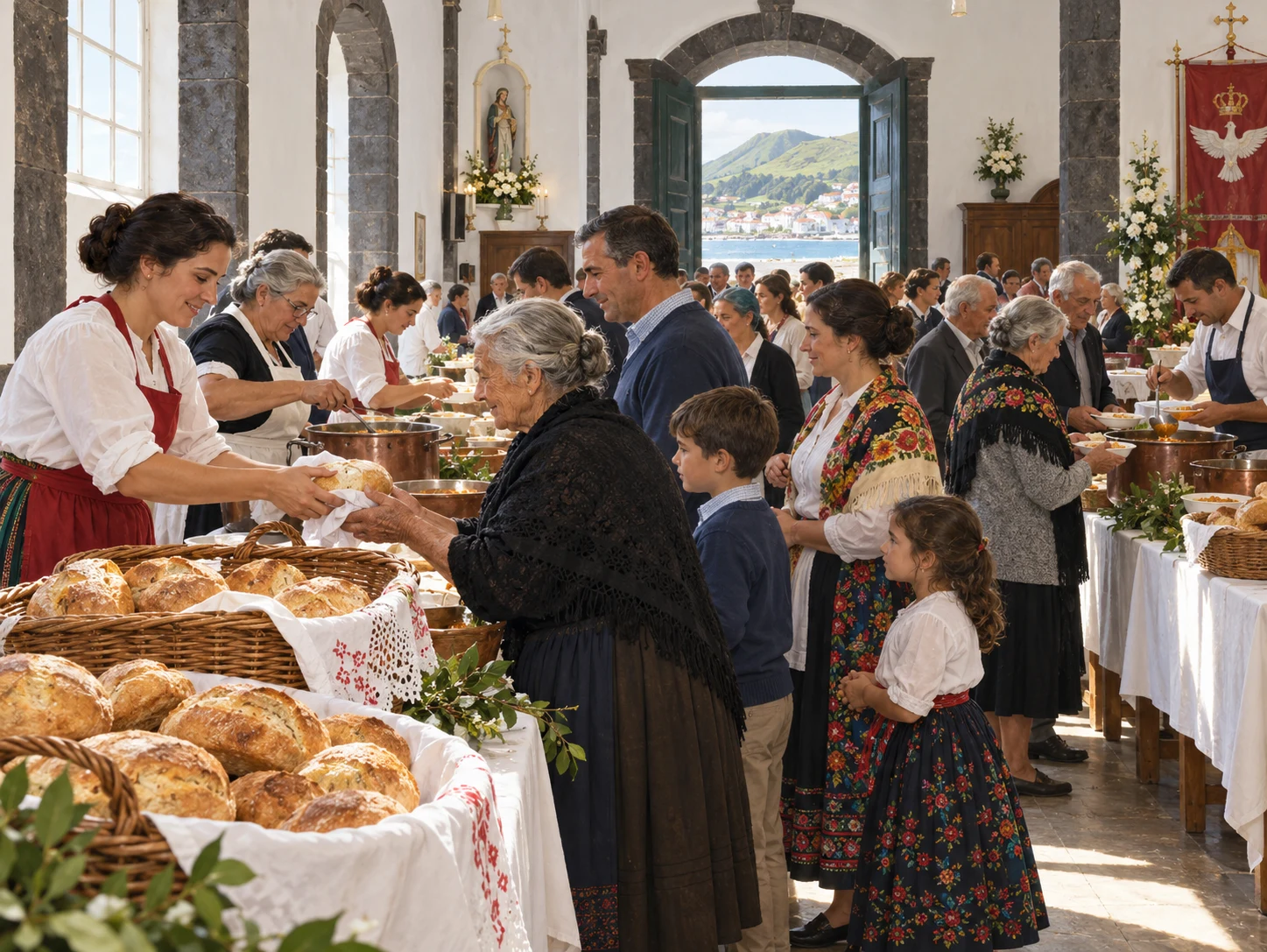
In May 2024, residents of Cinco Ribeiras on Terceira Island in the Azores prepared to share meat, bread and wine on the eve of a Bodo, one of the local Festivals of the Holy Spirit. According to on-the-ground reporting by the Portuguese news agency Lusa, more than 200 portions known as esmolas were arranged on wooden benches in the village square while Saturday Mass was still under way. After Mass, a priest blessed the offerings and three rockets signalled to the rest of the community that distribution was beginning.
A family's portion included about three kilograms of beef, a sweet bread, a bottle of wine and an additional loaf for each member of the household. A crown and flag, symbols of the Holy Spirit, accompanied the handover. While waiting his turn, Francisco Álvares explained that he took part to keep his faith and the tradition alive. The report therefore documents not merely the existence of a festival, but an identifiable recipient waiting in an ordered distribution.
Holy Spirit traditions vary between islands and parishes across the Azores. In Cinco Ribeiras, however, this turn-taking made the festival's language of equality practical: food prepared through many hours of volunteer work was divided family by family. The line advanced one recipient at a time, much like an ordinary checkout, yet what changed hands was not a purchase. It was a share of a communal celebration, wrapped in labour, memory and faith.