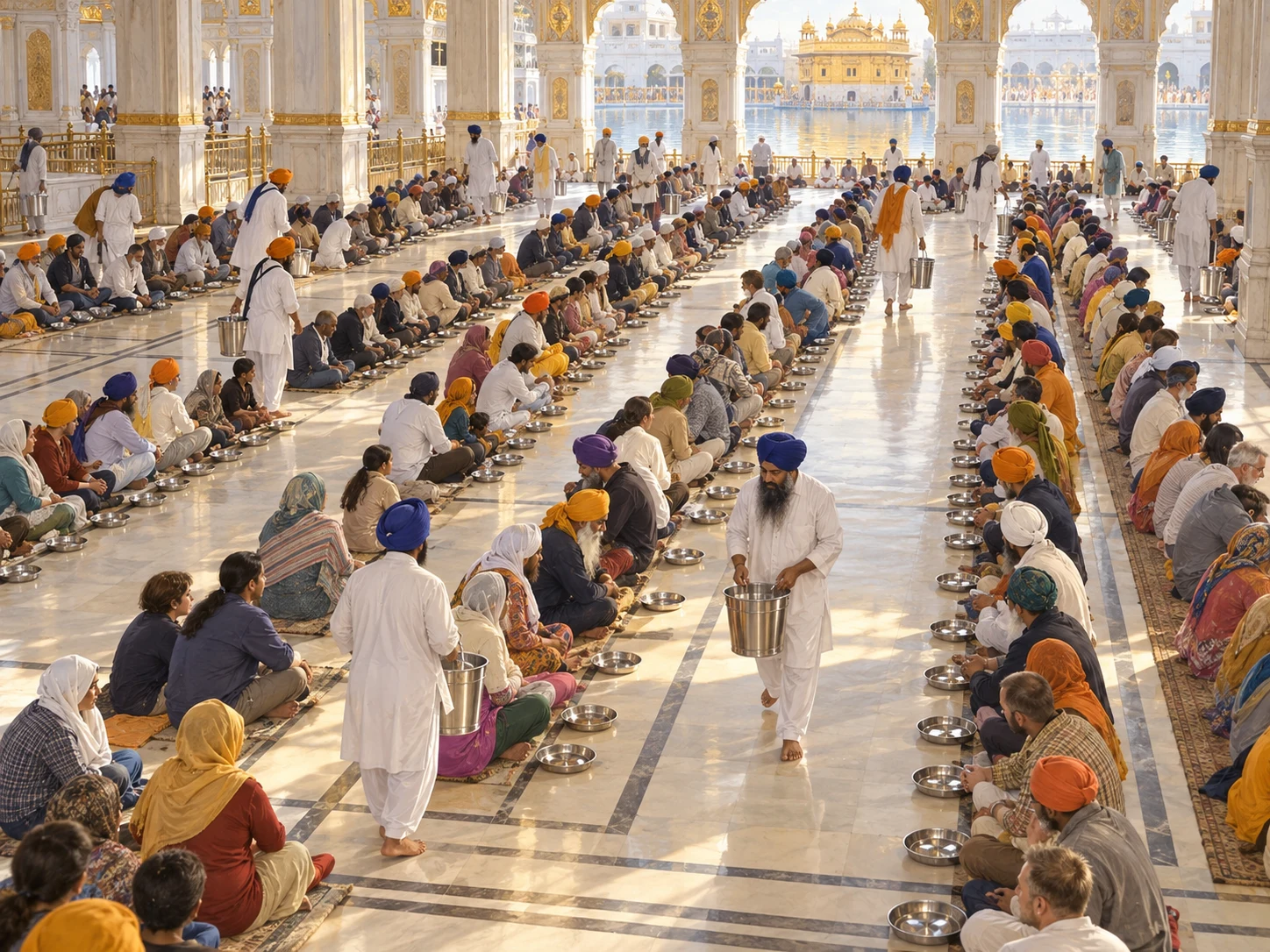
At the Golden Temple in Amritsar, the communal kitchen known as langar welcomes people regardless of faith or status. Volunteers prepare food, hand out utensils, serve diners and clear the hall.
An NDTV account explains that diners sit in lines on carpets in the langar hall and that, to manage the crowd, volunteers admit roughly one hundred people at a time. The sequence is not a competition for a better table. It is the organised movement of each group onto the same floor to receive the same vegetarian meal.
In Sikh practice, the side-by-side seating called pangat gives physical form to an ideal of equality. The order at the entrance is transformed inside: it does not become a hierarchy of privilege, but an arrangement in which people of different backgrounds eat at the same level.
A kitchen serving so many people cannot be understood by its cooking pots alone. Places must be cleared, utensils collected and the next group welcomed. Waiting is part of the shared work that allows the service to continue every day.