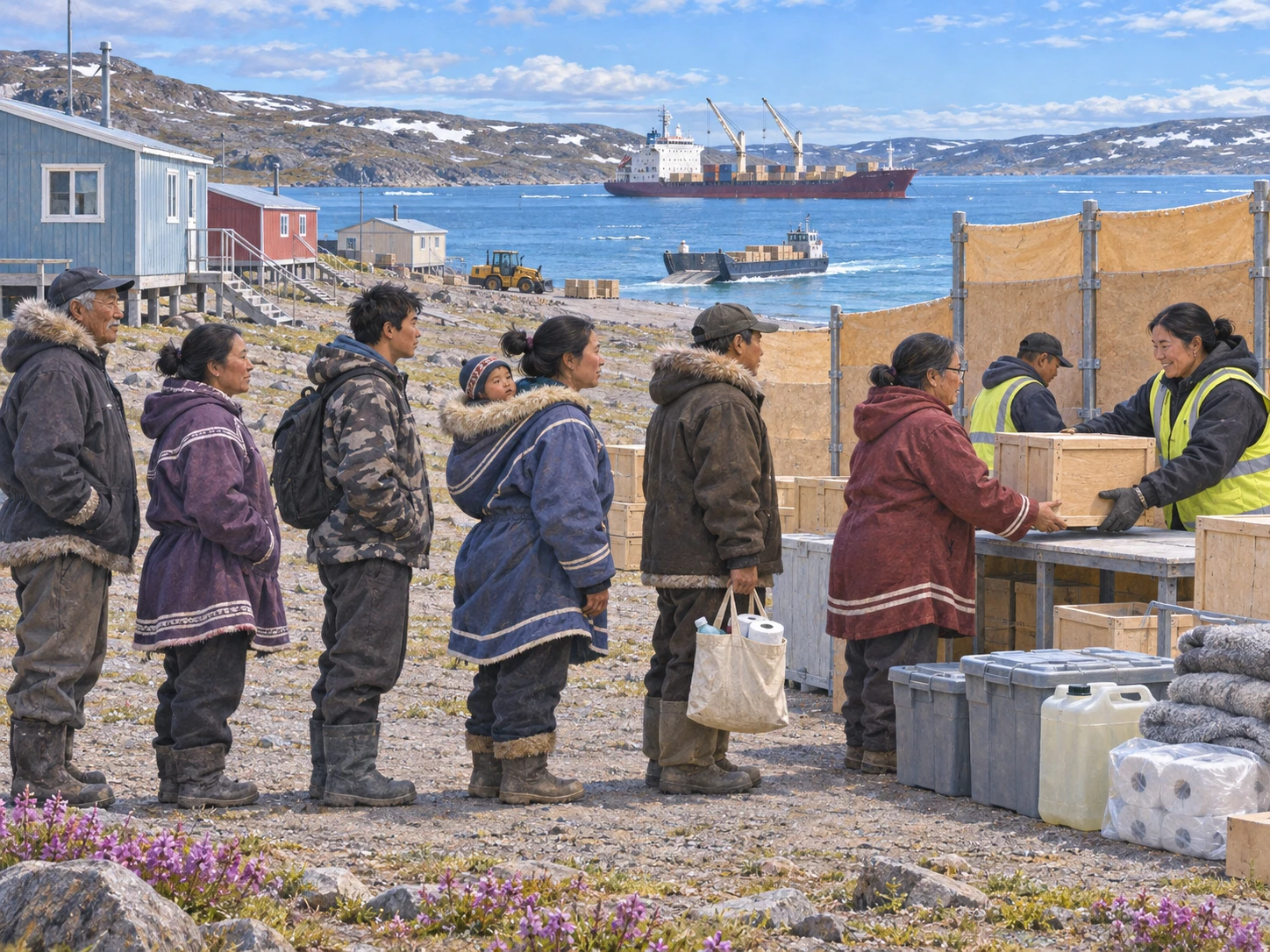
Some communities in northern Canada have no year-round road connection to the outside world. Seasonal sealift services carry groceries, building materials and other supplies during the navigable months. If people queue to collect freight, that brief visible wait follows a much longer period of ordering and transport planning.
An item that might arrive within days in a southern city can depend on seasons and weather farther north. Decisions about what goes aboard affect home repairs, shop inventories and community construction projects. The time spent standing at a port would be only a small part of the larger wait.
A specific record of residents lining up to receive cargo at a particular port is still needed. The arrival of a ship is not itself proof of a queue. Yet in places where the sea and the seasons set the delivery calendar, the question “When will it arrive?” carries a different weight.
The defining feature of Waiting Begins Before the Ship Arrives is the way a specific procedure turned sealift到着時の貨物受取・地域サービスの順番 into ordered waiting. The line was not background scenery: it determined access, timing and the burden placed on the people involved. The revised account keeps those mechanics visible and separates the documented scene from assumptions that the source does not support.