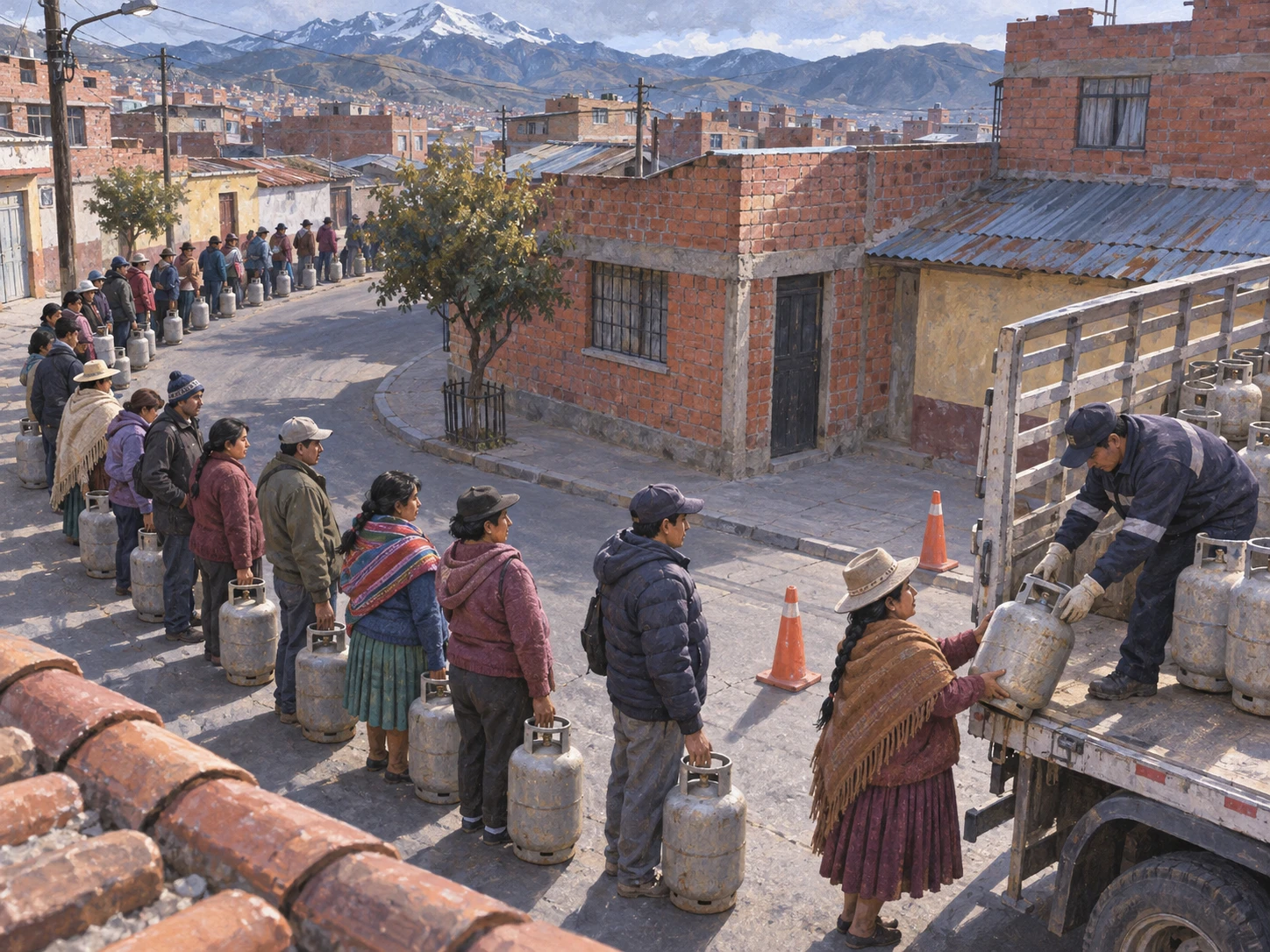
When household LPG supplies tightened in Bolivia, people carrying empty cylinders gathered at distribution points. In January 2026, local reporting described long lines for cylinders across several regions. A separate report from San Julián recorded residents waiting from eight in the morning and a restriction of one cylinder per person.
The defining object in this queue was the metal cylinder that each household needed to exchange or refill. It was not merely a symbol of scarcity. It was the physical unit of the purchase, carried by the person whose turn advanced toward the seller. News photographs show many cylinders together with the people waiting at the distribution point.
The evidence does not justify claiming that unattended cylinders always held places on their owners’ behalf. It does directly establish a physical queue of people with cylinders waiting in order for limited household fuel. The scene makes an energy shortage visible as an intrusion into ordinary time: obtaining the means to cook required an early start, a container, and a place in line.