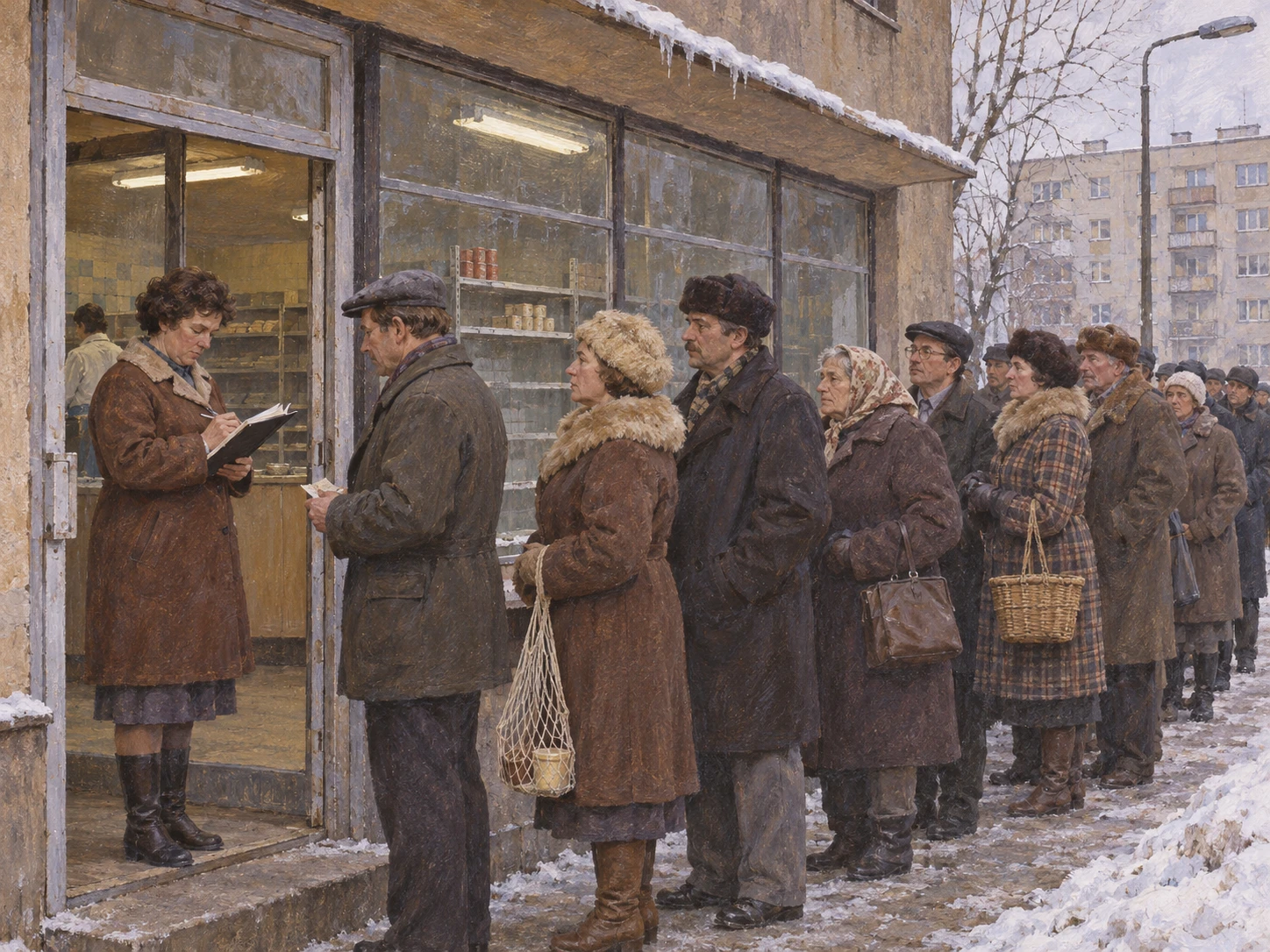
From the mid-1970s onward in the Polish People’s Republic, lines formed outside shops even when customers did not know when—or what—goods would arrive. Educational material from Poland’s Institute of National Remembrance records that people sometimes joined first and only then asked what the queue was for. A shoe shop might unexpectedly receive shampoo, cassette tapes, or engine oil; the type of store did not reliably predict the scarce item.
When deliveries came only every few days, queuers created their own committees and registered names on waiting lists. Participants had assigned periods of physical attendance and had to report for roll calls several times a day. Missing a call meant being struck from the list. Family members replaced one another every few hours, and even children could be recruited because each person might be allowed to buy a limited quantity. A place on the list preserved order but did not guarantee that any goods would remain.
Here, written sequence and embodied waiting formed one social institution. Ration cards were not the only mechanism controlling access: a list maintained by the participants themselves could decide who reached the counter. Separate commodity lines, family shifts, and roll calls make this a distinctive documented record of everyday life in socialist Poland.