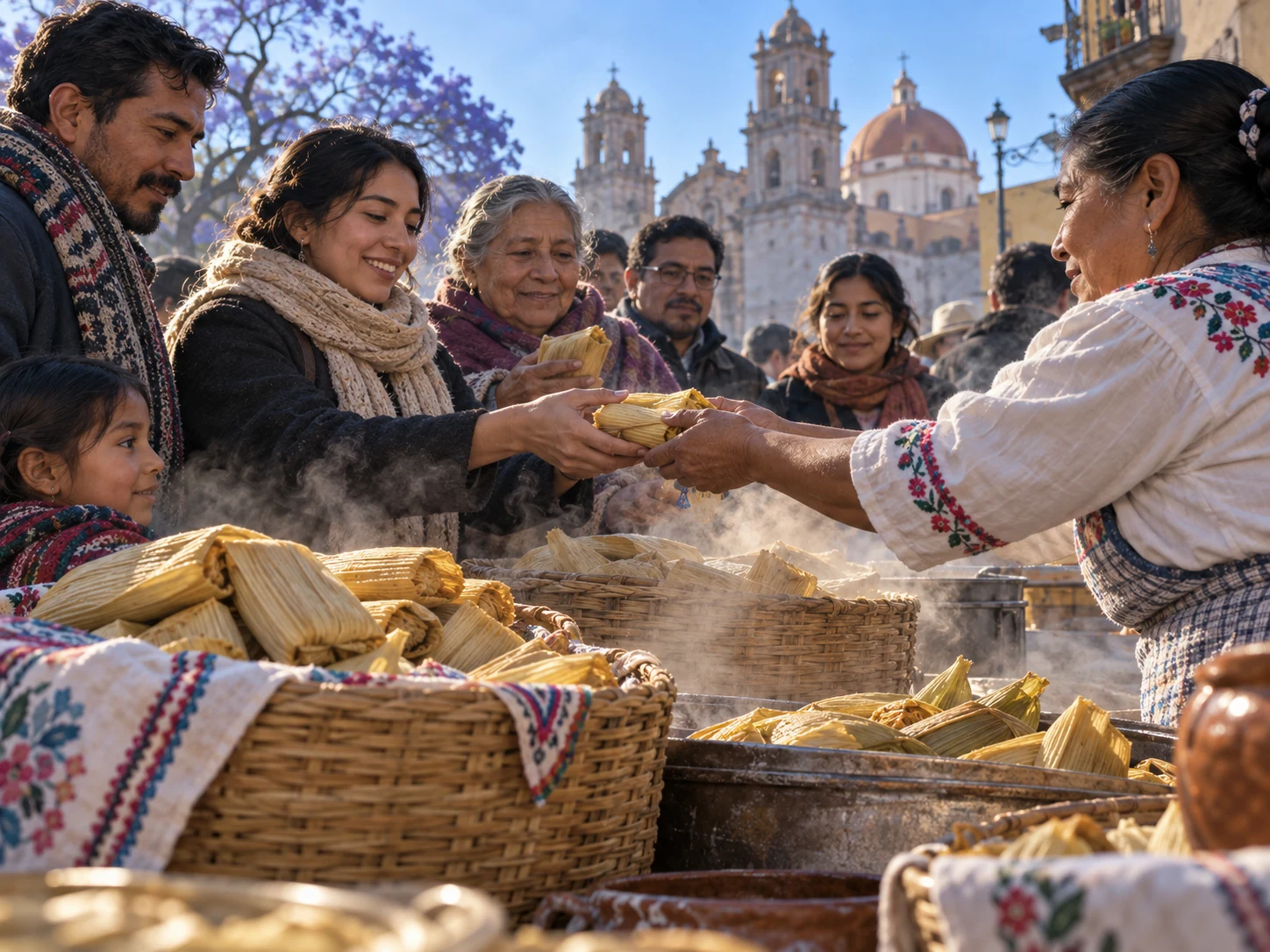
In Mexico, families and friends share a ring-shaped sweet bread called rosca de reyes around Three Kings’ Day on January 6. A small figurine is hidden inside. By a familiar custom, whoever finds it takes responsibility for providing tamales on February 2, the feast of Candlemas, known locally as Día de la Candelaria. A surprise inside a loaf becomes a promise to feed others weeks later.
Tamales are made from corn dough, often filled, wrapped in leaves and steamed. Some people prepare them at home; others buy them. A festival can concentrate demand, making a wait at a shop entirely plausible. But plausibility is not evidence. The source record for this candidate does not yet identify a particular shop, date or firsthand account of a purchasing queue. The custom and the queue must be verified separately.
What makes this story distinctive is the delay between the playful choice and its consequences. A tiny figure found in January assigns a task in February. If a documented line can be located, the people waiting for tamales may also be participating in the second act of a shared celebration.