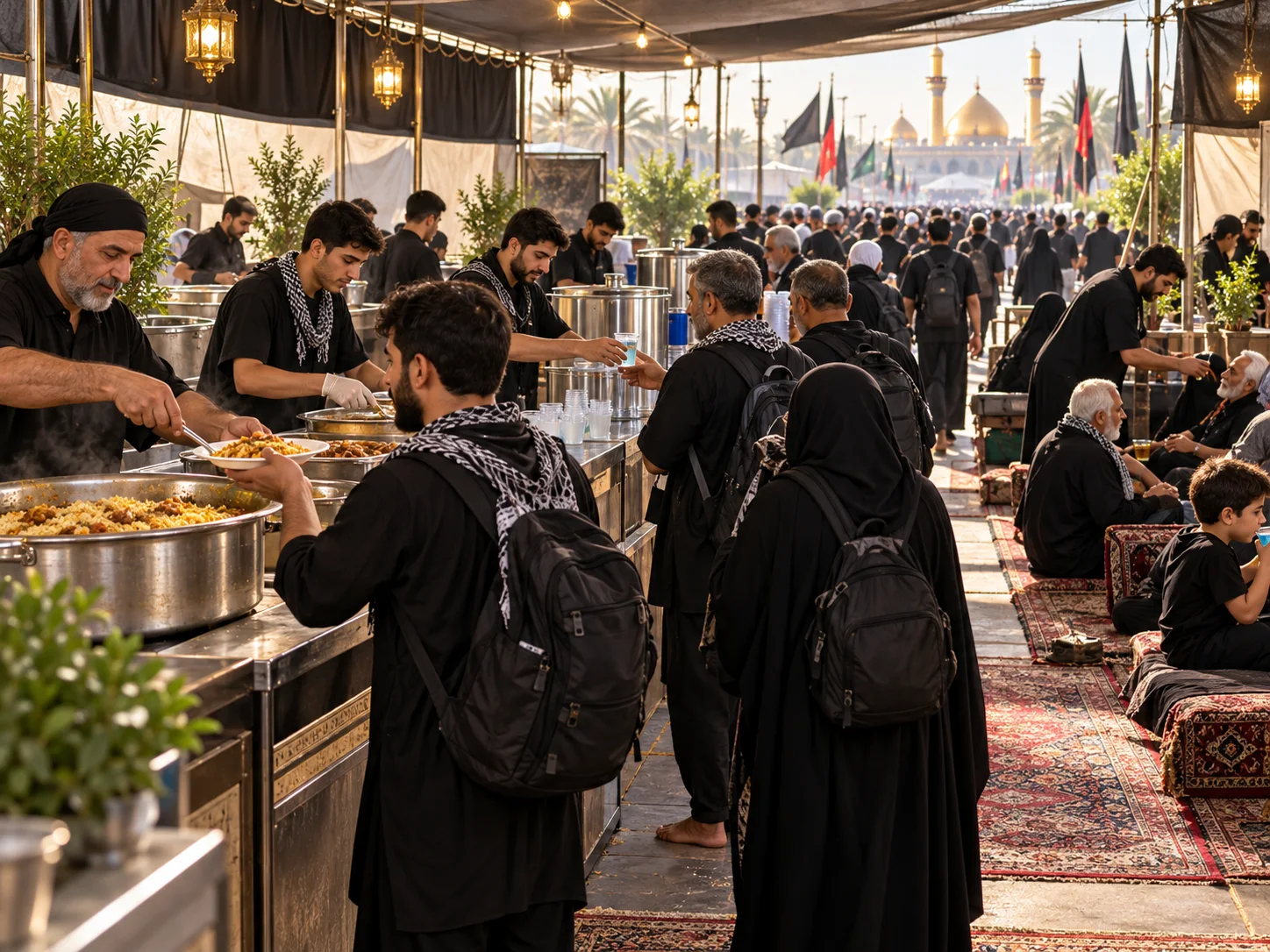
Along the Arbaeen pilgrimage routes to Karbala in Iraq, volunteer service stations known as mawākib offer pilgrims food, water and places to rest. Moving a vast number of people requires more than roads and security. It also requires someone to carry supplies, prepare meals, pour drinks and clean up afterward. Free hospitality does not mean that the work or its costs disappear; rather, other people undertake them. A turn-taking system may be needed where many pilgrims seek food at once, but it would be misleading to claim that every station produces the same kind of physical queue. The relationship between pilgrims and volunteers is not quite that of customers and shopkeepers. Service is bound up with religious devotion and hospitality. Looking at the moment when food changes hands reveals a different dimension of mass pilgrimage: the extraordinary event depends on ordinary acts repeated countless times. Waiting, where it occurs, is part of the practical organization of generosity, not simply a delay before a purchase.
The defining feature of A Meal Along the Pilgrimage Road is the way a specific procedure turned アルバイーン巡礼路で無料食事・飲料・休憩サービスを受ける巡礼者 into ordered waiting. The line was not background scenery: it determined access, timing and the burden placed on the people involved. The revised account keeps those mechanics visible and separates the documented scene from assumptions that the source does not support.