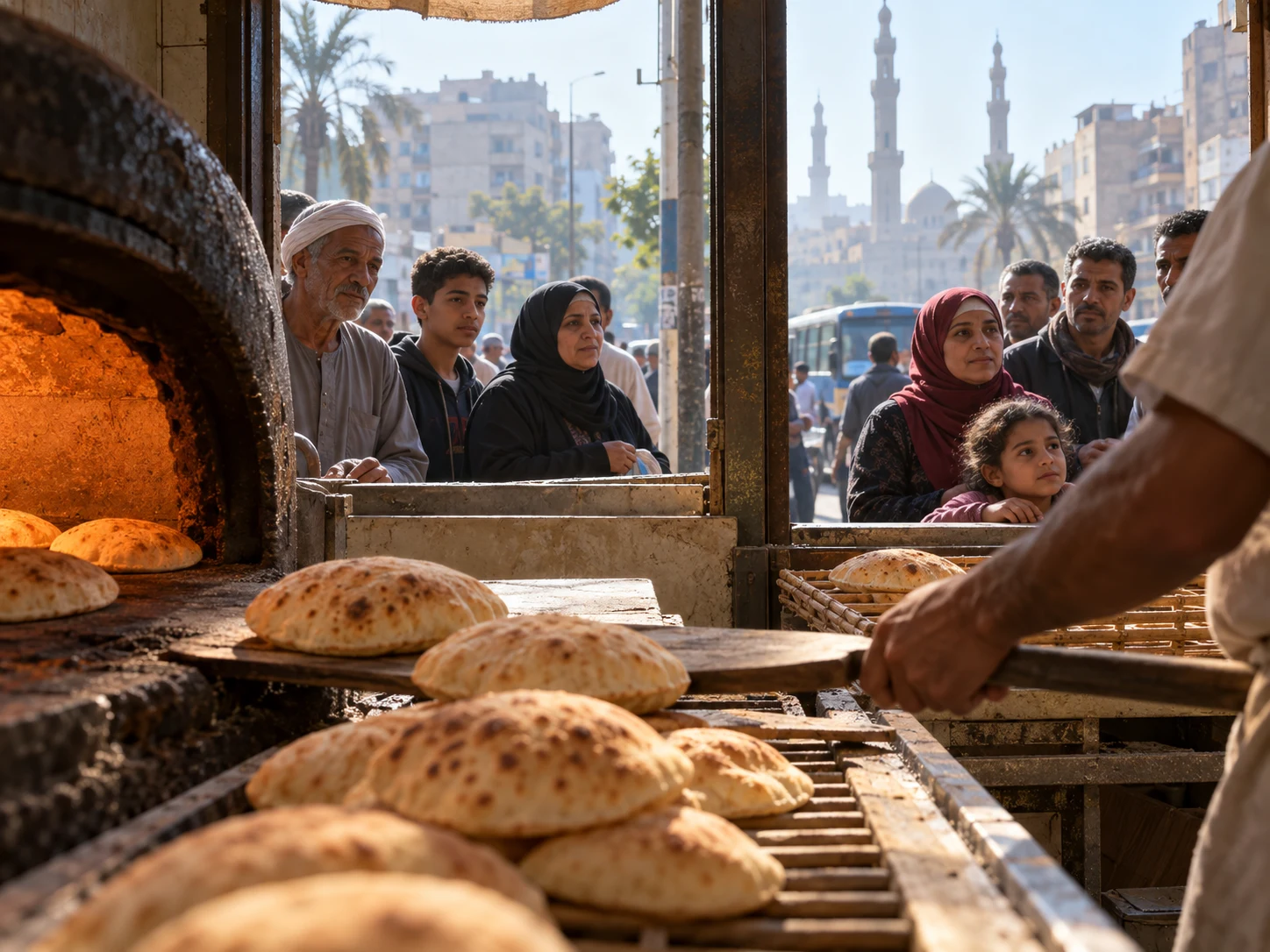
In Egypt, residents join bakery lines early in the morning to buy government-subsidised baladi bread. A 49-year-old father interviewed in Helwan in 2010 said he had to be on the street by 6 a.m. every day and stand in a long queue or his children would go hungry. Subsidised bread was sold at a price that made it a daily foundation for low-income households.
This is not merely a wait for a fresh loaf. It is the final stretch through which a national food subsidy reaches a household in a country dependent on imported wheat. Electronic cards and changes to the retail network have altered administration, but subsidised bread remains at the centre of a system serving tens of millions of citizens.
The clock of this queue starts before work and school. The father's time is an invisible price exchanged for affordable bread and a family breakfast. National finance, the global wheat market and the neighbourhood oven are compressed into one line each morning.