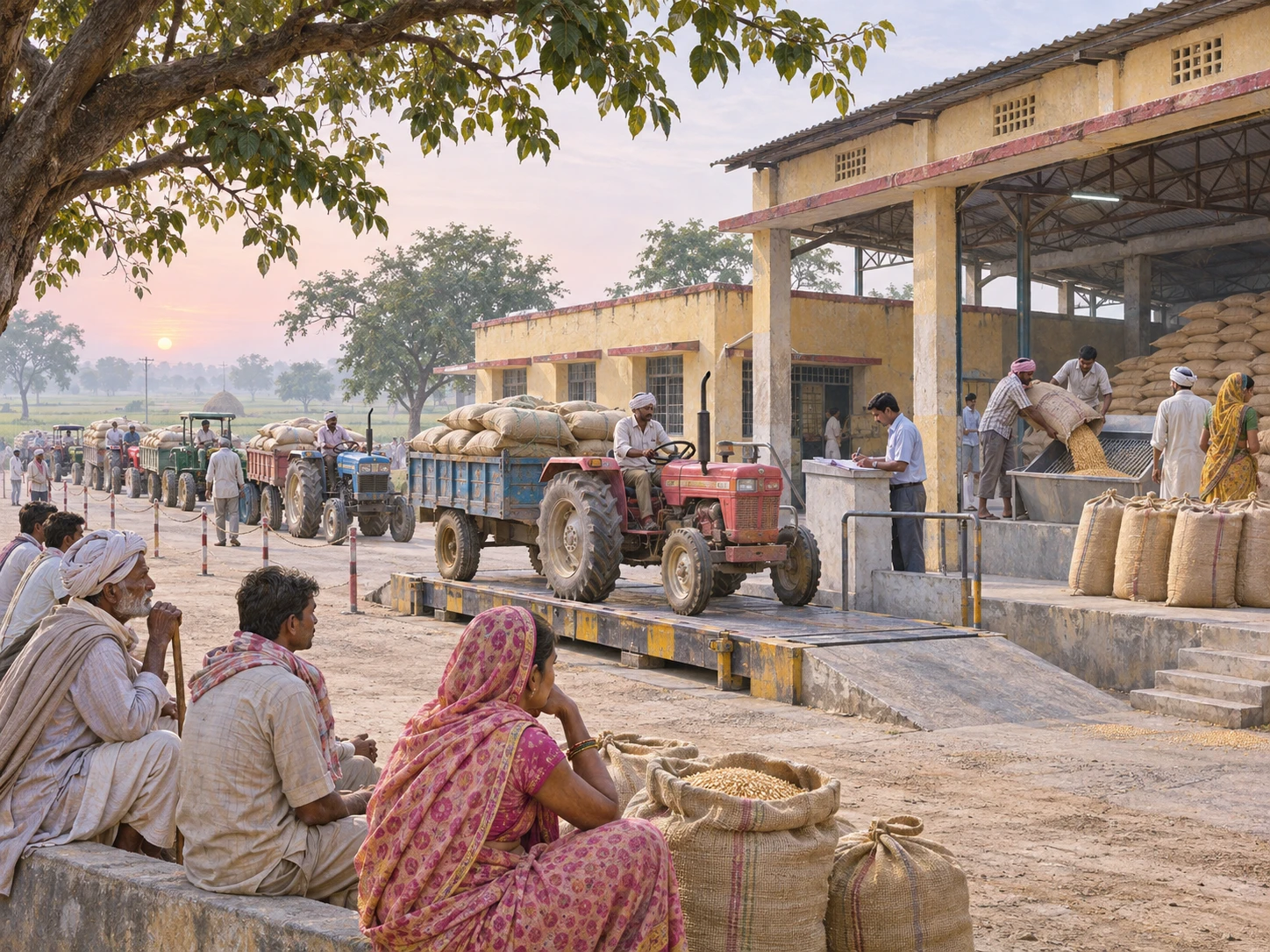
In 2026, farmers at grain markets in Faridkot, Punjab, stood in queues for hours because they could not unload their wheat. The Tribune reported that a rivalry among contractors had disrupted lifting operations and produced a glut-like concentration of harvested grain. For farmers watching the weather, the line involves more than people. Wheat remains on tractor-trolleys while its turn is delayed, increasing exposure to rain, humidity, and loss of quality. Procurement controls elsewhere in northern India use tokens, schedules, and gate passes to regulate arrivals, with early vehicles directed to holding areas. What distinguishes this queue is the collision between the crop's short period of safety after harvest and the market's limited handling capacity. A loaded tractor becomes a very large place-holder, carrying both the farmer's order and the risk attached to delay.
India · Present day
India | Farmers Wait Hours to Unload Wheat at the Mandi