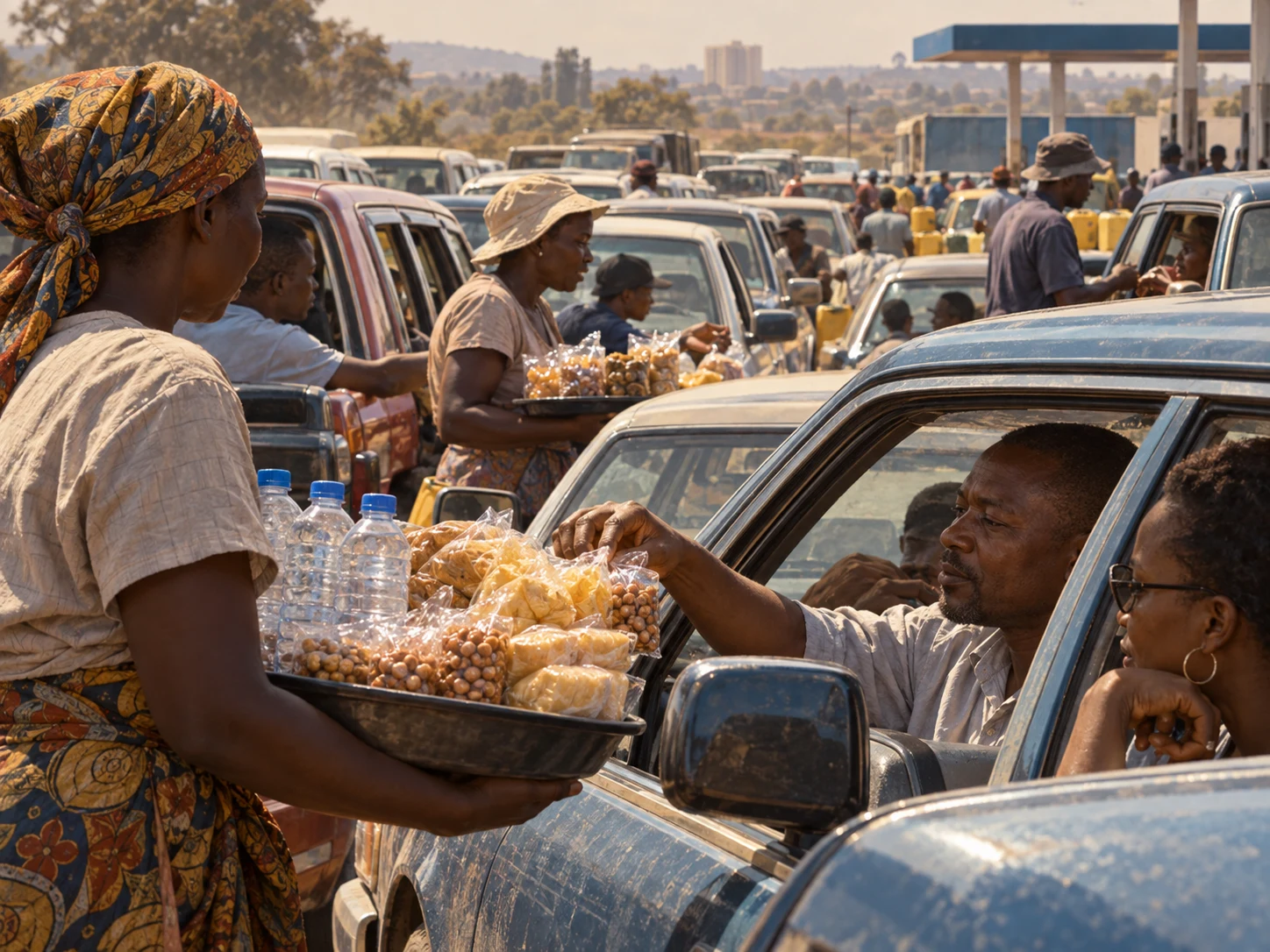
When fuel shortages persist in Zimbabwe, vehicle queues at service stations can stretch for kilometres and keep drivers waiting for hours. Research on crisis resilience records a Harare leather-goods vendor explaining that each fuel queue creates a new market: sellers arrive with drinks, fruit and food for the people waiting.
A stationary line attracts not only those seeking fuel but also people who trade with the captive hours around it. The order for petrol and small transactions for food occupy the same road. A long wait is a burden for drivers and, at the same time, a workplace for someone else.