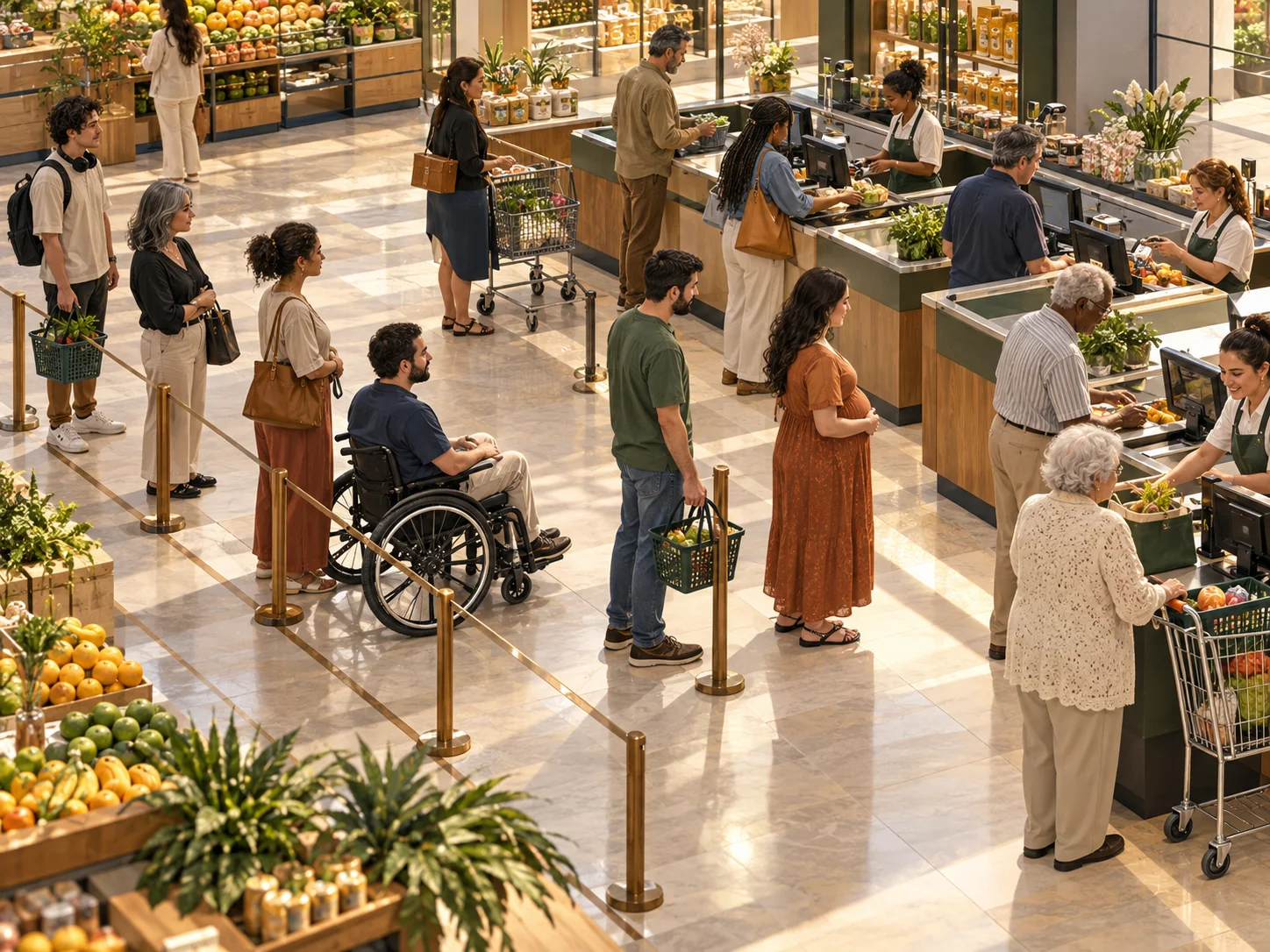
In August 2023, the municipality of Paranaguá in Paraná organized an information campaign in local supermarkets about priority-service queues. Its guidance stated that people over 80 receive “absolute priority.” After them come people who are ill, older adults, people with obesity, pregnant or breastfeeding people, and adults carrying infants. The list also includes people with disabilities or reduced mobility, autistic people, and visually impaired customers accompanied by guide dogs.
The campaign also explained the sunflower lanyard, used to indicate a disability that may not be visible. Staff and shoppers were asked to yield a turn, a place, or a passage to a wearer when needed. What makes this queue distinctive is that it does not stop at a simple division between “priority” and “ordinary” customers. The priority line has an order within itself, and it includes a device for communicating needs that cannot be judged by appearance. Here fairness does not mean placing everyone in an identical sequence. It means allowing different burdens of waiting to shape the order of service.