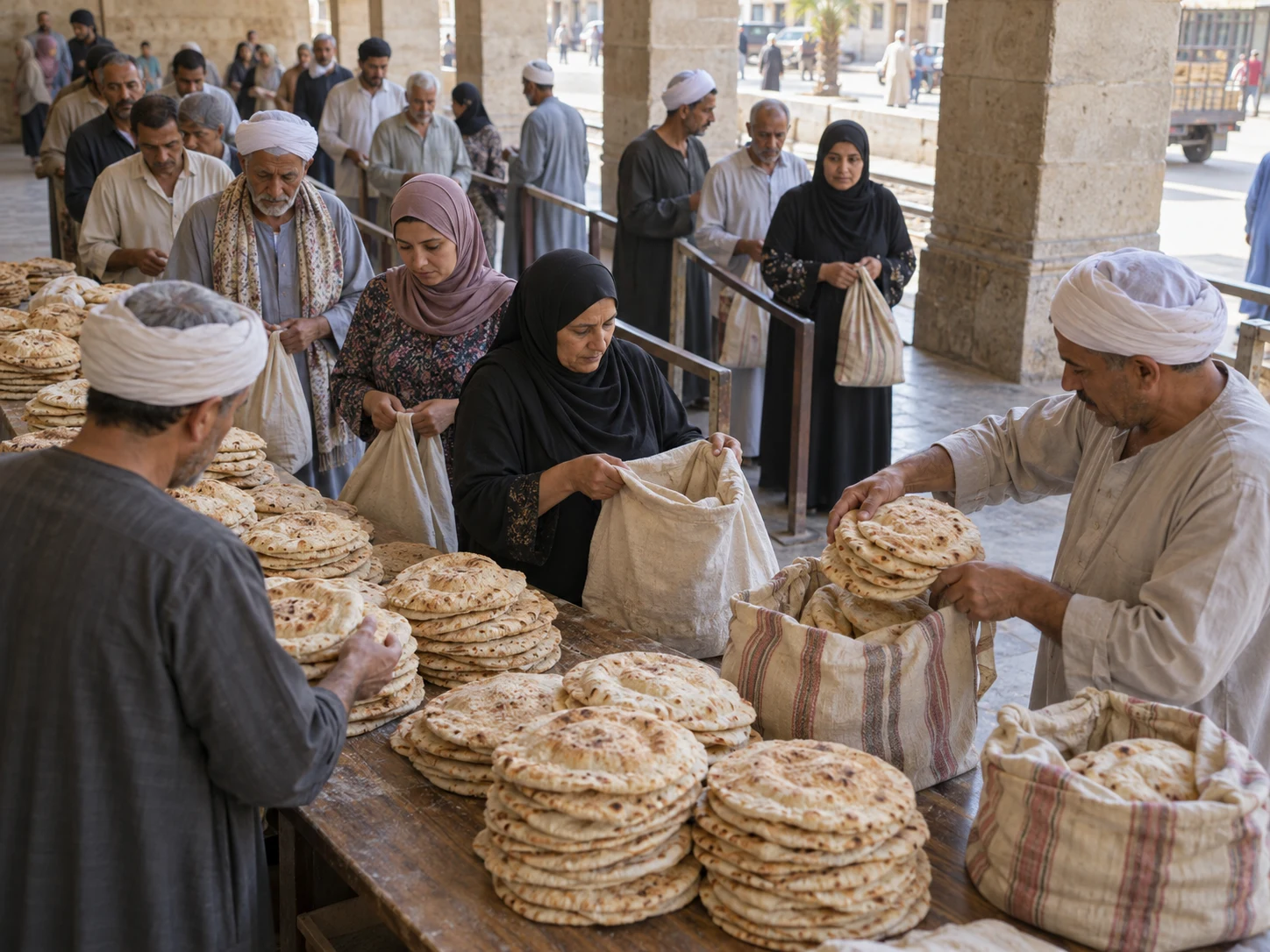
Egyptian baladi bread is both a round flatbread and a staple at the centre of the country's food-subsidy system. At licensed bakeries, eligible households can buy it at a heavily subsidized price using a ration card. Field research in Cairo records residents in poorer neighbourhoods queueing for long periods to collect their bread.
A bakery can produce only so much at once, and purchases must be processed before loaves are handed over in turn. What waits at the front is not a luxury but part of that day's table. Some customers buy for a household; others collect bread for neighbours as well.
Each fresh batch moves the line a little. A subsidy designed at national scale ends in a street-corner exchange, with ordinary bread passed from counter to customer one person at a time.