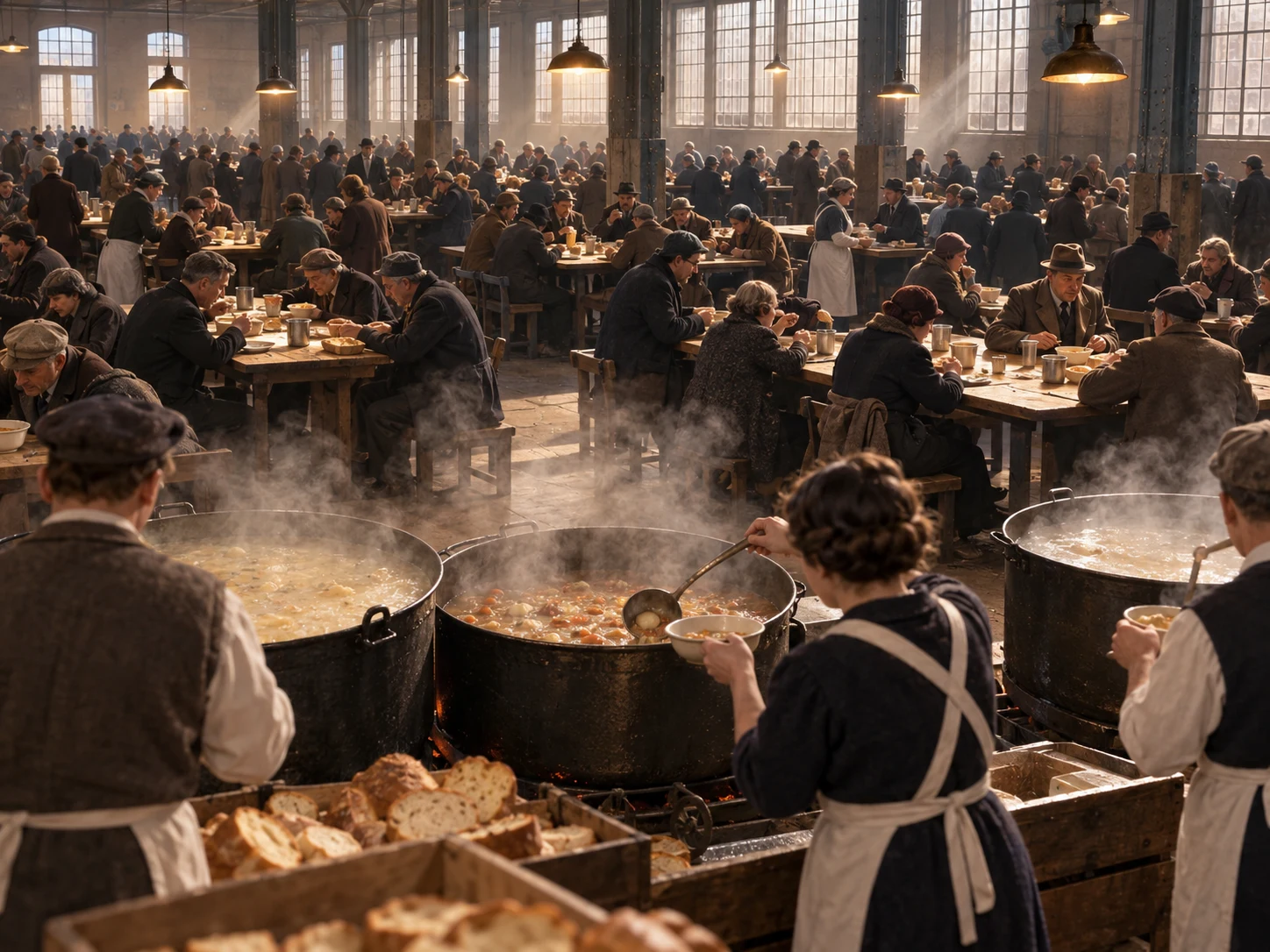
On 4 November 1930, unemployed men queued on Wacker Drive in Chicago for soup and bread. A photograph preserved by the Library of Congress records the place, date, people waiting and the food they hoped to receive. The vast abstraction of the Great Depression appeared on the street as a turn for a bowl of soup and a piece of bread.
The photograph does not establish the line’s full length or each man’s waiting time. It does show men facing the same direction and taking their place, evidence that unemployment changed not only income but the organisation of a day. To eat, a person had to reach the distribution point and remain there until his turn came.
A free meal could ease hunger, but it could not remove the time required to receive it. This queue shows how an economic crisis is written into pavements and human hours before it becomes a historical statistic.