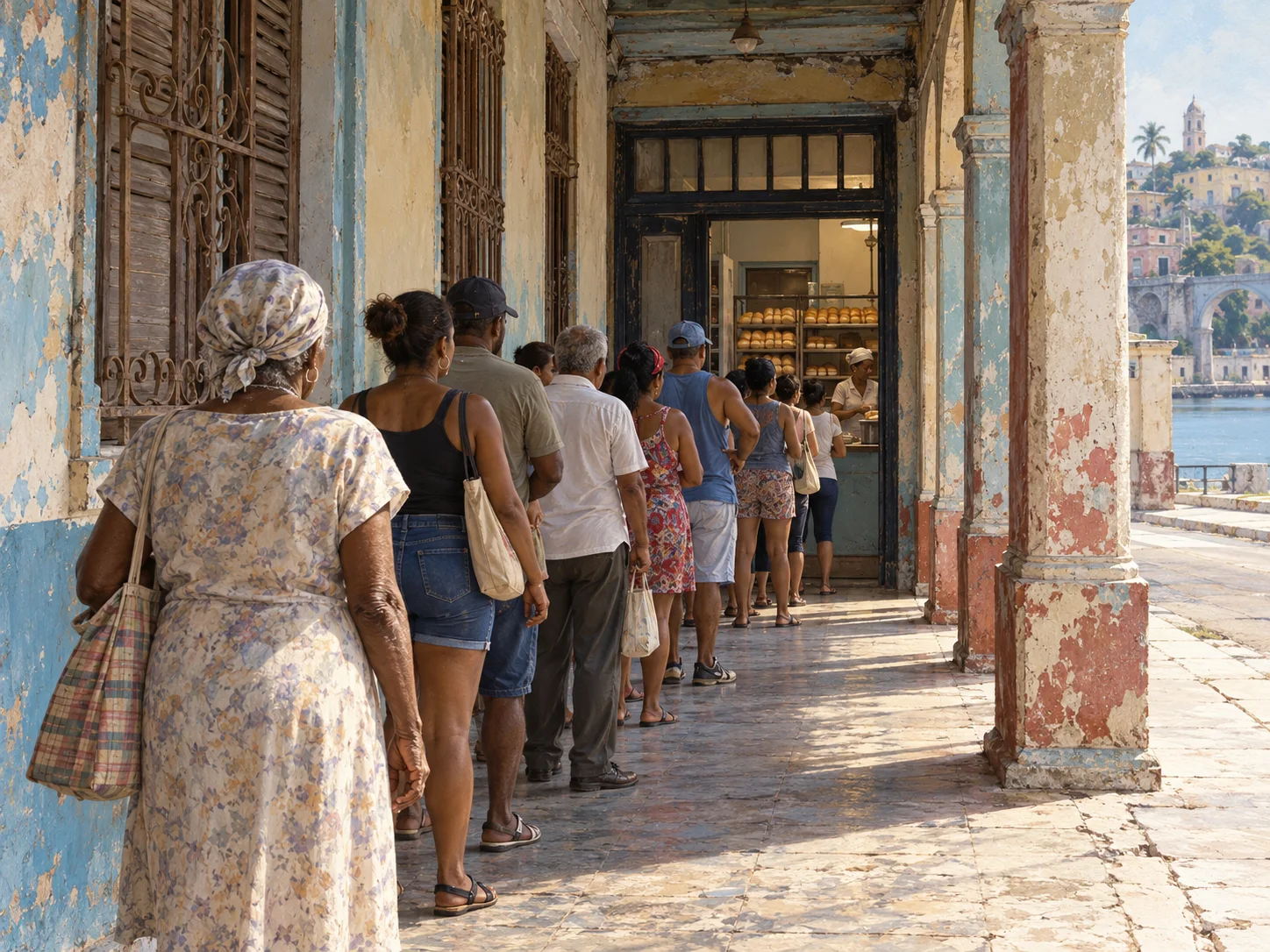
In July 2026, a pensioner in Matanzas, Cuba, felt relief when she turned a corner and saw a line outside the bakery in the Versailles neighbourhood. The queue warned of a wait, but it also provided the clearest sign that bread might still be available. Street vendors charged 200 pesos per loaf, beyond what she could routinely afford on a pension. The state bakery’s delivery time and quantity were uncertain.
Joining the back did not guarantee a purchase. Even so, residents inferred stock from the presence of other customers. Information normally supplied by shelves, prices or delivery notices was carried by the queue itself. Waiting order became an improvised public sign announcing that some bread might remain.