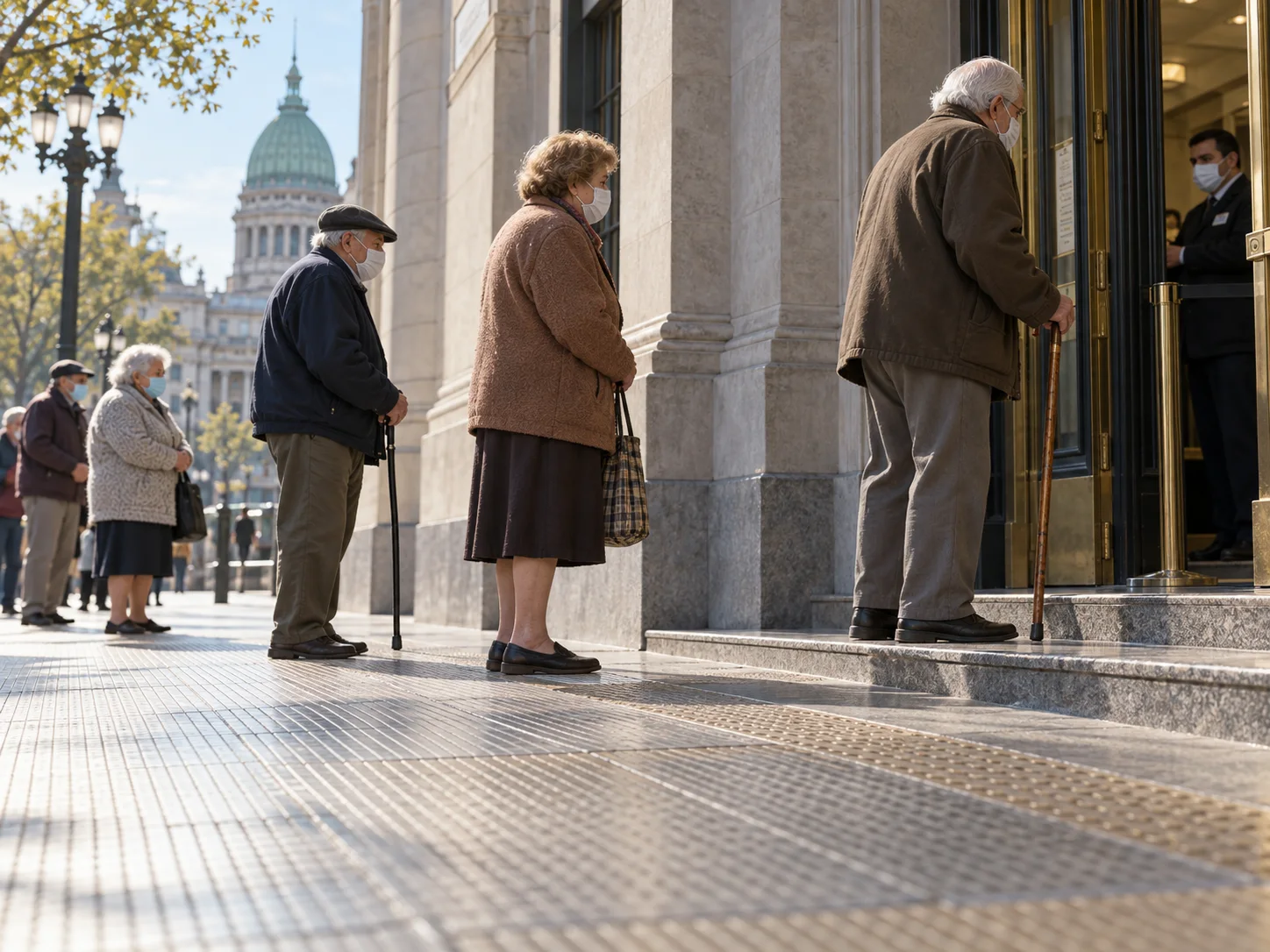
When Argentine banks reopened, pensioners without cards converged on counters.
Banks had been closed as part of the lockdown, but some recipients lacked debit cards and needed to verify their identity by fingerprint at a counter. One pensioner with a chronic respiratory illness explained that he should not have been in the crowd, yet needed the payment to buy medicine.
Those most in need of protection had to leave home for cash to buy medicine and food.
On 3 April 2020, Argentine banks reopened their counters for pension and benefit payments, and long lines of older people formed early in the morning. Reuters footage showed customers with canes and walkers, a woman waiting on a chair, and masked pensioners outside branches.
When staying home and collecting living expenses cannot both be achieved, the system leaves an individual with a dangerous choice. The people outside the banks were not casually ignoring public-health advice. Another necessity had pushed them there. The crowd demonstrated how emergency safety could differ according to something as ordinary as the way a person was able to receive money.
Emergency safety depended on the payment design inherited from ordinary times.
Reuters recorded pensioners queueing outside banks in La Matanza on 3 April 2020. One man with chronic lung disease said he lacked a debit card and needed fingerprint verification to collect money for medicine. The people most strongly advised to stay home were among those compelled to reach the counter.