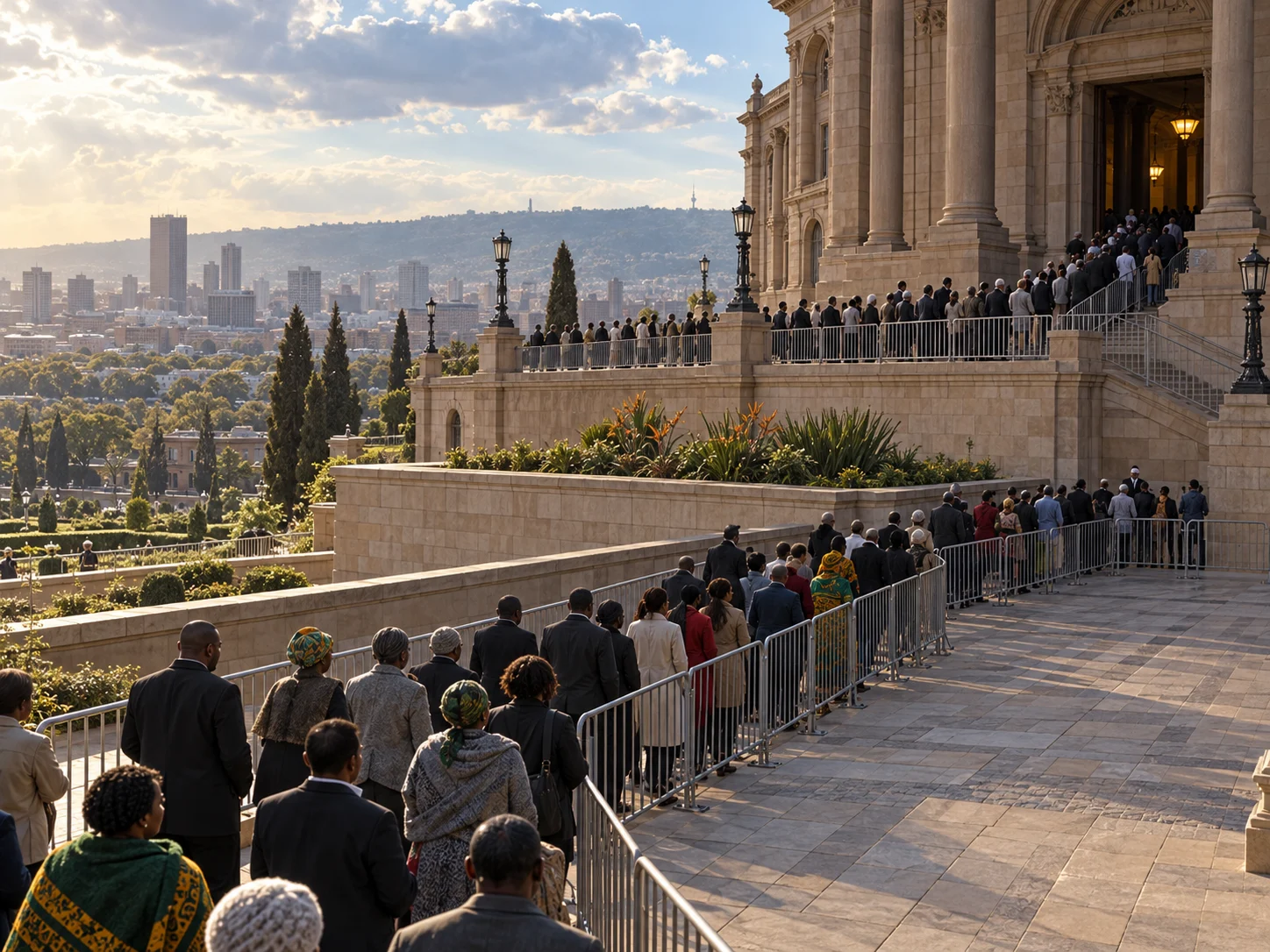
In Pretoria on 12 December 2013, saying goodbye to Nelson Mandela involved more than one line. Mourners first waited at park-and-ride sites for buses to the Union Buildings. Once they arrived, another queue led towards the place where his body lay in state. South Africa’s government news service, SAnews, reported long lines at several transport points in Tshwane and tens of thousands of people still waiting. The farewell was organised not as a single queue at a door but as a sequence of queues spread across the city.
The destination carried its own history. Mandela had been inaugurated at the Union Buildings in 1994, becoming South Africa’s first Black president after the country’s first democratic national election open to all races. Now the building offered a brief opportunity to pay respects before his burial. Military personnel guarded the coffin. Visitors were guided past by security officers and were not permitted to take photographs. A Reuters photograph dated 11 December records people waiting outside the government buildings.
SAnews observed that the long lines called to mind the queues of the 1994 election. The resemblance is striking, but the purposes were not the same. In one line, citizens waited to help decide what their country might become; in the other, mourners waited to acknowledge a person associated with that transformation. There was no single way to grieve, and the heat, transport arrangements and hours of waiting were real hardships rather than picturesque accessories to a national tribute. What those people shared was not necessarily one emotion, but a narrow window in which to reach the same place and say goodbye.
The two queues moved the same mourners through different bottlenecks: first transport to the Union Buildings, then the brief passage past the coffin. A farewell on this scale depended on order across both the city and the building.