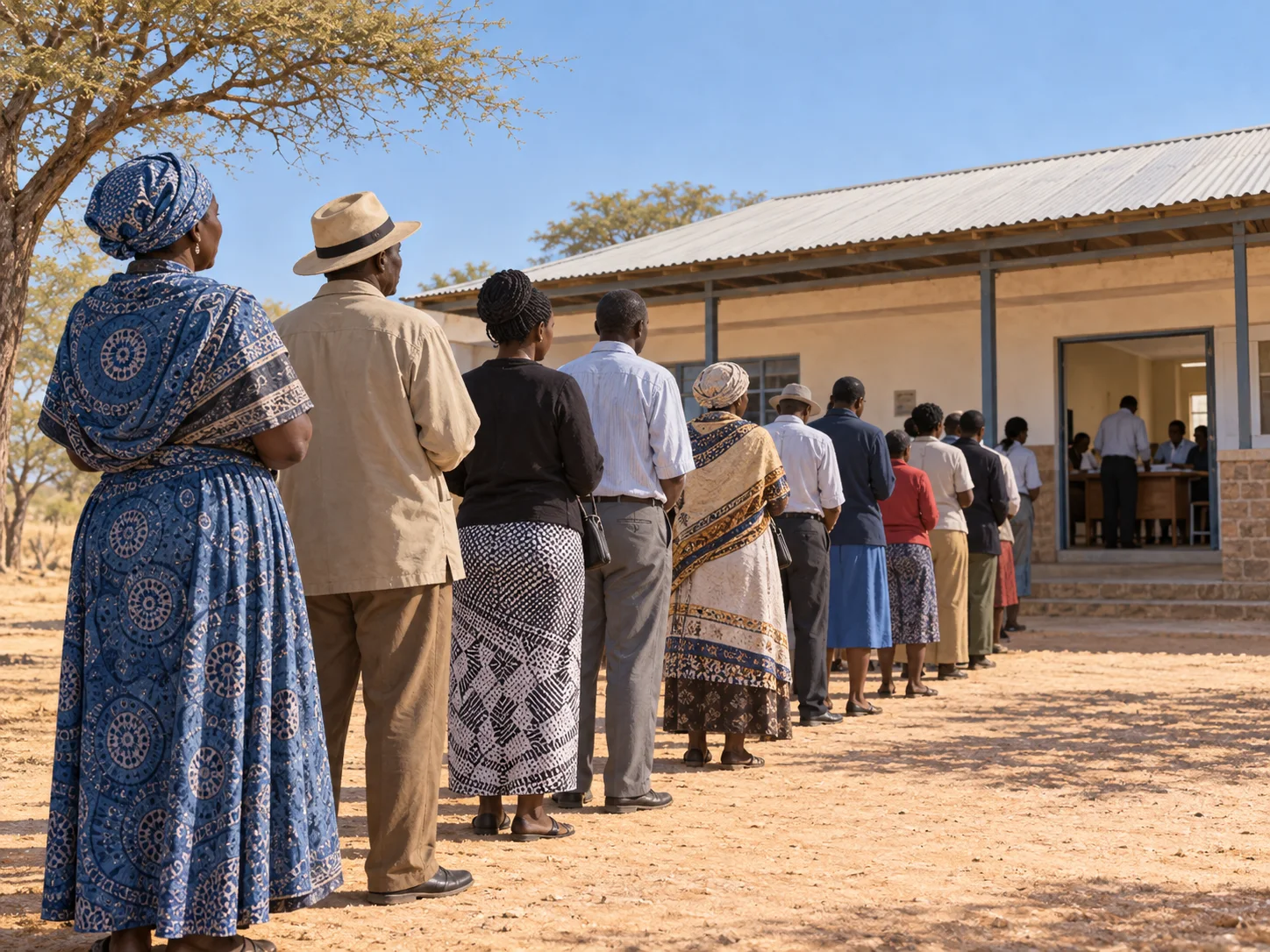
Hours before polling stations opened on 23 October 2019, voters in Botswana were already forming an order. Botswana Daily News recorded hundreds waiting early at some locations. The Independent Electoral Commission's official report states that 2,260 polling stations operated from 6:30 a.m. to 7 p.m. Registration checks, ballot issue, marking and deposit had to occur in sequence. The queue was therefore more than an image of enthusiasm: it was the mechanism that allowed large numbers of people to be processed without weakening the rule of one person, one vote.
Election observers also noted the practical challenge created when several streams of voters formed at the same site. Arriving early did not by itself guarantee clarity; people needed to know which line led to which procedure. That detail is the distinctive lesson of Botswana's polling queues. A calm election still depends on visible, carefully managed order. The people outside the doors did not necessarily share a political preference. They shared a temporary procedure in which sharply different choices were converted, one voter at a time, into counted ballots.
For administrators, one long line may be easier than several confusing streams leading to different registers or desks. Observers recorded queue control as an issue because election performance cannot be measured by waiting time alone. A voter also had to reach the correct checkpoint without losing a place or being redirected too late.