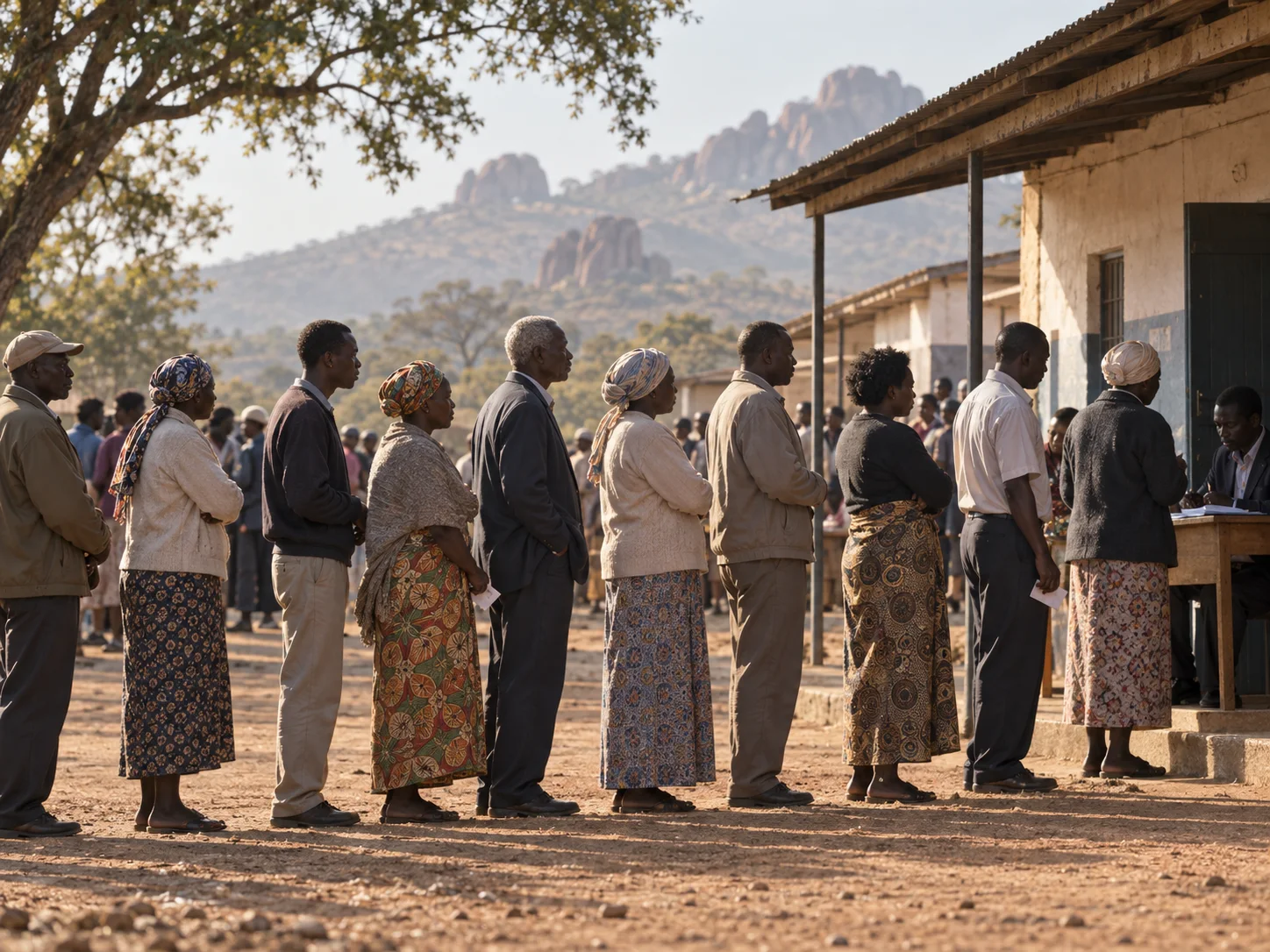
On 29 March 2008, roughly 300 voters were waiting at Courteney Selous School in Harare before Zimbabwe's presidential and parliamentary polls opened. ABC reported that some had arrived more than three hours early. The election pitted long-serving president Robert Mugabe against Morgan Tsvangirai and other challengers, while voters were living through severe inflation and political tension. Waiting to receive a ballot was inseparable from that larger crisis.
It is misleading, however, to turn the queue into a simple prophecy about the result. At that moment, the winner, the delayed count and the violence surrounding the later runoff were still unknown. What the voters could see was the immediate sequence: identity and register checks, the issue of several ballot papers, and admission to a private vote. Arriving three hours early expressed commitment, but it also transferred the risk of administrative delay onto the voter's own time. At this polling place, democracy appeared less as an abstraction than as a decision to reach a school before dawn so that one's place in the procedure would not disappear.
The 2008 ballot combined presidential, parliamentary and local choices, making the procedure more demanding than a single contest. In an economic crisis, three hours spent waiting also competed with time for work or finding food. Before these voters became a turnout statistic, they personally absorbed the everyday cost of participation.