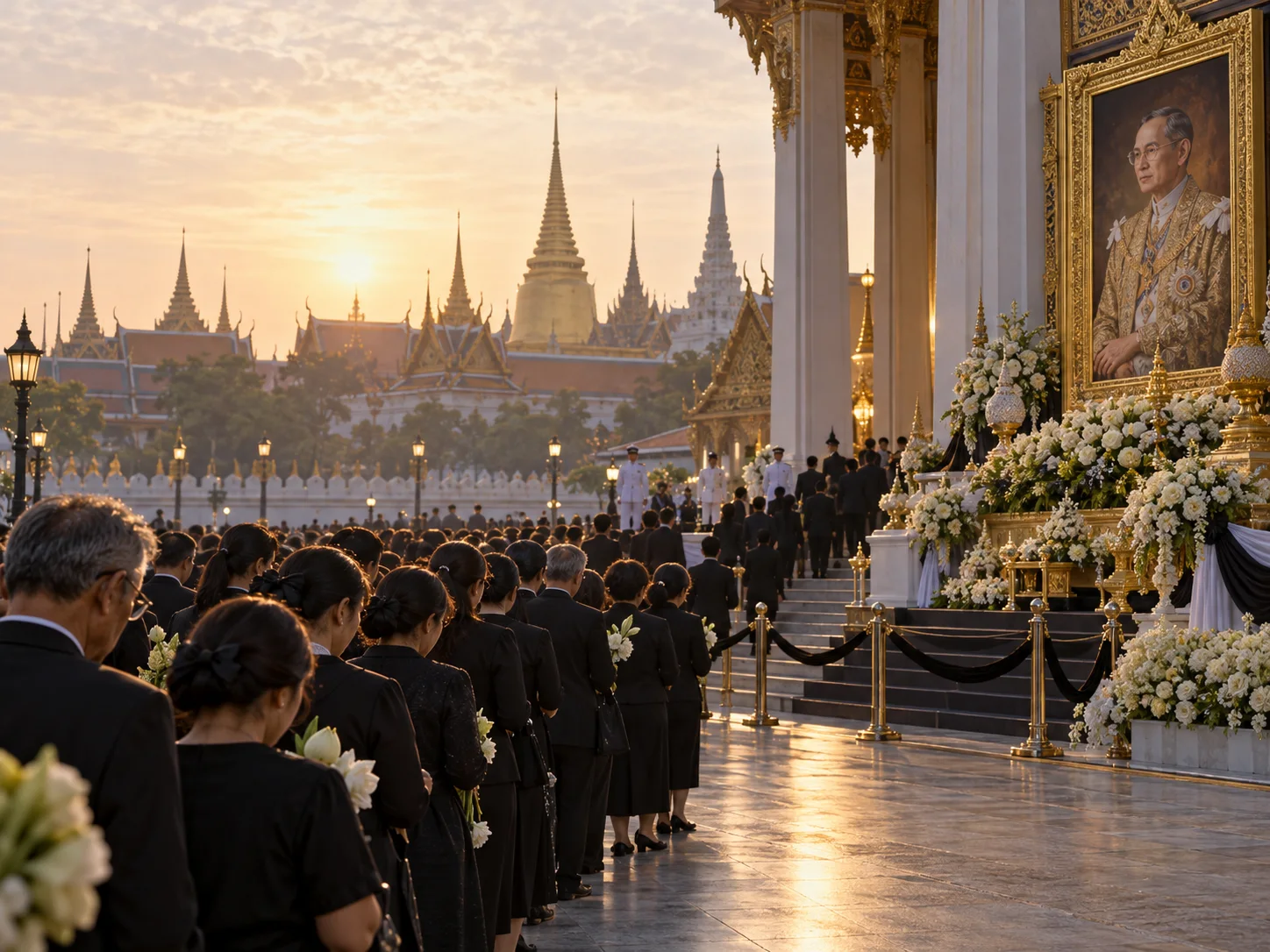
On 14 October 2016, as King Bhumibol’s body was transferred from Siriraj Hospital to the Grand Palace, black-clad mourners lined the route through Bangkok. Thai official material reported crowds numbering in the hundreds of thousands along the procession. The Tourism Authority also published dates, access information and free bus arrangements for people going to the palace and Sanam Luang. Public mourning was both a spontaneous gathering and an operation requiring transport and admission planning.
Bhumibol had reigned for seventy years, making him the only monarch many citizens had known. Thailand’s political and legal relationship with the monarchy is complex, however, and it would be wrong to assign one emotion to everyone present. What the sources securely establish is a route, managed access points and people occupying long sections of street to witness the body’s passage.
Those entering the palace, those waiting on the roadside for a momentary view, and those going to sign condolence books were not all in the same queue. Treating the entire commemoration as a single line would erase those distinctions. The king’s procession passed once; the acts of waiting were distributed across a city and organised through several different gates.