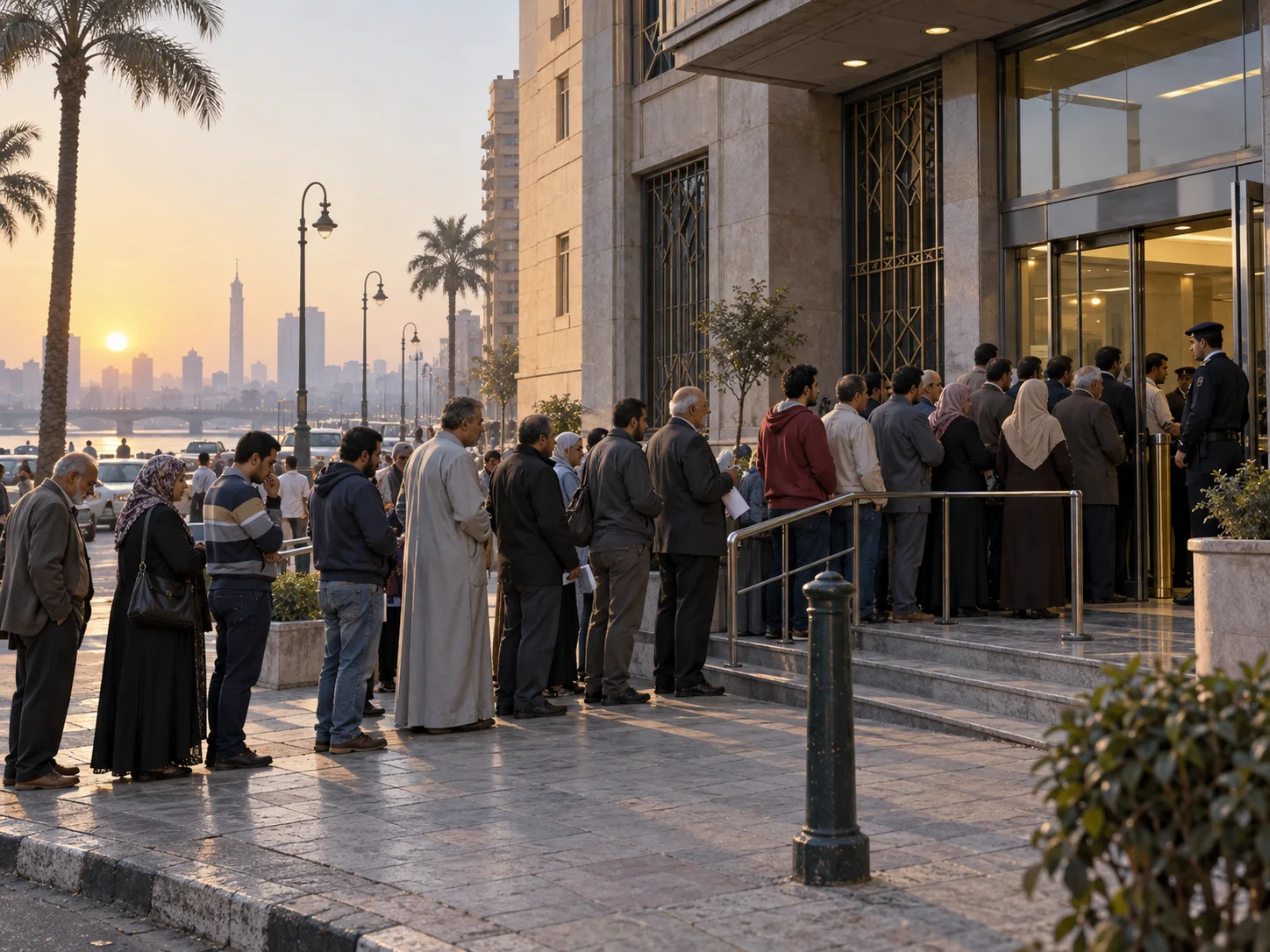
On 3 November 2016, the day Egypt's central bank allowed the pound to float, people seeking foreign currency formed a line at Banque Misr in Cairo. A contemporary Voice of America report records 22-year-old student Mohamed Farahat standing in that line and saying that the dollar rate had changed four times since he arrived at the bank.
Egypt had long maintained a gap between the official exchange rate and the black-market price, making dollars a scarce resource tied to imports, travel and savings. The policy shift sent the rate moving sharply within a single day. By the time a customer's turn came, the terms of the transaction could already be different. This was a queue not only for currency, but for the hope that the same deal would still exist at the counter.