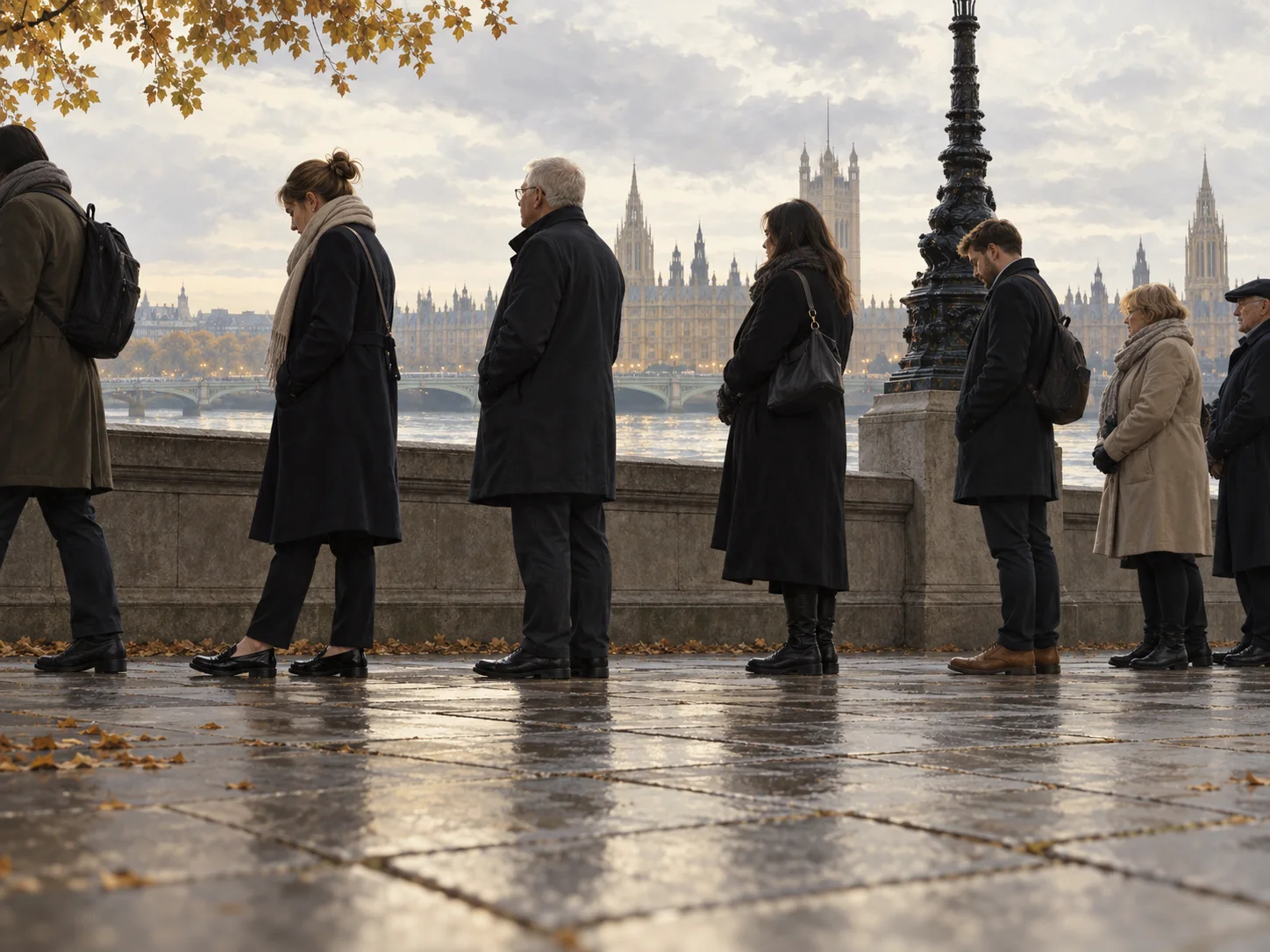
When Queen Elizabeth II lay in state at Westminster Hall in September 2022, the line of mourners extended along the south bank of the Thames. The British government did more than tell people to queue. It published a route map from Southwark Park to the Palace of Westminster and, when the line reached its final capacity, closed it to new entrants. Public viewing continued around the clock until 6:30 a.m. on 19 September, but twenty-four-hour opening did not mean unlimited admission.
Mourners received wristbands and passed through security and baggage controls before entering the hall. Pavements, parks and bridges normally used for travel became infrastructure for translating national mourning into an orderly sequence. Official guidance about food, clothing, overnight cold and long periods of standing and walking shows that the queue was not incidental to the ceremony. It was a large operation in its own right.
Waiting times changed by day and hour, so no single figure describes every visitor. Yet “The Queue” became a name people understood because the line itself was experienced as an event. Each mourner ultimately received only a brief moment before the coffin. That moment depended on a route across London and a system designed to admit the next person quietly.