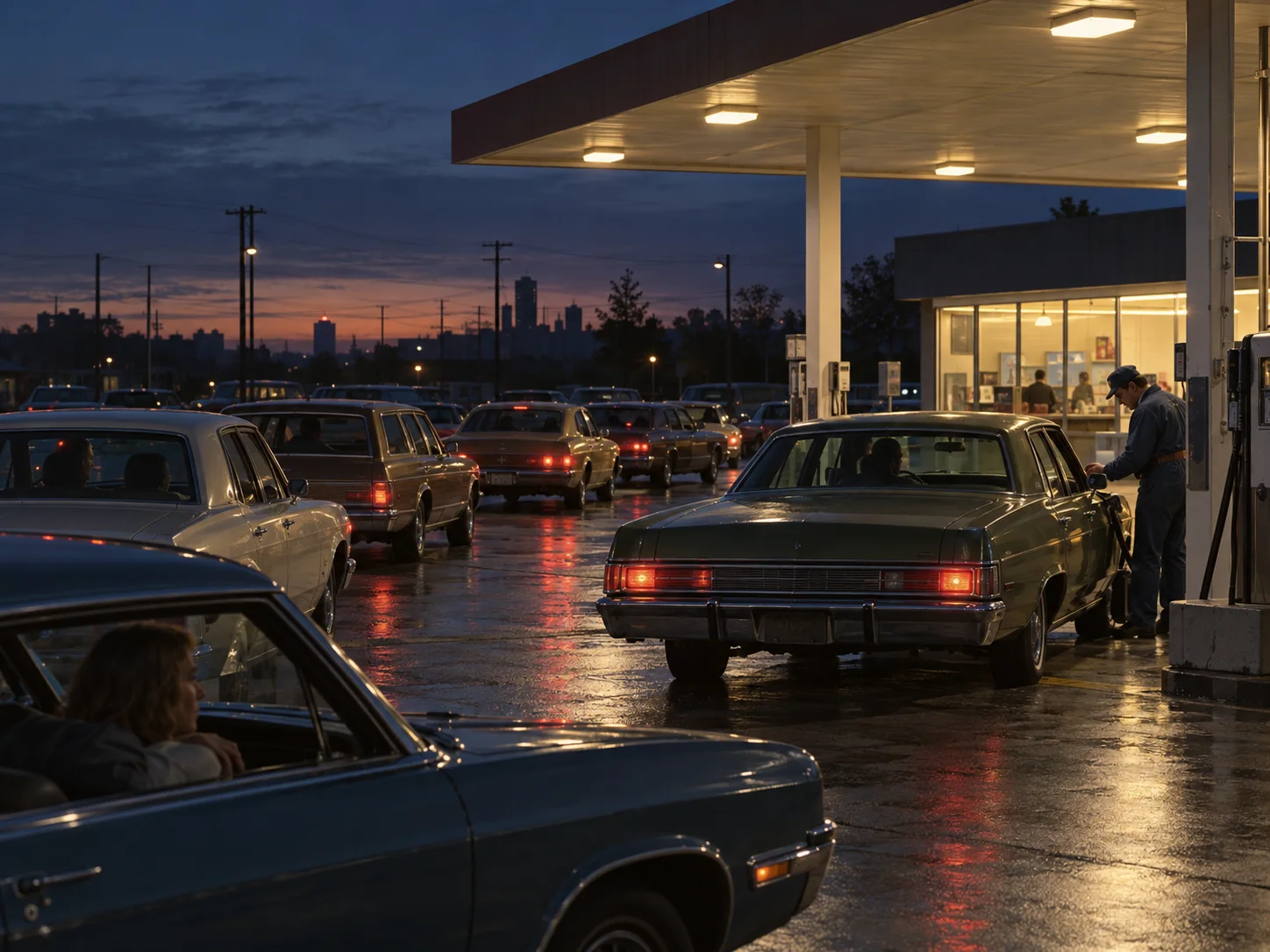
In late 1973 and early 1974, lines outside American filling stations were more than a response to higher prices. The Arab oil embargo made supplies uncertain, sending drivers toward stations that were still open and sometimes pushing queues into ordinary traffic. The Smithsonian's National Postal Museum records long gasoline lines and notes that some stations could not obtain fuel themselves. A society built around the car had produced a peculiar contradiction: drivers burned gasoline while waiting to buy gasoline.
Several states tried to restore order by assigning purchase days according to the final digit of a license plate. New Jersey paired odd-even rules with other controls: stations could refuse cars whose tanks were at least half full, and colored flags signaled whether gasoline was available. The queue was no longer governed by arrival alone. Plate number, calendar date and fuel level became gates to the pump.
The federal government prepared for a nationwide system by printing almost five billion ration coupons. They were never used. The embargo ended in March 1974 before national rationing became necessary, leaving behind sheets of carefully designed paper for a crisis that had already been experienced in hours on the road.
The most revealing object in this story is not the coupon but the license plate. Normally it identified a vehicle. During odd-even rationing, it also decided whether that vehicle could purchase fuel that day. A driver could possess a car, a road and money, yet still lack permission to move to the front of the line.