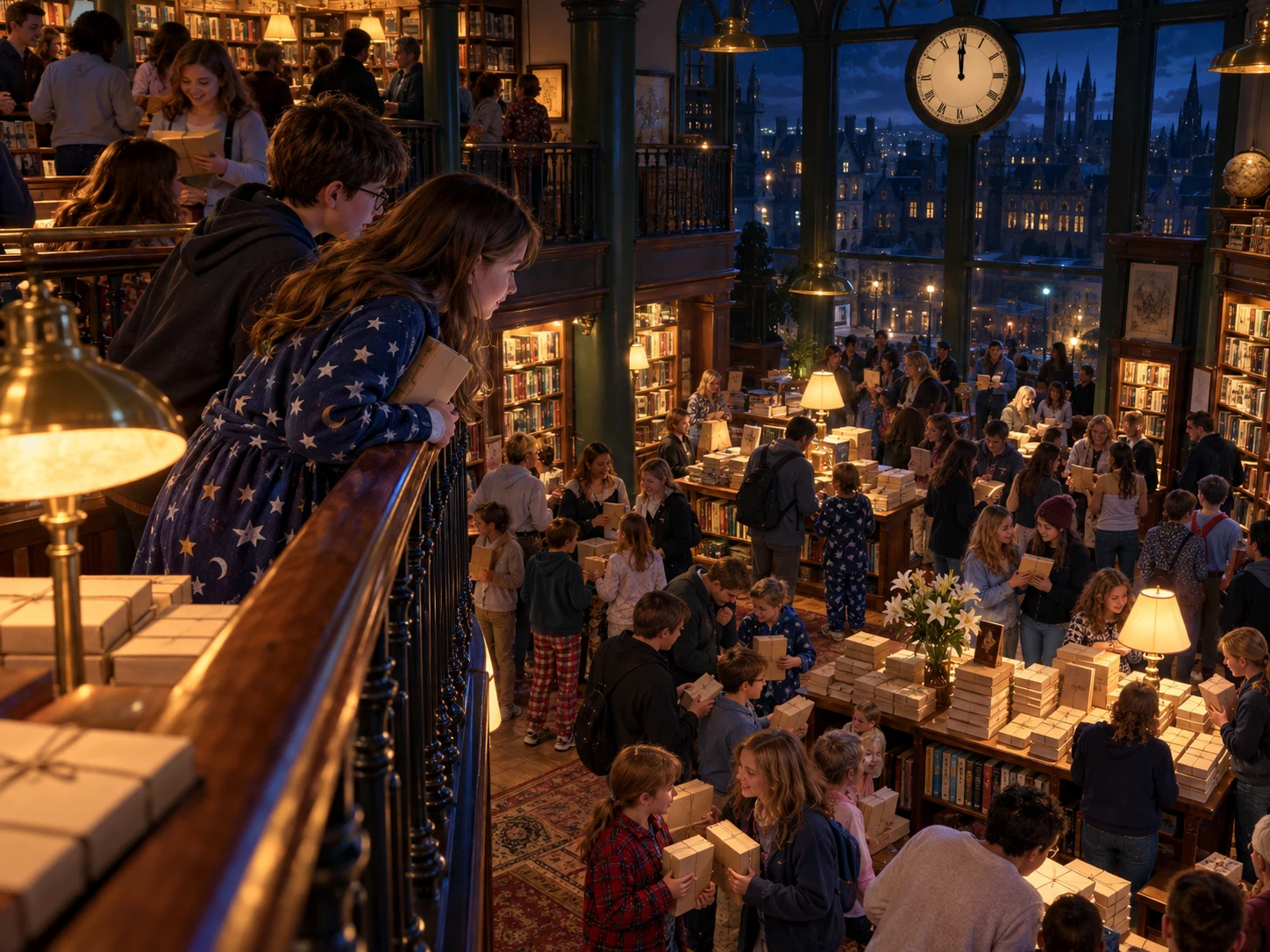
On the night of 7 July 2000, people began lining up at about 10 p.m. outside a Barnes & Noble on Manhattan’s Upper West Side. Salon reported that nearly 350 were in line by midnight, when Harry Potter and the Goblet of Fire went on sale. Reuters likewise described fans waiting for hours in Britain and the United States. The fourth volume turned the purchase of a children’s book into a coordinated late-night event.
Scarcity was not the whole explanation. Advance information had been tightly controlled and the release time synchronised, so even readers with reserved copies were waiting for the moment when they could begin. Bookshops used costumes, decorations and activities to turn the hours before the tills opened into an entrance to the fictional world. Reported first-day British sales of 372,775 copies also helped establish the language of an opening weekend for publishing.
Midnight launches became routine for later volumes, but the fourth book was an early moment when the format became visible on an international scale. Readers shared ignorance of the ending until the same clock time, then dispersed into separate acts of reading. The line of nearly 350 people was protecting more than access to stock. It was preserving a common starting time for a story.