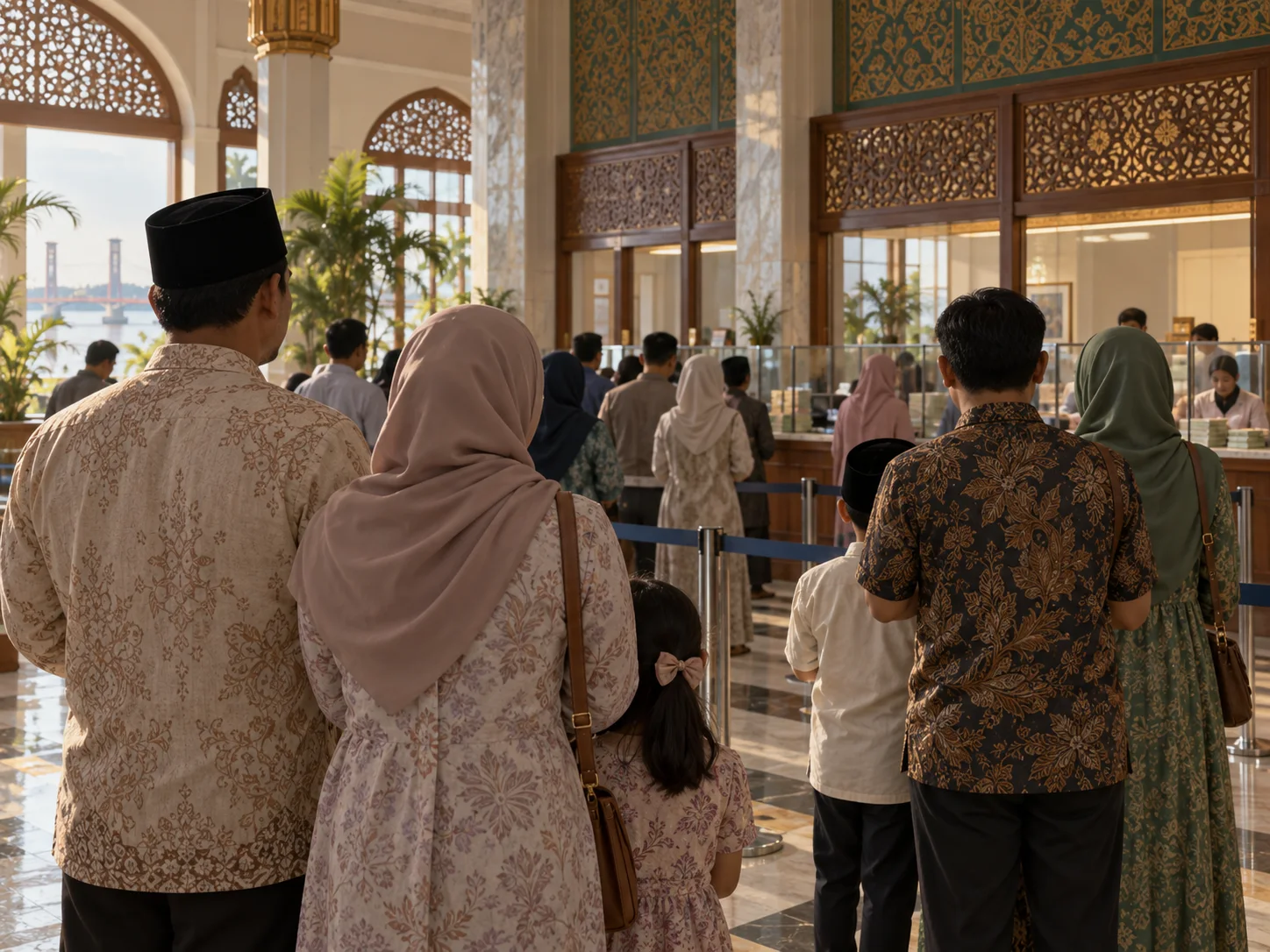
On 21 March 2024, dozens of people were already waiting at Palimo Market in Palembang, on the Indonesian island of Sumatra, roughly two hours before Bank Indonesia's mobile cash-exchange vehicle arrived. The local newspaper Kompas recorded the scene: the service began at around nine in the morning, and people observing the Ramadan fast stood in the heat for their turn. They were not collecting interest or trying to increase their wealth. They wanted to exchange rupiah for clean, fresh notes, often in smaller denominations, of exactly the same monetary value.
The explanation lies in Idulfitri, widely called Lebaran in Indonesia. At the end of Ramadan, families commonly give money to children and relatives. A crisp banknote can help make that gift feel like an occasion. An old 5,000-rupiah note and a fresh one buy the same amount, but they do not necessarily feel identical when an envelope is opened. The exchange is not about changing the number printed on the paper. It is about preparing the moment when the paper changes hands.