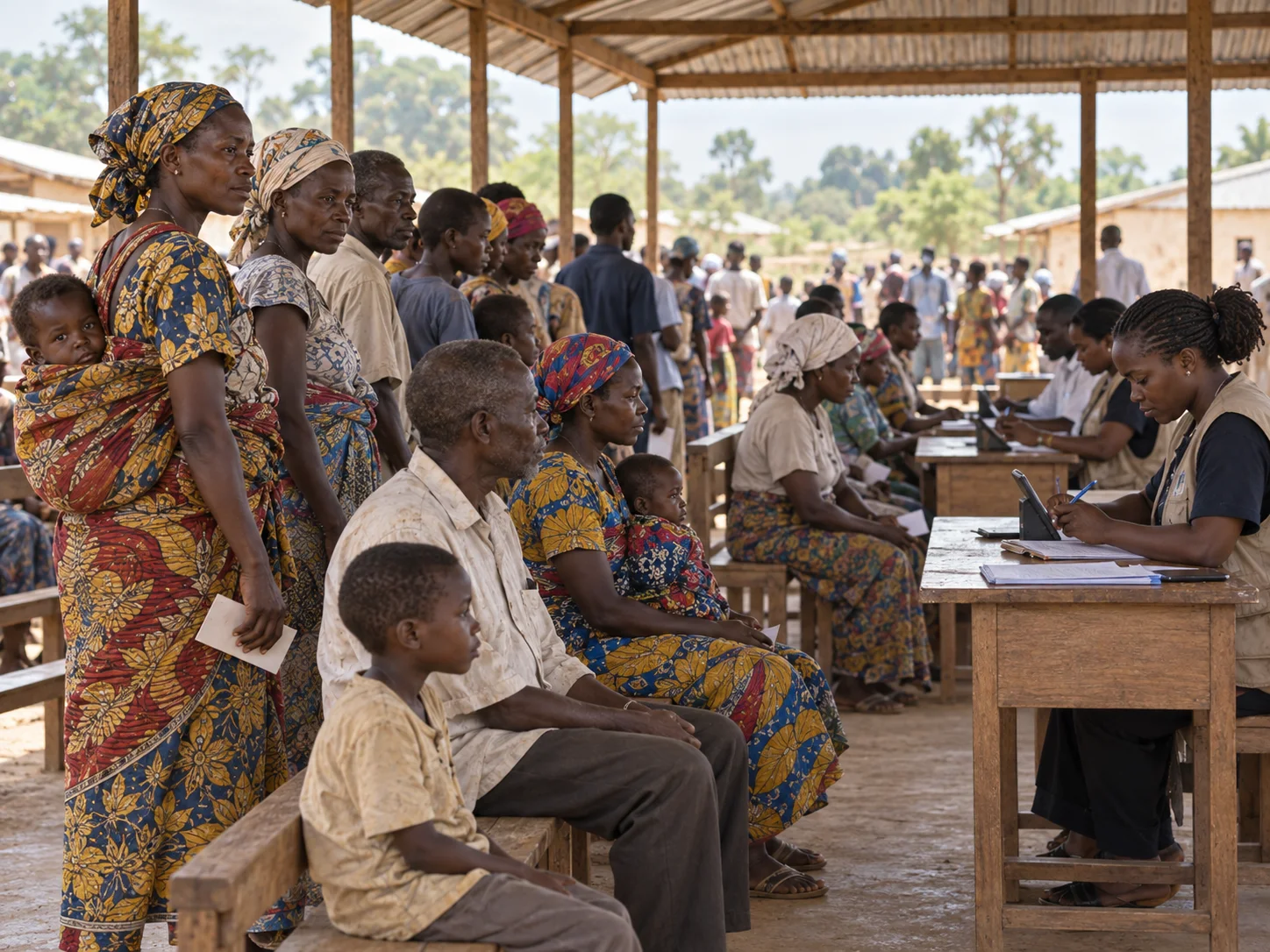
In October 2018, displaced people and returnees queued at a cash-distribution centre operated by UNHCR and partner agencies in Luiza Territory, in the Democratic Republic of the Congo's Kasai region. UNHCR's caption directly records the line, while the accompanying release says the large-scale distribution reached more than 17,600 people. Eighty-three per cent of the beneficiaries were women in an area badly affected by the violence of 2017.
Cash differs from a distribution of predetermined goods because a household can decide whether food, transport, shelter or another need comes first. Yet a programme intended to return choice still requires a physical point for identity checks and an ordered payment process. This queue should not be romanticized as recovery. It was an administrative entrance through which people whose livelihoods had been damaged by violence regained a limited measure of control.