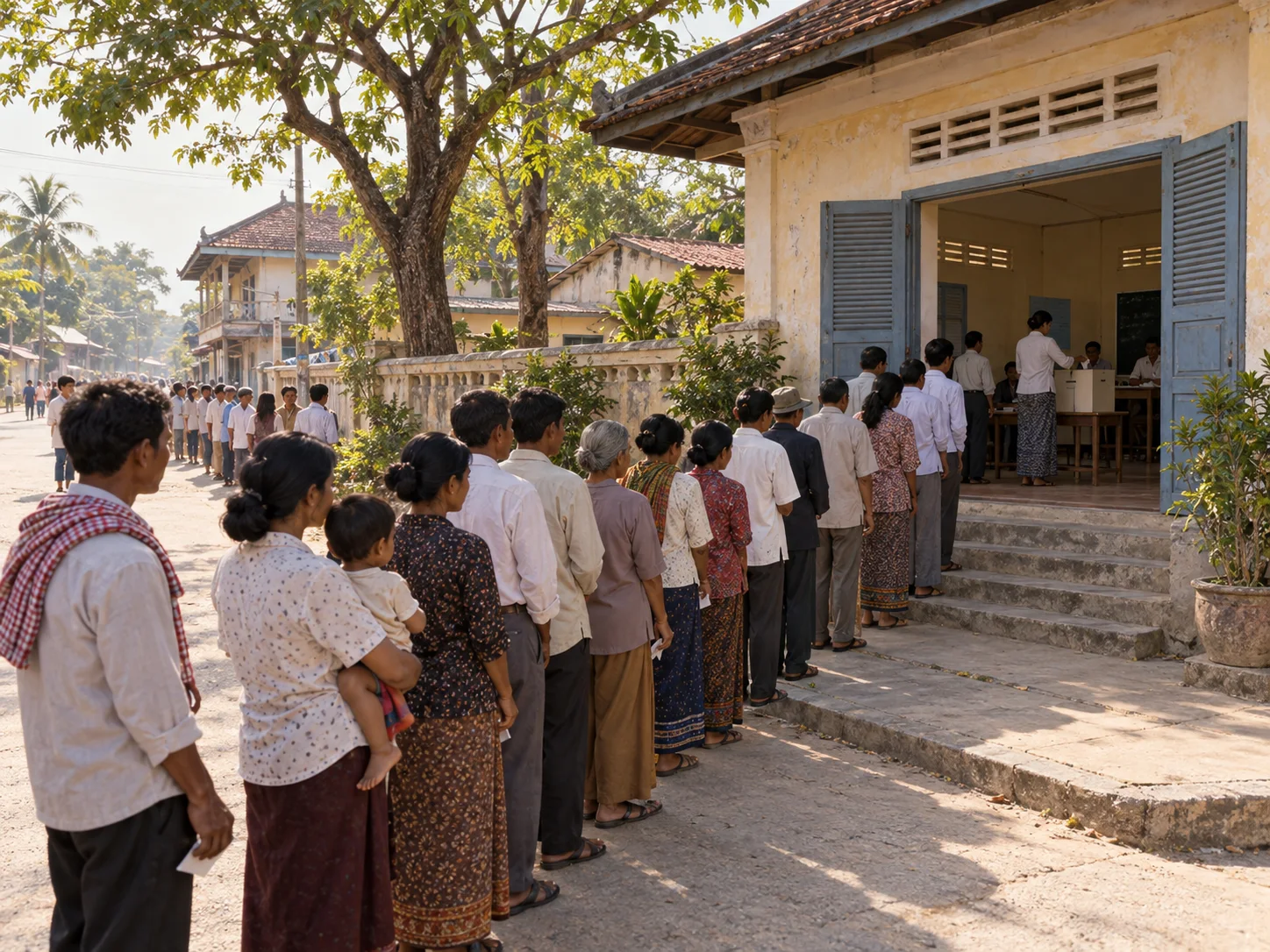
In May 1993, when the United Nations Transitional Authority organised Cambodia's election, long lines formed from early morning at Phnom Penh's Olympic Stadium and across the country. About 2.2 million people—46 percent of registered voters—cast ballots on the first day.
What distinguishes these queues is that they operated amid threats of violence and disruption, while the UN used identity cards and indelible markers to prevent multiple voting. Waiting itself became part of the collective work required to make a secret ballot function after prolonged conflict.