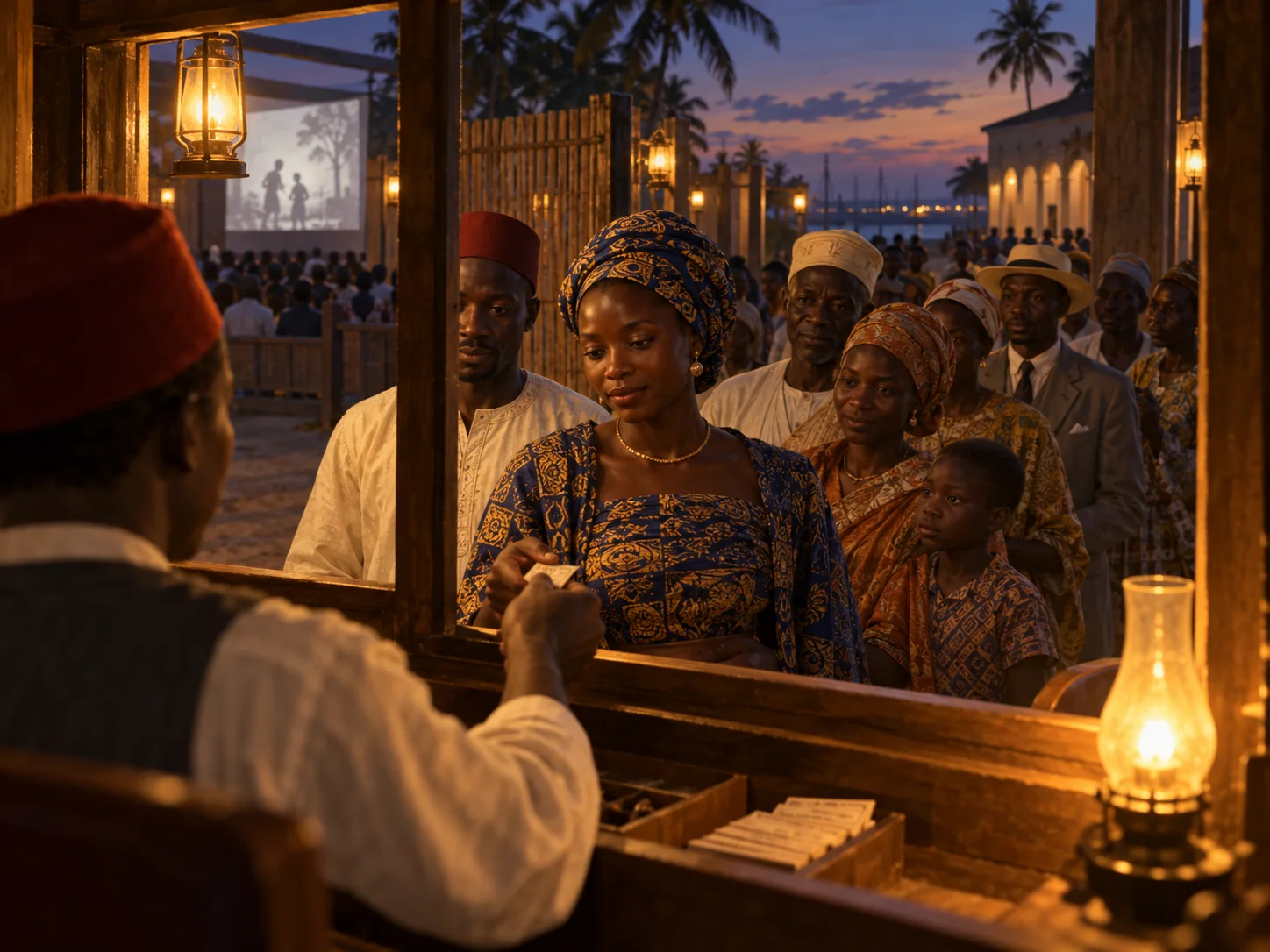
In Bamako in 1937, people gathered before the large gates of a new cinema and waited to be admitted to the place where tickets were sold. A contemporary account discussed by cinema historian Odile Goerg describes a lively waiting space: people talked and shouted, while hawkers offered sweets, cigarettes, matches, dates, kola nuts, and lemonade. When the ticket seller finally called out, the social life outside the gate shifted into the formal process of admission.
The queue was not simply an innocent picture of people awaiting a new entertainment. Cinemas in colonial West African cities used ticket classes, separate entrances, and seating arrangements that intersected with distinctions among Europeans, African elites, and the wider African public. At the Empire Cinema in Freetown, spectators rushed toward the better seats when the doors opened. People could therefore share anticipation at the same gate without being directed to the same place inside.
This is what makes the cinema queue historically distinctive. Film gathered a broad urban public around a modern mass spectacle, and the vendors outside turned waiting into a temporary street economy. Yet the admission system then sorted that public through prices, entrances, checks, and seats. The line was both a common space of expectation and the threshold of an unequal colonial interior. It shows how a seemingly ordinary wait for entertainment could briefly mix a city at the gates while reproducing its divisions beyond them.