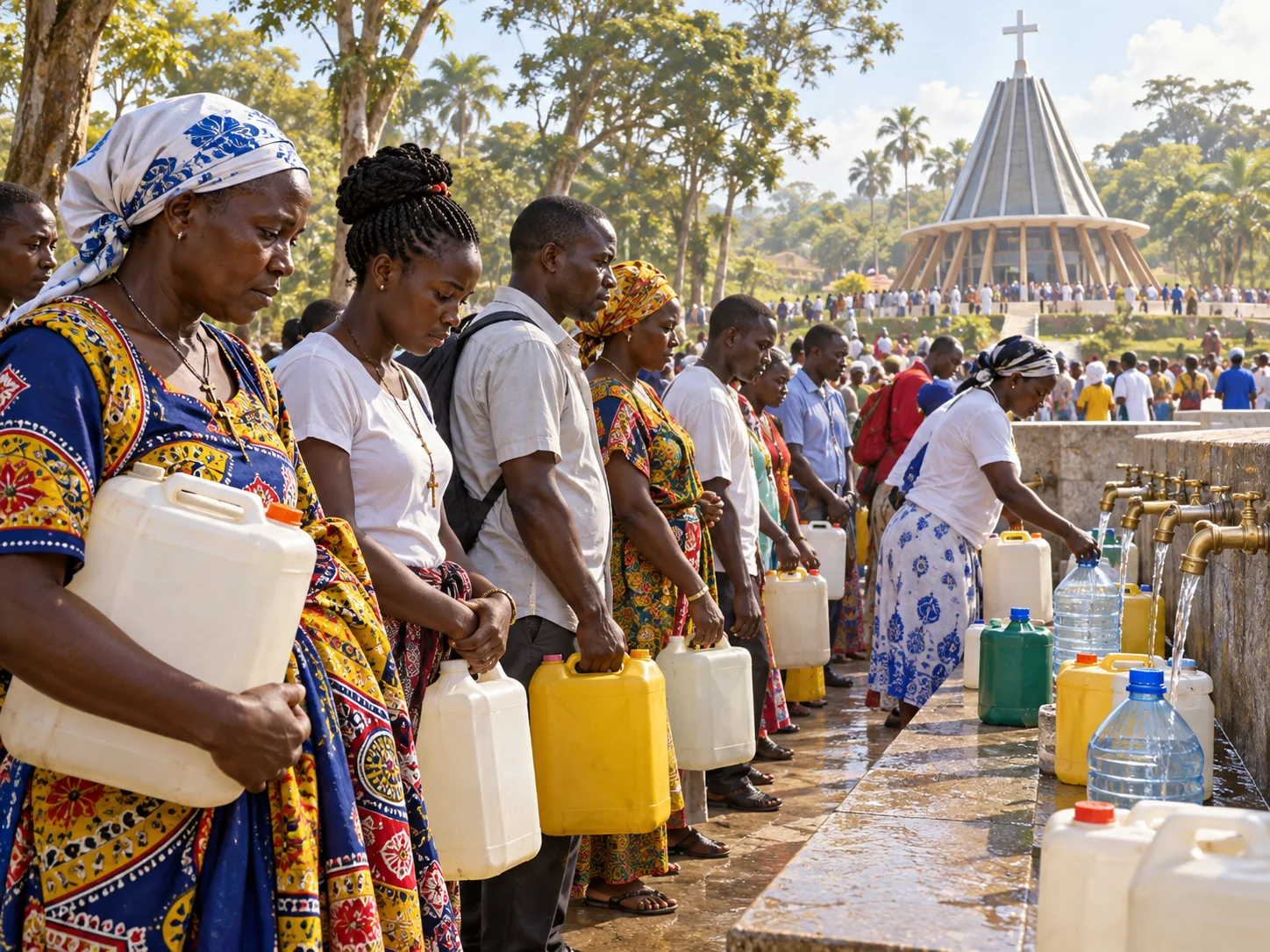
Ahead of Uganda Martyrs Day in June 2018, pilgrims queued for “holy water” at the Namugongo shrines. The Observer’s photograph caption documents the line directly. Some visitors believed water from the Catholic shrine’s artificial lake and Anglican spring could heal illness, protect against evil or carry blessings. Health officials, however, warned against drinking it untreated because contamination could cause diarrhoea, dysentery or cholera, and advised boiling or purification. More than four million pilgrims were expected, while medical teams treated illnesses among arrivals. Churches later tried purification and bottling, but many worshippers still preferred to draw water themselves at the sacred site. The queue was therefore not simply for a chemically defined resource. People valued water whose connection to place had been preserved, creating a tension between sanitary safety and religious meaning at the collection point.
Uganda · 2019-05-21
The Queue for Holy Water—and the Warning Not to Drink It