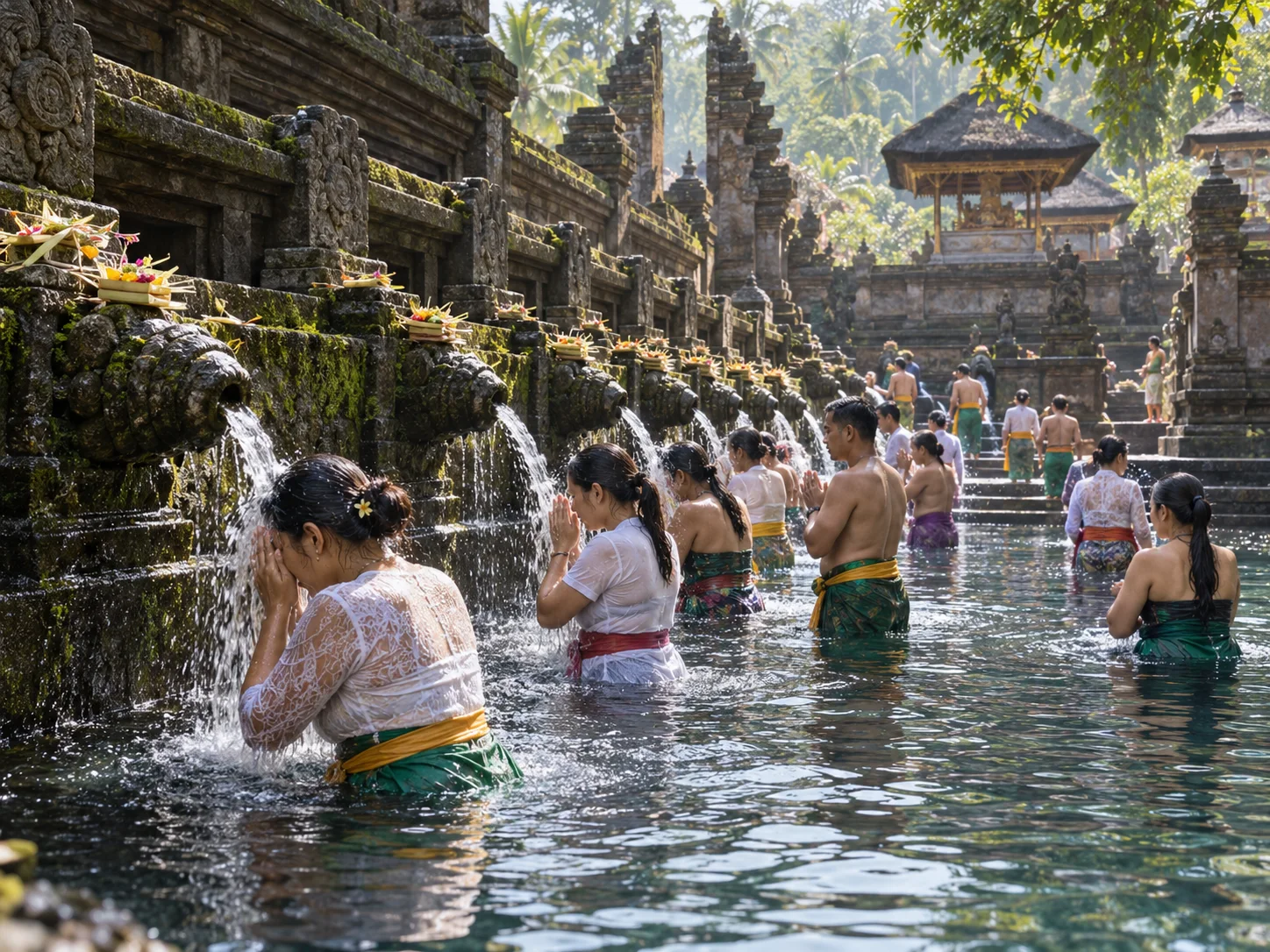
At Tirta Empul temple in Bali, visitors queue while standing in the purification pools. A 2016 Indonesian report explicitly described long lines during religious ceremonies and captioned a photograph as a queue of visitors in the bathing pool. They were not waiting merely to enter the site. They were waiting to step beneath sacred-water spouts, one person at a time, in the ritual known as melukat.
The temple has two bathing pools, and the spouts do not all serve the same purpose. Some are used for prayer and purification, while others are associated with rites for the dead. Worshippers prepare offerings, wear a sarong and move carefully through the water, checking which fountains are appropriate. The practical importance of turn-taking became visible again in 2024, when local media reported an argument after a foreign visitor tried to overtake the line.
This queue is unusual because reaching the front does not necessarily finish the wait. Participants move from one water outlet to another, alternating ritual action with waiting. Order is therefore more than crowd control: it is the shared method by which many people gain access to a limited sequence of sacred fountains.