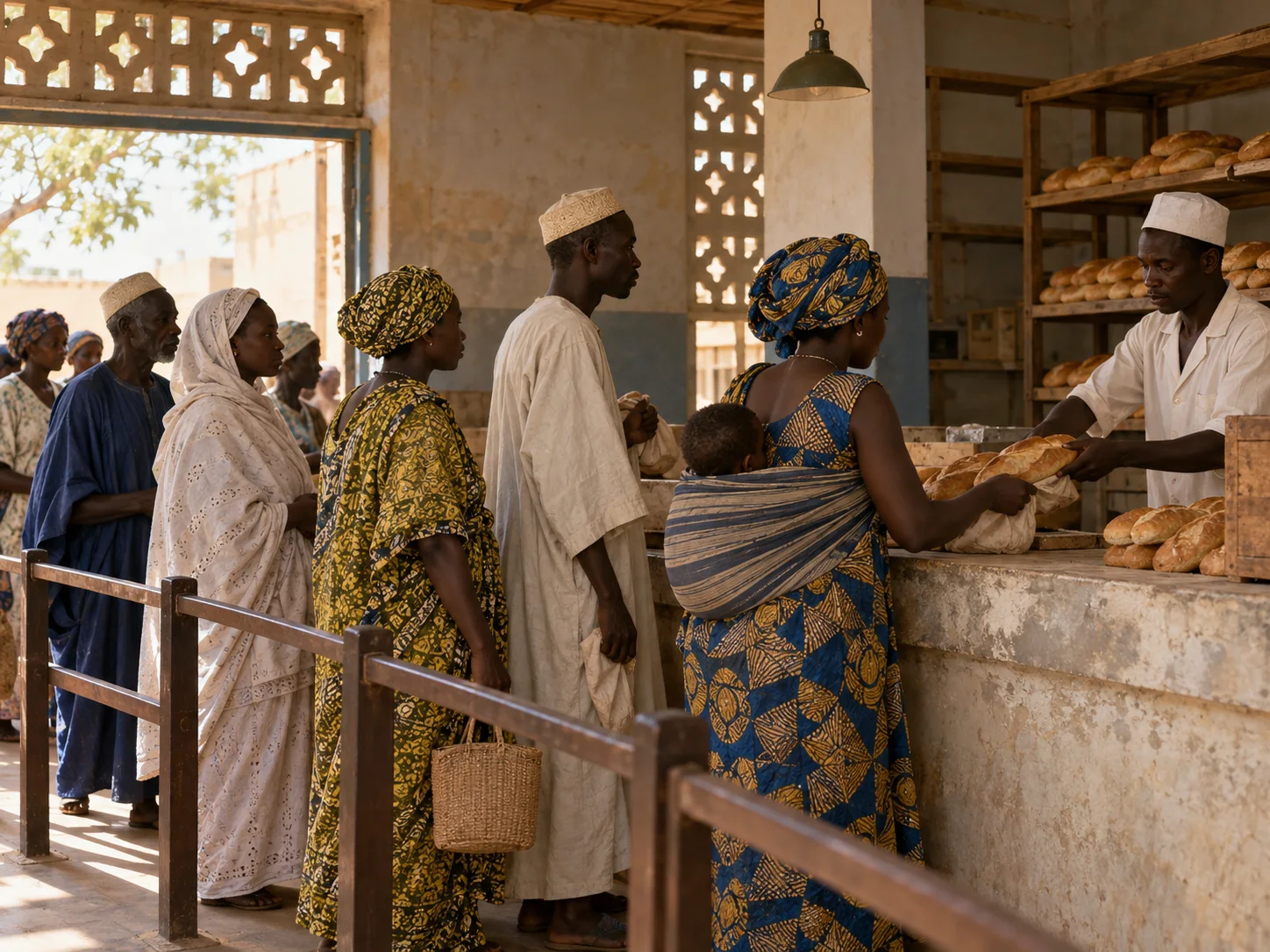
On 9 January 1965, long queues stood outside shops and bakeries in Bamako. The customers were not seeking the city’s customary staples. Rice and millet had been scarce for more than two months, so people were trying to obtain substitutes such as potatoes and bread. A Le Monde report based on an AFP dispatch called the lines an unfamiliar face of the Malian capital. The substitutes, moreover, cost more than the missing rice and millet.
The shortage affected Bamako and other towns and had become particularly conspicuous as Ramadan increased attention to household food supplies. President Modibo Keïta addressed the situation in his New Year speech, placing part of the blame on traffickers and smugglers. For the people outside the shops, however, the immediate question came before the political argument: could a familiar staple be replaced, and could the household afford the replacement?
This queue recorded not only a shortage of goods but a temporary rearrangement of diet. It was not a line to obtain rice or millet; it was a line for bread and potatoes because those staples were absent. The report’s note that substitutes were more expensive captures a burden that quantities alone miss. Reaching the head of the queue did not settle the problem. A household still had to absorb the higher price of filling the space that a staple food had left behind.