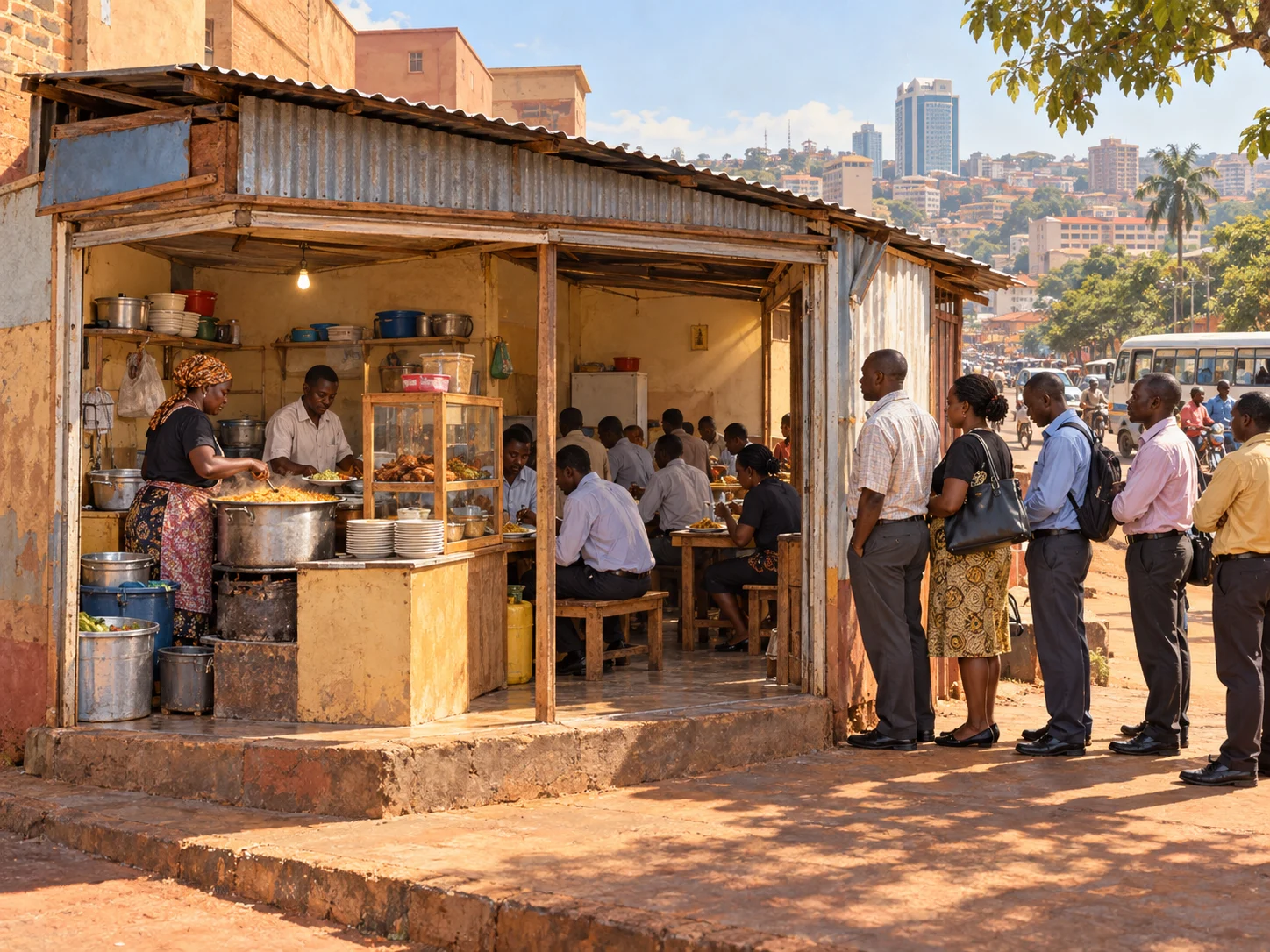
In 2012, customers at Kassim Ntongi’s kiosk in Kampala’s Cooper Complex waited for pilau and for seats. Shortly after 10 a.m., the roughly six-by-six-metre room was full, leaving many people standing until diners finished and made space. At lunch, regulars endured a queue in the hot sun for the food.
Ntongi said the kiosk served more than a thousand people a day, including takeaways. The line reflected more than popularity: a very small dining room met a production rhythm based on a huge pot of pilau. Customers were waiting not only for a plate but for the time of the person occupying the next seat to end.