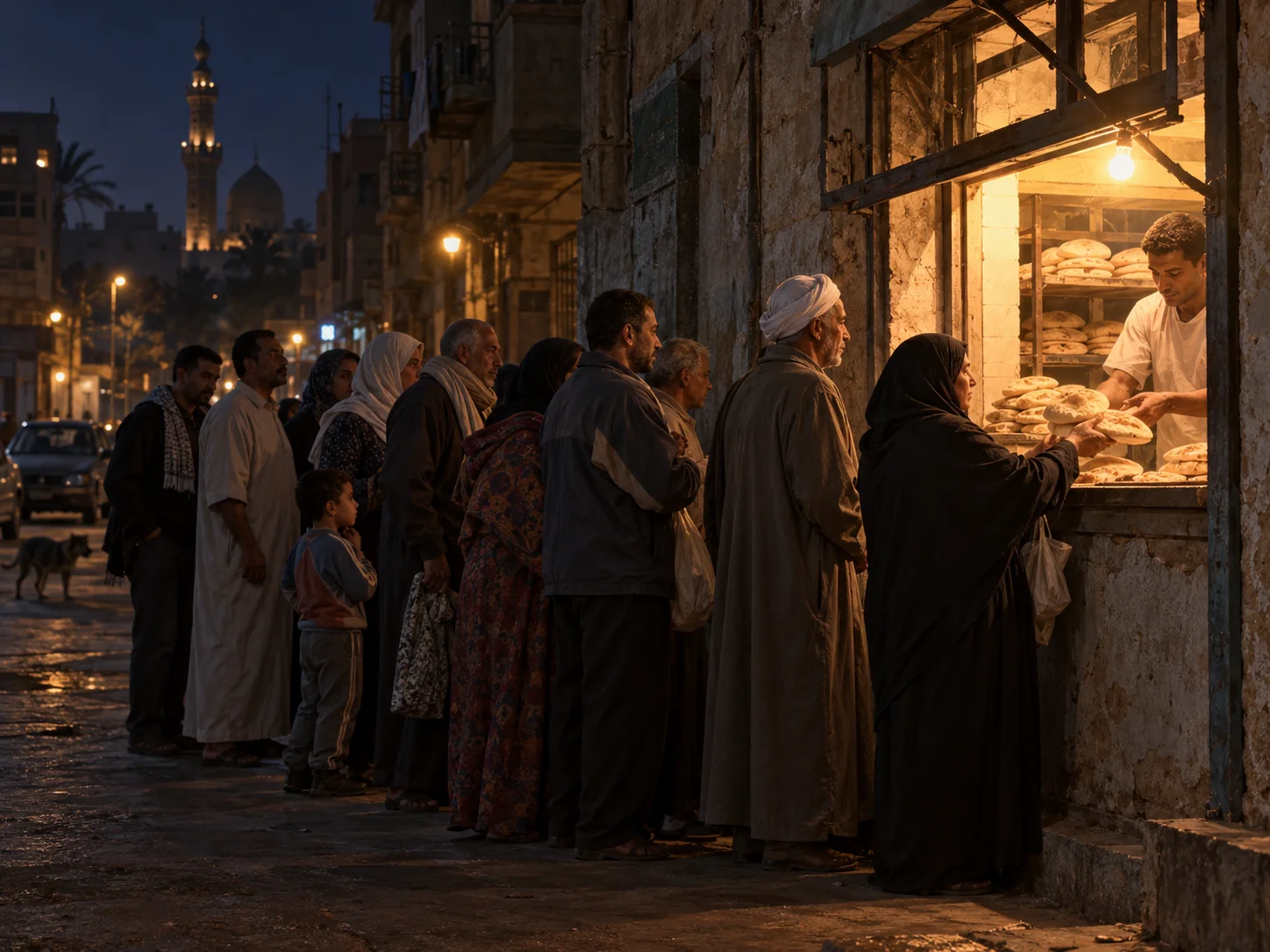
In Cairo in 2008, queues for subsidised bread began as early as 3 a.m. About fifty million Egyptians—two-thirds of the population—ate the bread, whose cost was 96 per cent covered by the state. Rising grain prices and surging demand overwhelmed bakery capacity. Disputes over places in line turned violent, and reports described deaths from heart attacks while people waited in extreme heat.
The government ordered the army and police to bake bread, producing about 2.5 million loaves a day, little more than one per cent of national need. It sharply increased wheat imports and added seventeen million people to ration eligibility. The subsidy created an extraordinary inversion: cheap bread could cost less than animal feed, so some farmers bought it for livestock. The 3 a.m. queue condensed global prices, state finance, production limits and household hunger into the price and availability of one loaf.