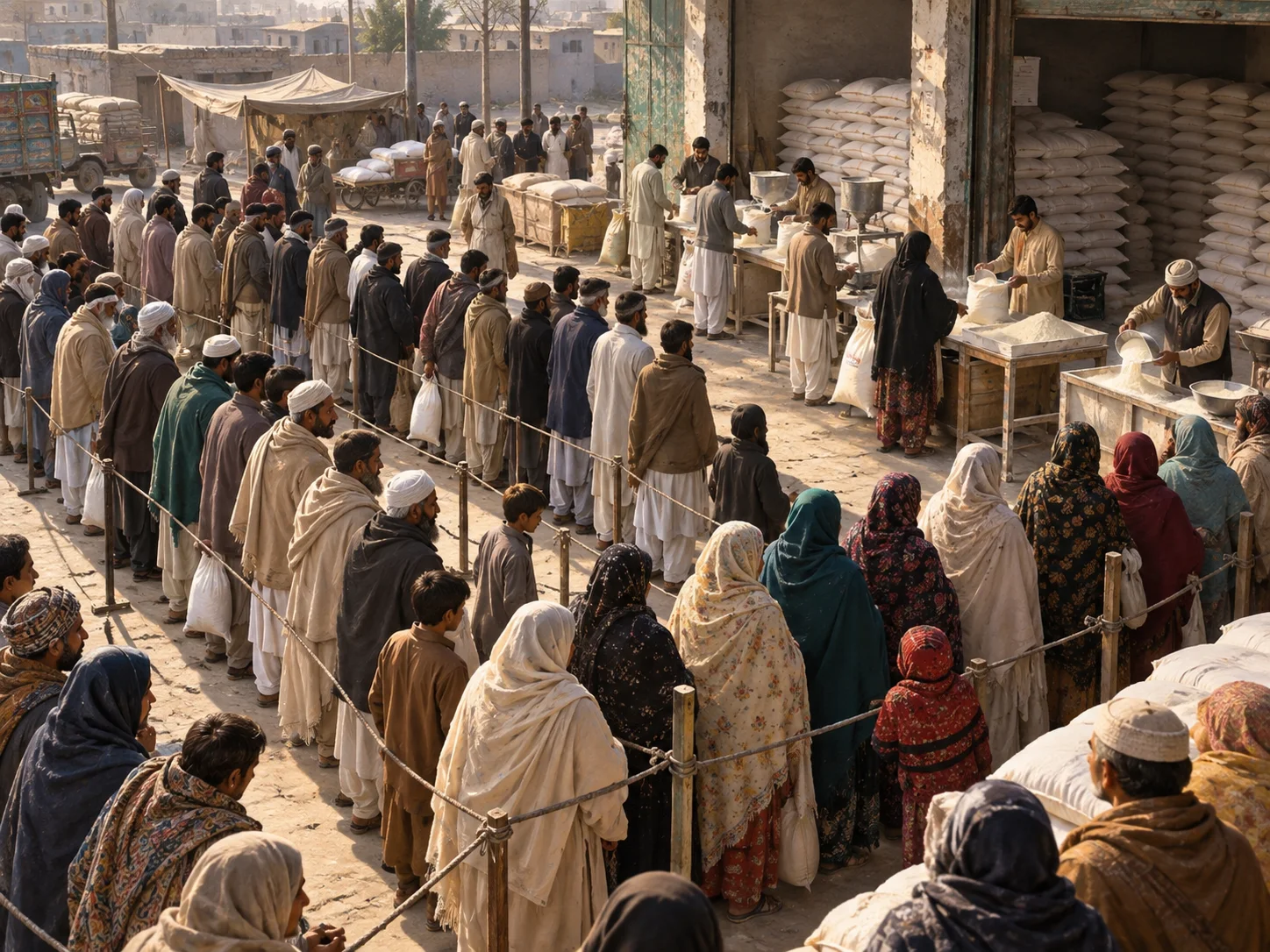
In January 2008, queues formed at dawn outside state-run utility stores in Karachi, Pakistan, as customers sought bags of subsidised wheat flour. Some waited throughout the day and still returned empty-handed because supplies were acute. Reports also described disorder and scuffles at stores and temporary flour stalls.
The shortage worsened as small mills exhausted stocks and open-market prices rose. A separate contemporary account recorded a Lahore woman waiting four hours for a single sack of atta.
In this staple-food queue, arriving early did not guarantee a purchase. The gap between the price promised by the subsidy system and the amount that actually reached shops claimed an entire day from customers.