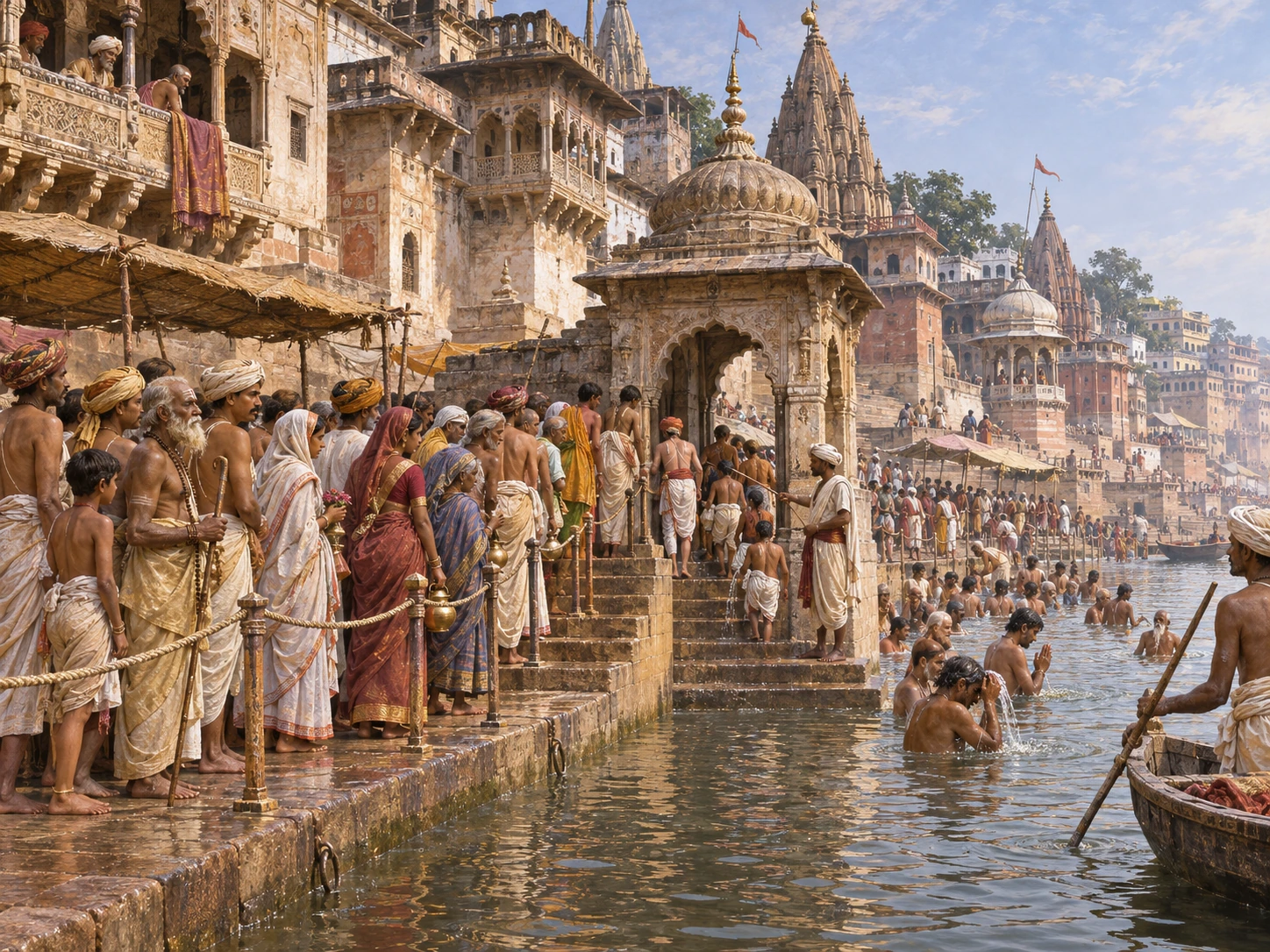
In Varanasi, also known as Benares, bathing in the Ganges has long carried religious significance. Steps leading down to the river, known as ghats, bring together worshippers, bathers and people assisting with rituals.
Yet a gathering is not automatically a queue. To claim that pilgrims formed an orderly line at a particular bathing place in the eighteenth century, we would need more specific evidence, such as a contemporary travel account or image. Modern congestion cannot simply be projected backward.
The question is compelling: at a river open to many, when does an order of turns emerge, and who establishes it? The history of devotion and the history of waiting may meet here, but the connection must be demonstrated rather than assumed.