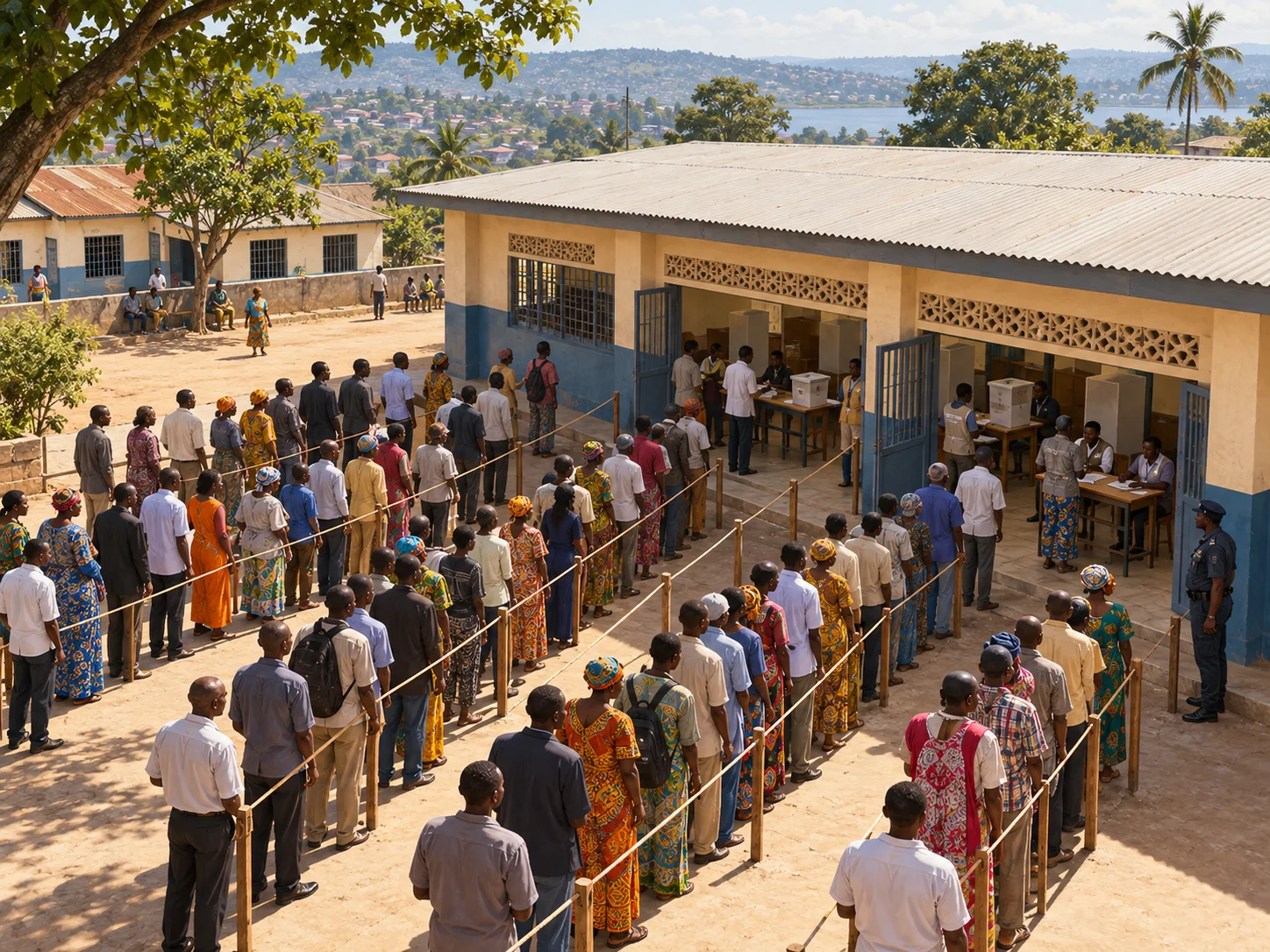
At 9:35 a.m. on 30 December 2018, voters queued in Kinshasa to cast ballots in the Democratic Republic of the Congo’s presidential and legislative elections. A photograph by John Bopengo for the United Nations peacekeeping mission MONUSCO directly records the line. Its archive description identifies the city, date and two elections.
The vote had originally been scheduled for 23 December but was postponed for a week after logistical problems, including a fire at an electoral warehouse. Voting in some areas was delayed further, with authorities citing insecurity and an Ebola outbreak. The country therefore did not experience one uniform election day under identical conditions. A queue in Kinshasa cannot represent access everywhere.
The photograph establishes a specific procedure at a specific moment. It does not provide a headcount, a waiting time, the polling-station name or the political preferences of those shown. People in one line need not share a candidate or a judgment about the election. What they shared was the sequence required to reach the ballots.
Presidential and legislative politics involve parties, institutions and national disputes. At the entrance, however, both contests were reduced to the movement of individual voters through one polling process. Amid postponement and unequal access, the MONUSCO image demonstrates that voting was physically under way at one place in Kinshasa on the morning of 30 December. The preserved timestamp matters. It moves the evidence beyond the general fact that an election occurred and anchors the existence of a voter queue to a specific morning moment.
