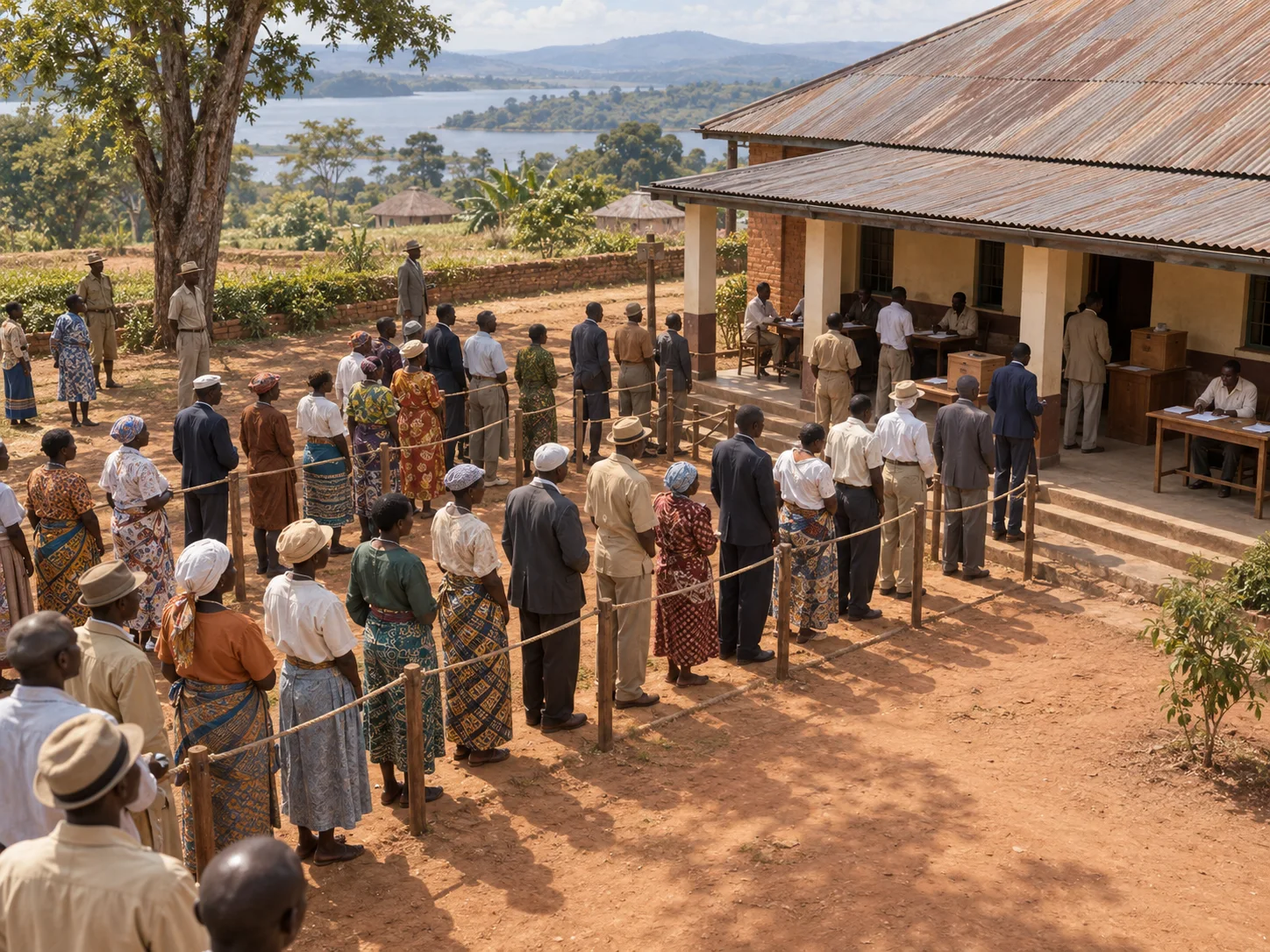
In Uganda’s 1958 election, voter registration was effectively forced in some places, and the study notes that nationalist politicians showed little interest in local complaints. Voters queued under police observation, had names checked and fingers inked. Yet the population did not enter one national line. Buganda largely boycotted the 1961 election, weakening its legitimacy. In 1962, Buganda was allowed to elect its own lukiiko, which then selected representatives to the national assembly. Joining a polling queue, refusing it, or using a different electoral route each became a statement about political belonging. The line could symbolise a common citizenry while also revealing disagreement over which state people were being asked to join.
Uganda · 1950 (period details in article)
Uganda’s Polling Queue beside a Boycott