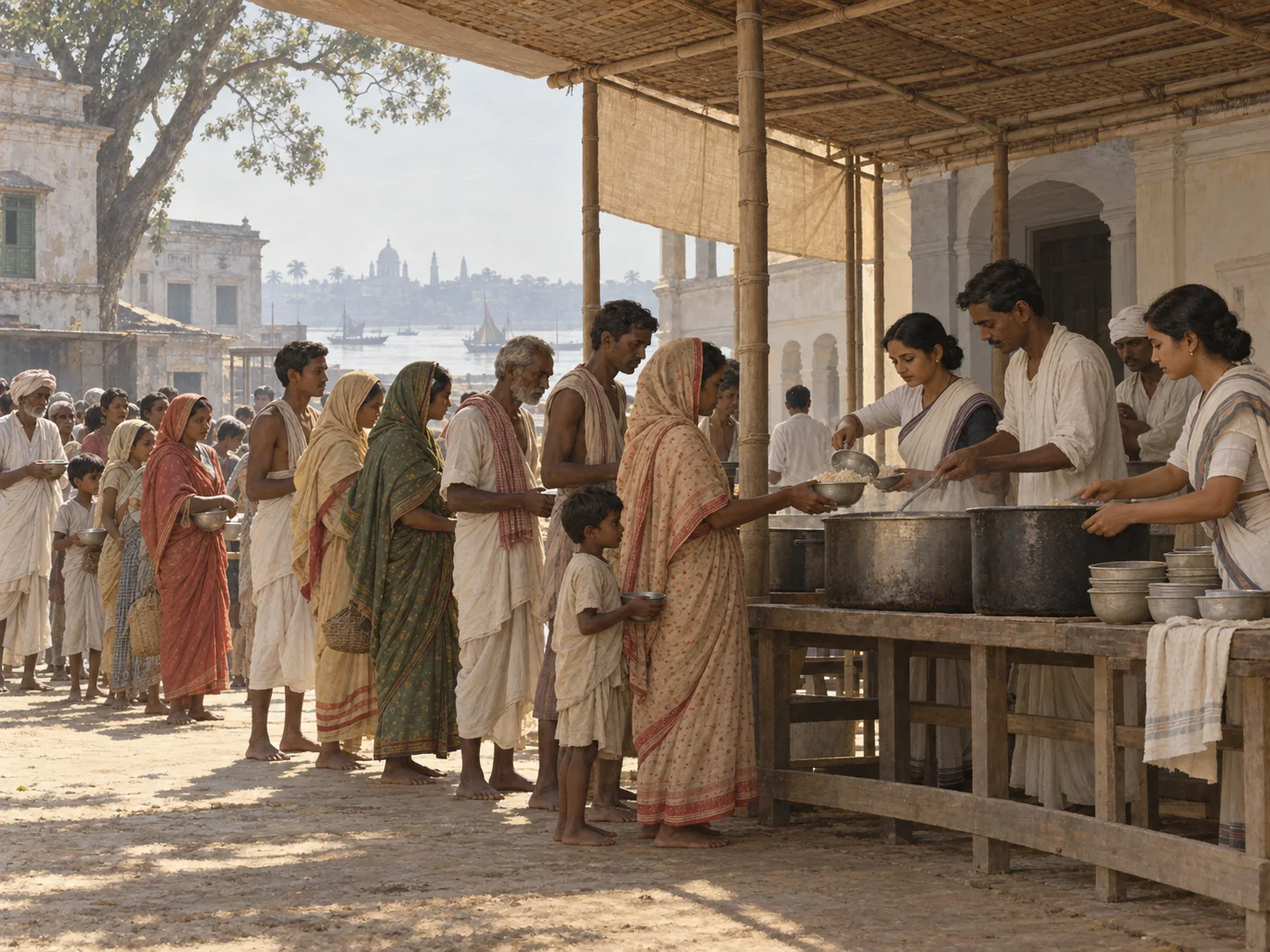
Reporting directly on the Bengal famine of 1943, T. G. Narayanan described long queues at a relief kitchen in Sarisha. The people seeking free food were those who had lost every practical means of obtaining it. A serving of khichuri was sometimes shared by two or three people and, he wrote, was insufficient to sustain a peasant.
The reporter observed more than hunger in the line. A caste Hindu stood behind a Namasudra and was followed by a Muslim; Hindu and Muslim mothers fed children under the same roof. This is not a story that turns suffering into a celebration of equality. It is evidence that famine forcibly disrupted boundaries that remained powerful in ordinary rural life. Position in the queue was determined not by social rank but by the need to receive a meal.