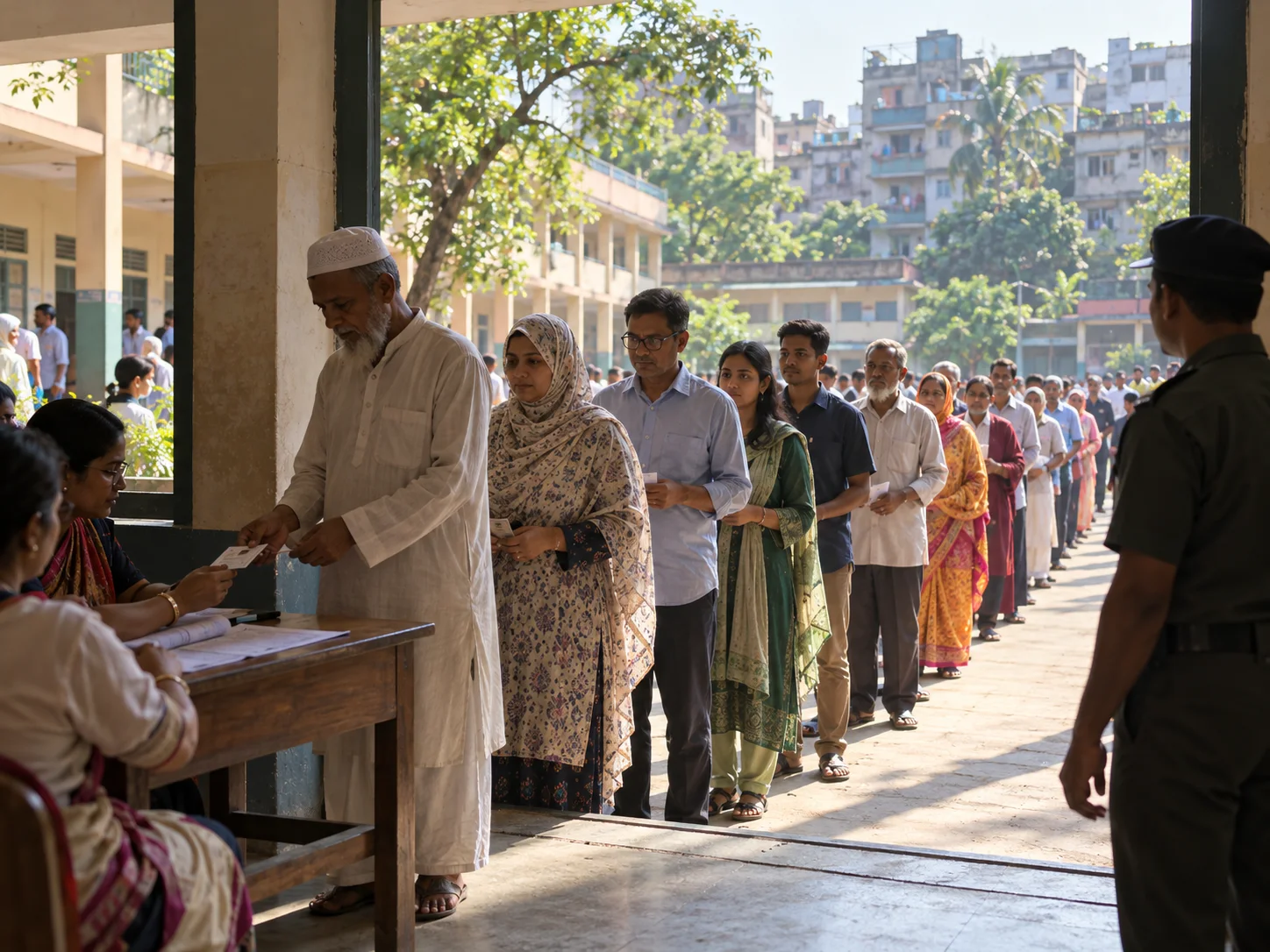
On February 12, 2026, voters formed a line at a polling station in Dhaka during Bangladesh's thirteenth general election. A Reuters photograph by Mohammad Ponir Hossain explicitly records people standing in a queue to cast their ballots. This is not a generic image of congestion in the capital: the place, date, purpose, and act of waiting are all identified in the caption.
A polling-station queue works differently from a line for a scarce ticket or a product sold on a first-come basis. Those waiting are there to exercise the same civic right, while identification, the issue of ballot papers, marking, and depositing the vote must proceed through an ordered process. The photograph's caption does not give the number of voters, the duration of the wait, or the station's name, so none of those details is added here.
What the record does show is how a national institution becomes a local sequence. An election may ultimately appear as totals and percentages, but before those numbers exist, individual voters have to reach a polling place and wait for their turn. In Dhaka that day, the administrative order of voting was visible as a physical line.