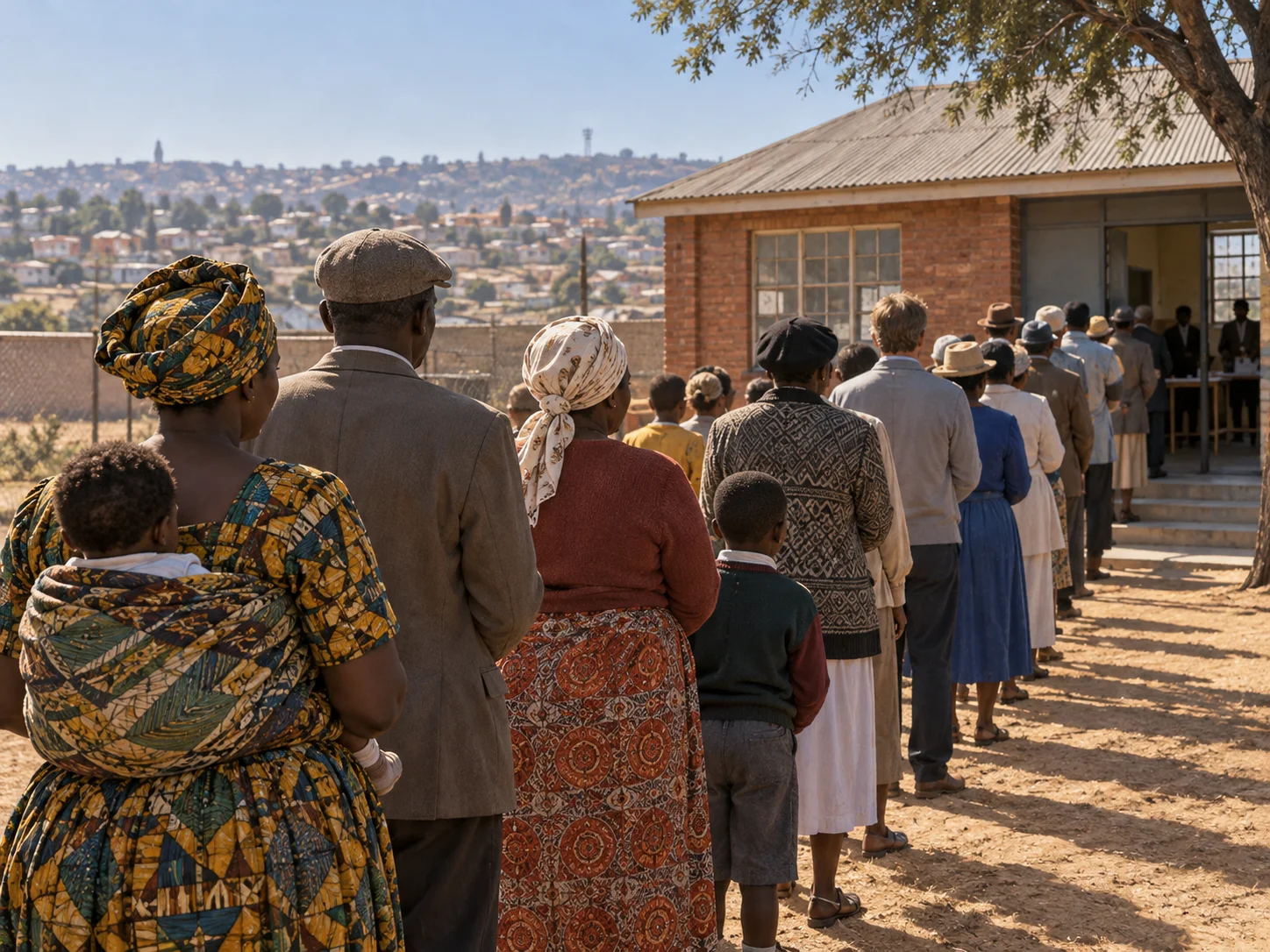
On 27 April 1994, a long line of voters snaked towards a polling station in Soweto, outside Johannesburg. South African History Online identifies the scene as part of the country's first all-race election. The queue was not simply a visual metaphor for liberation; it was the actual order in which residents of a Black township approached a national ballot.
The archive record directly establishes the date, place, voting purpose, and length of the line, but it gives no exact headcount or waiting time. Those details should not be invented. Even so, the nature of the election distinguishes this wait from earlier polling lines: people previously excluded from national political participation were now moving through the same voting procedure.
An expansion of political rights existed not only in law and in the final count. It became a physical experience of advancing one person at a time through the capacity of a polling station. The Soweto image shows that even on a day when a state changes, history cannot pass through the doorway all at once.