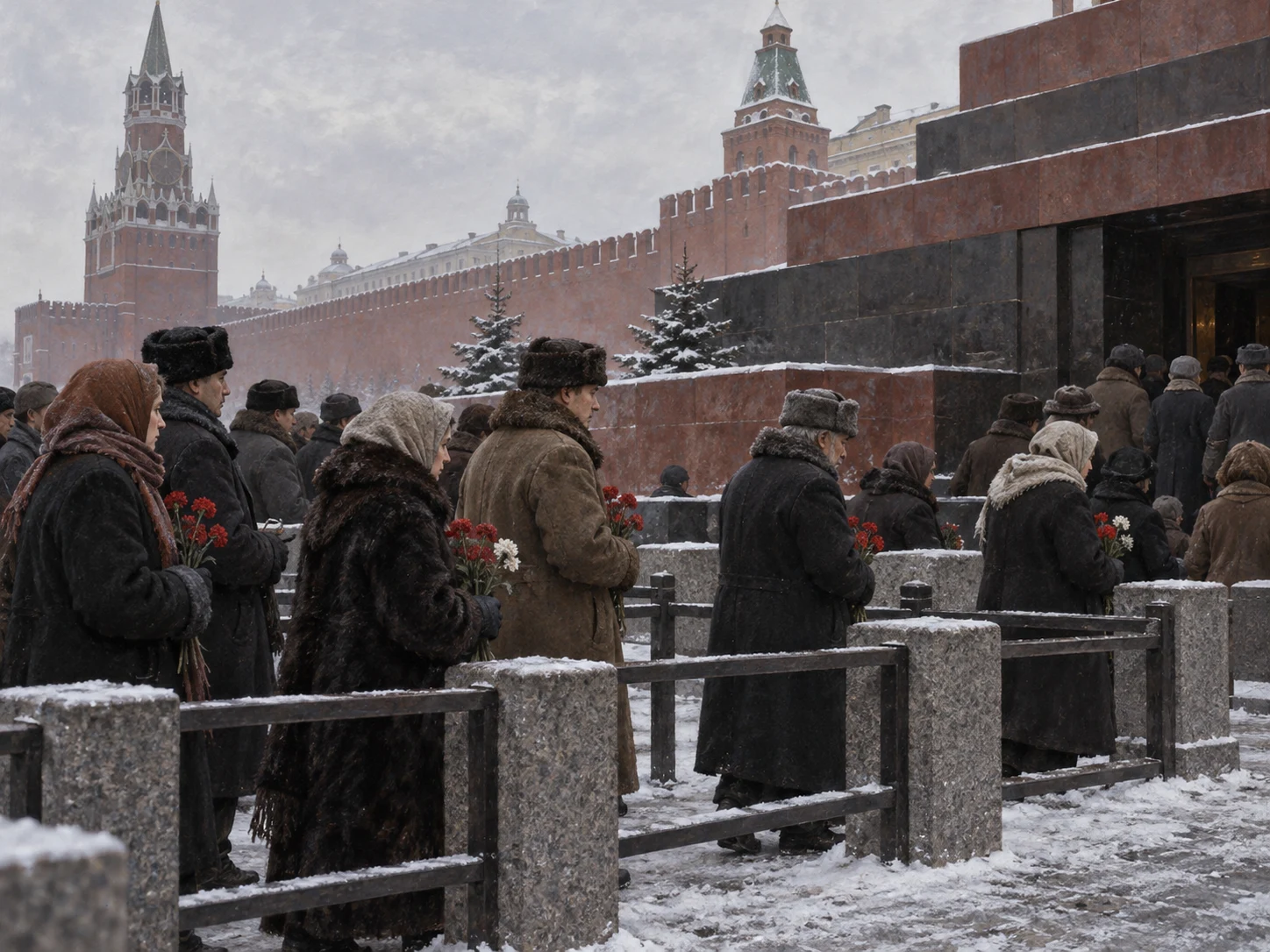
In 1924, the mausoleum on Moscow's Red Square was not yet the monumental stone structure familiar today. An archival film record held by the Russian State Documentary Film and Photo Archive explicitly describes the wooden mausoleum, people entering it, and a queue outside. Those visitors were not approaching a long-established tourist landmark. They were waiting for a public viewing while the death of a revolutionary leader was still an immediate political event.
What distinguishes this line is that the machinery of commemoration preceded the permanent architecture. The body was displayed, an entrance was controlled, and people were admitted in sequence while the building itself still looked provisional. A place in the line cannot tell us what each person believed, but the arrangement turned many private encounters with death into a state-organized public ritual.
The catalogue verifies one specific queue and admission scene in 1924. This entry therefore stays with that documented moment rather than assigning a single motive to the mausoleum's visitors across the decades.