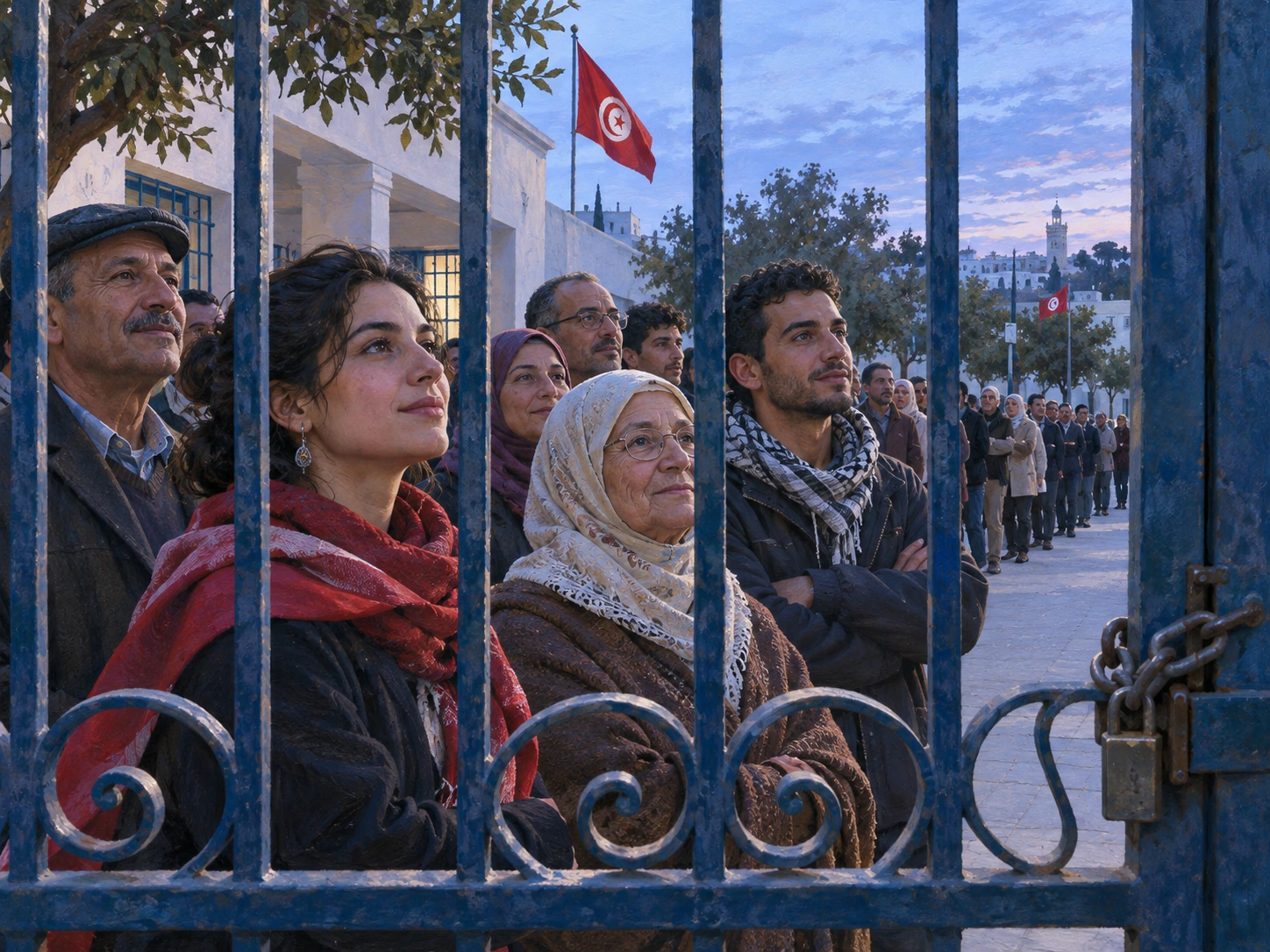
On 23 October 2011, Tunisia held its first nationwide election after the fall of Zine El Abidine Ben Ali. The Guardian's report from the country recorded a long queue at a polling station near Tunis's casbah before the doors opened at 7 a.m. Voters were choosing a constituent assembly charged with drafting a new constitution and forming an interim government.
This was not an ordinary line for an ordinary legislature. The ballot was an entrance to the work of designing the political system that would follow the revolution. Those waiting did not support the same candidates. The significance lay precisely in citizens with competing views following the same sequence and entering a secret ballot one by one. The National Democratic Institute's final report described the contest as Tunisia's first democratic election since independence.
Revolutions are often remembered as crowds in public squares. Here, the next stage was quieter: a queue before opening time, identity checks, and ballot papers. Procedure, rather than spectacle, became the way people began shaping the new state.