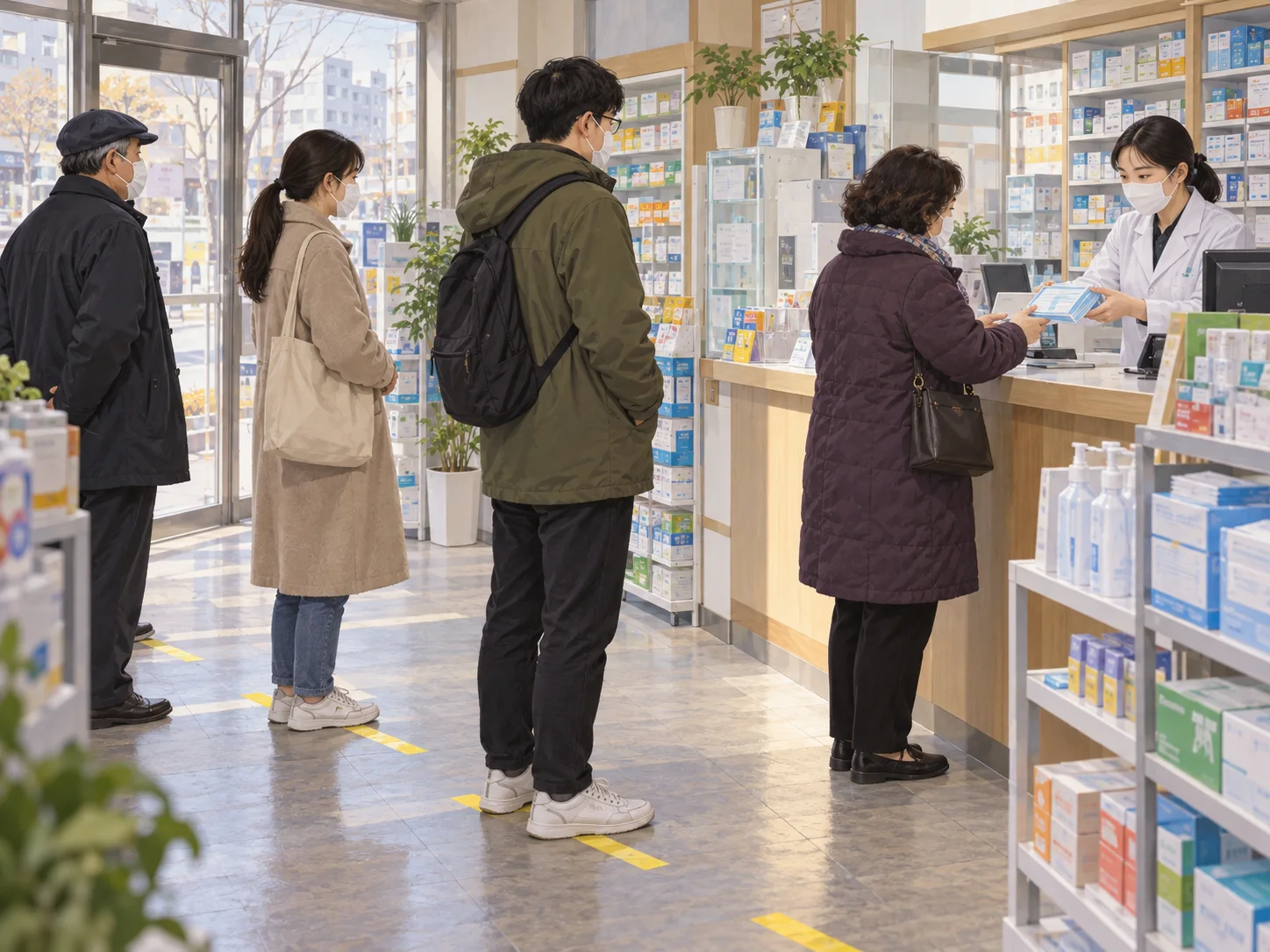
In early March 2020, people across South Korea waited for hours in long lines to buy masks distributed through public channels. Demand had outrun supply as COVID-19 infections rose. Even after the government directed half of national production through public organisations, shortages continued at the point of sale. Yonhap reported on 5 March that the government planned a computerized system to prevent the same person from purchasing repeatedly.
The rationing system that followed made pharmacies the principal retail network. Purchase days were assigned according to the final digit of a person’s birth year, while identity checks and a shared sales record prevented someone from visiting multiple pharmacies for another allocation. The initial weekly limit was two masks. It later rose to ten as supply improved. Each rationed mask cost 1,500 won. The queue was therefore no longer governed only by arrival time; it was organized through a calendar, identification and purchase history.
The scheme lasted roughly four months and ended on 12 July. Yonhap reported that pharmacies had served as the key public channel for 137 days and that weekly production had exceeded 100 million masks from the first week of June. Greater output mattered, but so did the information system. By defining who could buy, on which day and in what quantity, the government reduced the incentive to join several lines for the same scarce product. Queue management moved from arranging bodies outside shop doors to coordinating records across a national network of pharmacies. The government also prioritized medical, quarantine and safety sectors and restricted exports. Pharmacies became more than shops: they served as the final nodes of a national allocation and identity-checking system.