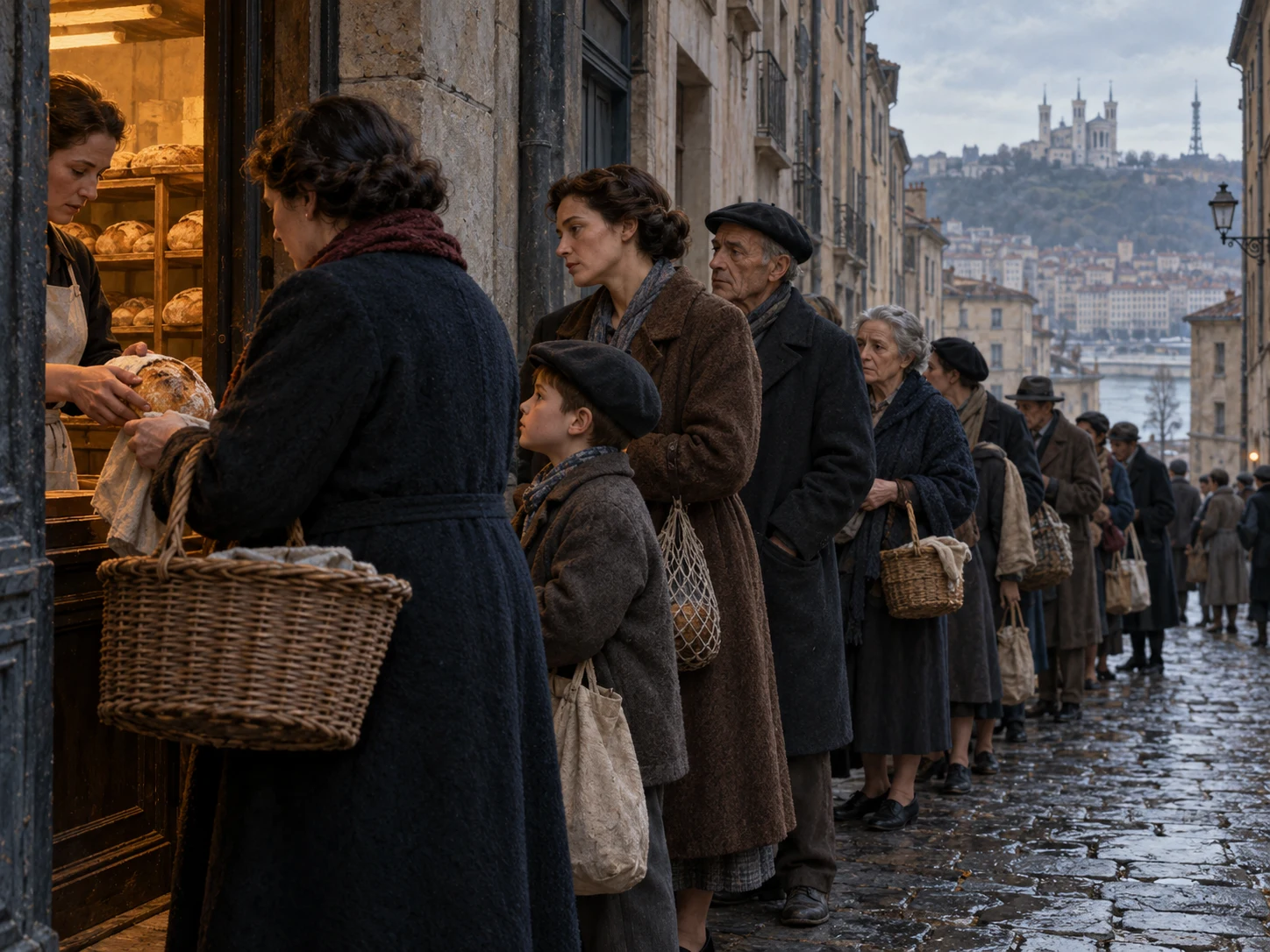
During the Second World War, queues appeared outside French shops from the first days of occupation and became widespread after food ration cards were introduced in autumn 1940. Lyon's Resistance and Deportation History Centre preserves a photograph of a bakery line in Place Jules Guesde.
Without supermarkets, shoppers moved from baker to butcher, dairy seller, and greengrocer. Each stop could mean another queue and a sign announcing that goods had run out. Spending four hours a day waiting was not unusual.
A ration card did not guarantee stock. Shopping became a chain of waits, and rationing survived liberation, disappearing completely only in 1949.