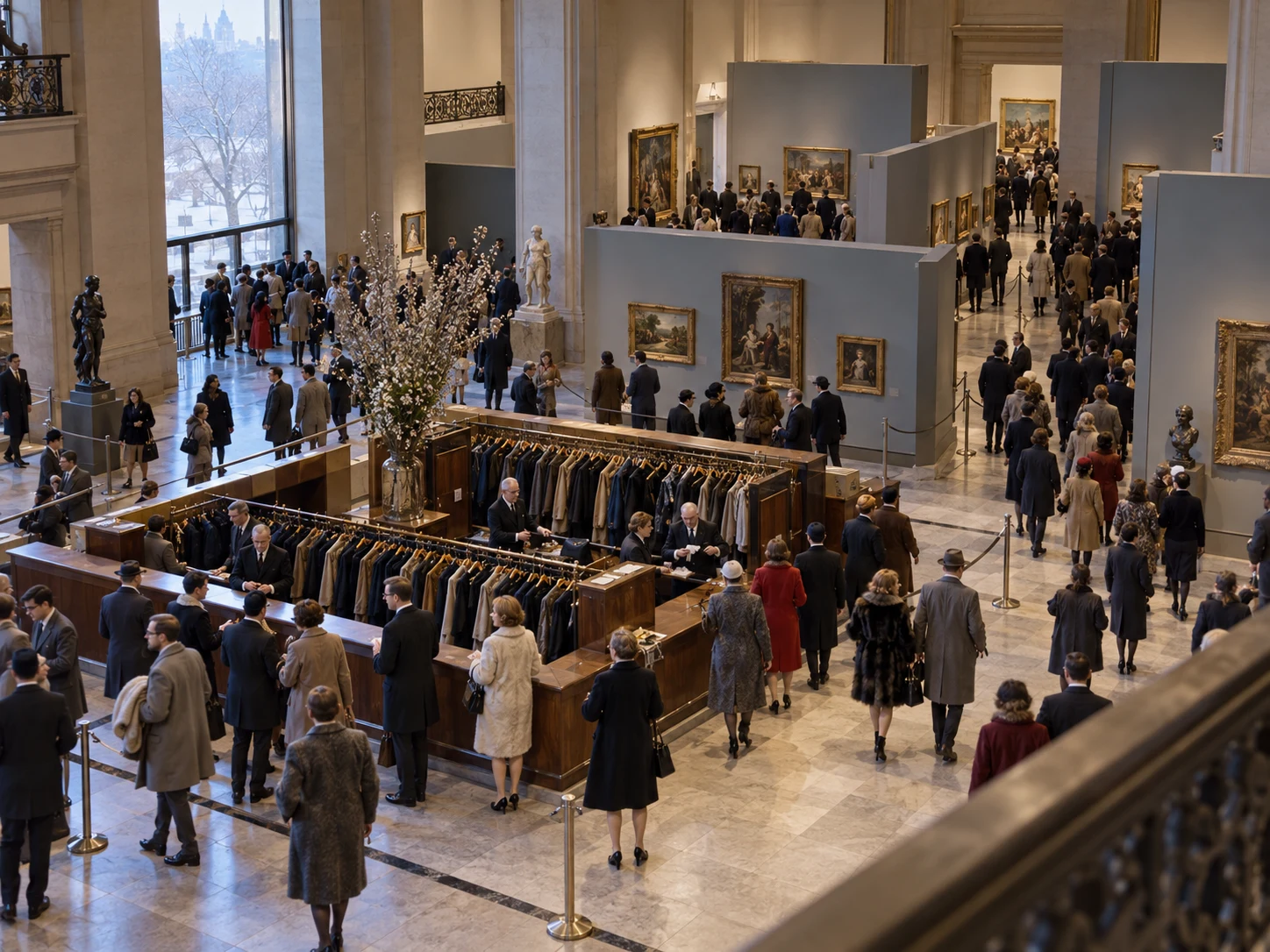
In 1963, a queue to see the Mona Lisa, lent by the Louvre to the United States, stretched from New York's Metropolitan Museum of Art down Fifth Avenue. A photographed viewing line also formed at the National Gallery in Washington on 13 January.
Protected behind bullet-resistant glass, the painting was viewed as people advanced past it. To show one object to a mass audience, the line became a mechanism for distributing brief encounters.
Moving a painting normally housed in Paris created new waiting on American streets. More than the distance travelled by the artwork, the final distance reduced one step at a time shaped the public experience.